

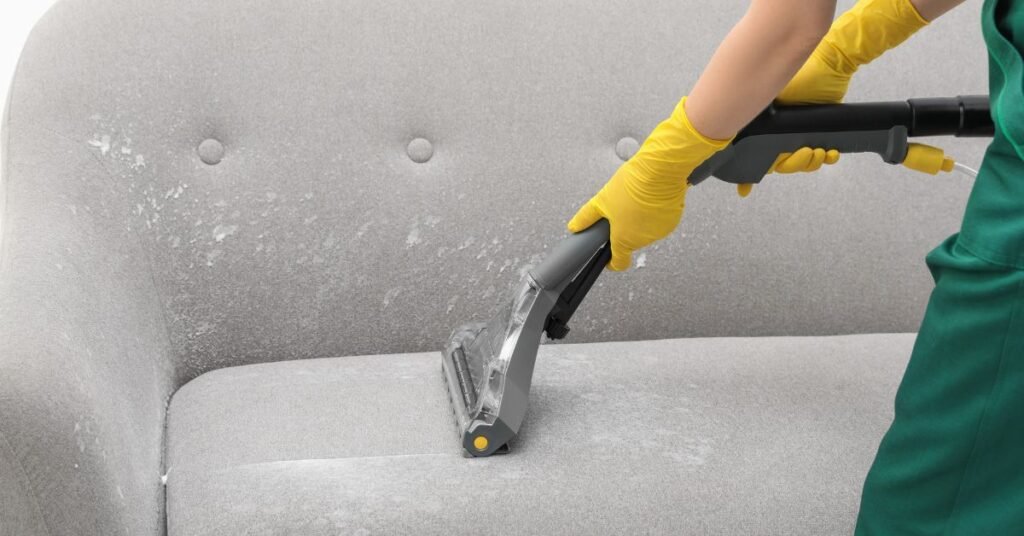
Your sofa sees more daily use than almost anything else in your home. And most Toronto homeowners have no idea how to clean upholstery sofa fabric properly without damaging it.
Cleaning upholstery sofa fabric at home means vacuuming away surface debris, identifying the correct cleaning method for your specific fabric type, treating stains with the right solution, and allowing the sofa to dry completely before use. The process differs significantly between fabric, microfibre, leather, and velvet upholstery – and using the wrong method on any of them causes permanent damage.
This matters more in Toronto homes where pets, children, humidity, and year-round indoor living mean sofas take a heavier hit than in drier climates. A sofa that is cleaned correctly every few months lasts significantly longer and stays genuinely hygienic, not just visually clean.
At TidyUp HandyCrew, our Carpet & Upholstery Deep Cleaning Services cover sofas, sectionals, armchairs, and other upholstered furniture across Toronto and the GTA using professional-grade equipment safe for all fabric types, pets, and children.
In this blog, we’ll walk you through everything you need to know to clean upholstery sofa fabric safely, correctly, and effectively at home.
Step One Before Anything Else – Read the Cleaning Code on Your Sofa
Most homeowners skip this. It is the single most important step in the entire process.
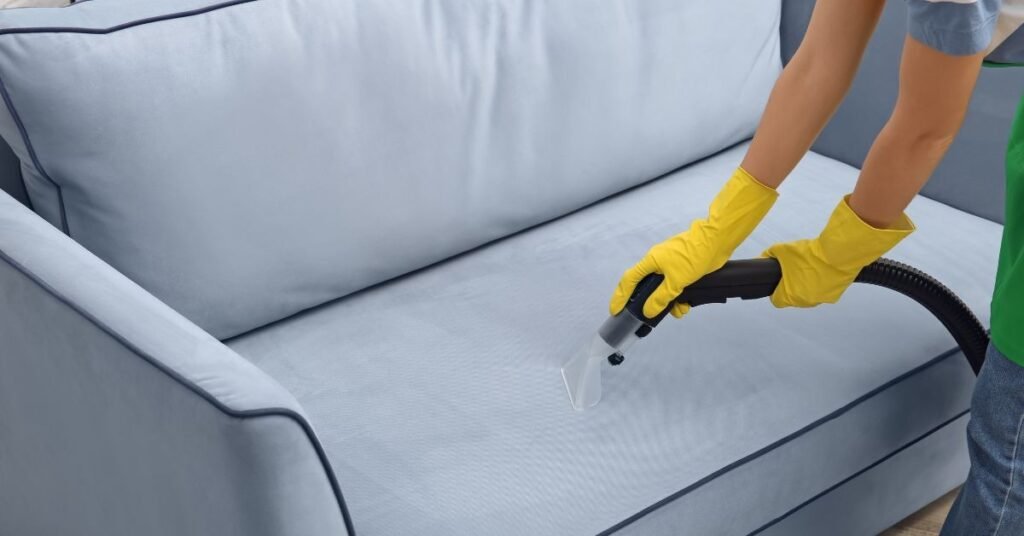
Every upholstered sofa has a cleaning code tag, usually found sewn into the underside of a cushion or underneath the sofa frame. This code tells you exactly which cleaning method is safe for your specific fabric. Using the wrong method ignores this entirely and is how people ruin their sofas while trying to clean them.
Here is what each code means:
- W (Water): Water-based cleaners are safe. This covers most fabric and microfibre sofas and is the most common code found in Toronto homes.
- S (Solvent): Use solvent-based or dry-cleaning solutions only. No water. Common on velvet, silk-blend, and some delicate woven fabrics.
- W/S (Water or Solvent): Both are safe. Gives you the most flexibility when choosing a cleaning method.
- X (Vacuum Only): No liquid of any kind. Vacuum or brush only. Applying any cleaning solution to an X-coded sofa causes immediate and permanent damage.
Check the tag before you gather any supplies. If the tag is missing or unreadable, treat the sofa as an X-coded fabric and contact the manufacturer before proceeding. When in doubt, test any solution on a completely hidden area (under a cushion or at the very back of the base) and wait 24 hours before applying it anywhere visible.
What You Need to Clean Upholstery Sofa Fabric at Home
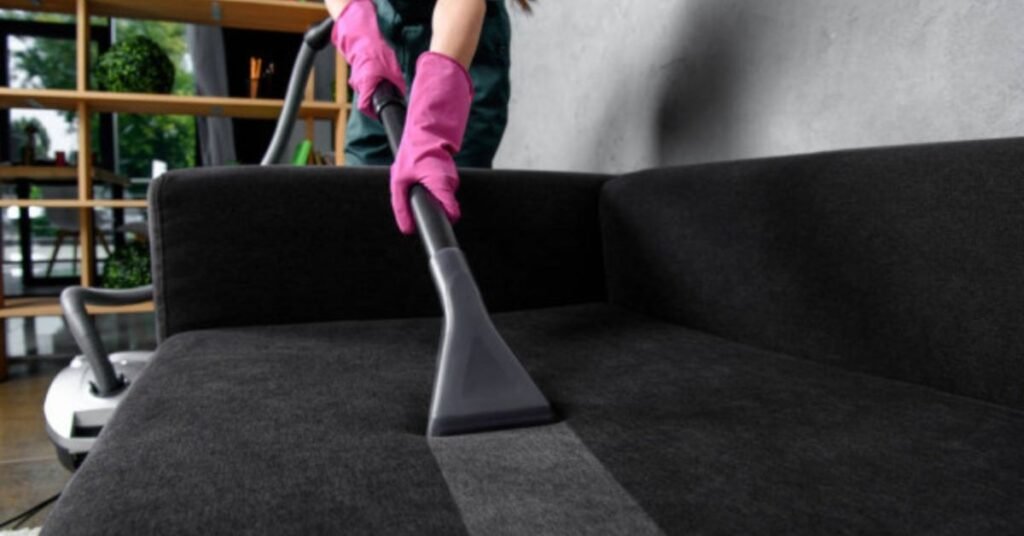
Gather everything before you start. Stopping halfway through an upholstery clean to find a missing supply leads to over-wetting the fabric while it sits, which creates exactly the kind of damage you are trying to avoid.
For a fabric or microfibre sofa (W or W/S code):
- Vacuum cleaner with an upholstery attachment
- Clean white microfiber cloths (at least four)
- Spray bottle
- White vinegar
- Mild dish soap or upholstery-specific cleaner
- Warm water
- Baking soda
- A soft-bristle brush
- A fan or access to open windows for drying
A leather sofa:
- Vacuum with a soft brush attachment
- Clean soft cloths
- Mild leather cleaner or diluted dish soap
- Leather conditioner
- Distilled water (tap water can leave mineral marks on leather)
For a velvet or S-coded sofa:
- Vacuum with the lowest suction setting and a soft brush attachment
- Dry-cleaning solvent or specialist velvet cleaner
- Soft-bristle clothes brush
- No water of any kind
How to Clean Upholstery Sofa Fabric: Step by Step
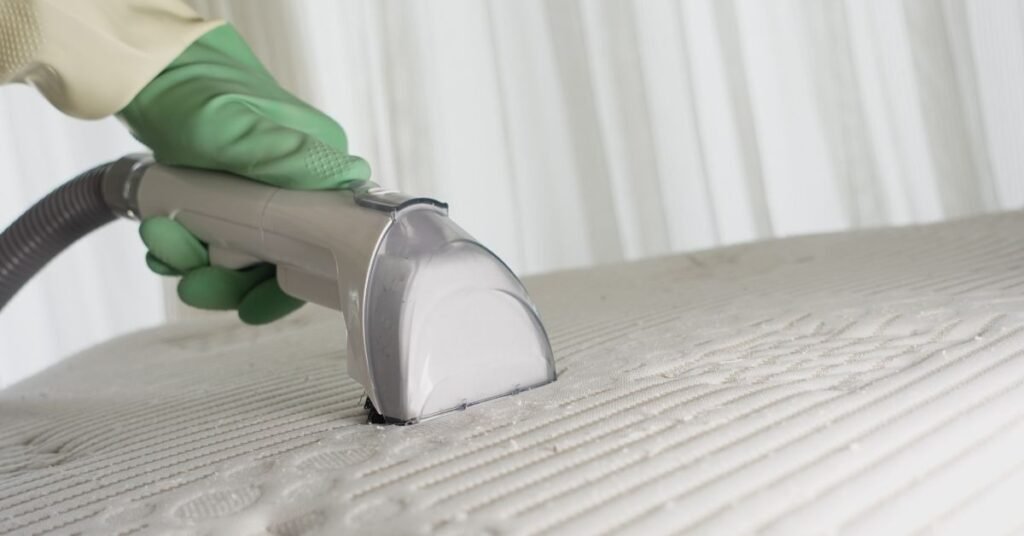
This process covers fabric and microfibre sofas with a W or W/S cleaning code. These are the most common sofa types in Toronto homes and condos.
Step 1 – Vacuum the Entire Sofa Thoroughly
Start here. Always.
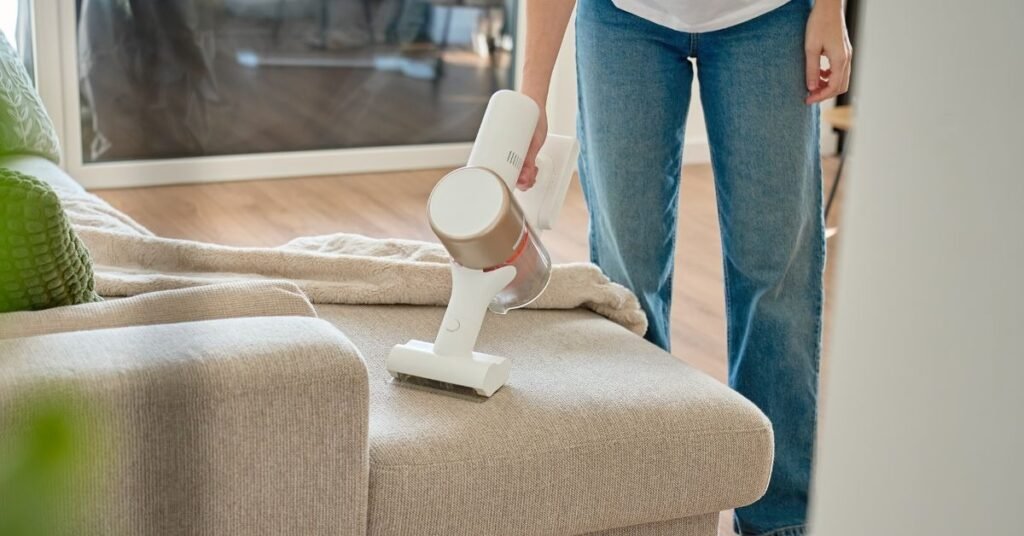
Remove all cushions and vacuum both sides of each one. Vacuum the sofa frame including the seat area, the back, the arms, and the crevices between sections. Use the crevice tool to get between seams where crumbs, pet hair, and dust compact over time.
Vacuuming before any wet cleaning is non-negotiable. Applying a cleaning solution over loose debris pushes dirt deeper into the fibres and can turn dry particles into muddy stains. Do two passes: one with the upholstery attachment across all flat surfaces, one with the crevice tool along every seam and gap.
This step alone, done thoroughly, removes more surface-level grime than most people expect. For a lightly used sofa, a thorough vacuum combined with the baking soda deodorising method in Step 2 may be all that is needed for a regular maintenance clean.
Step 2 – Deodorise With Baking Soda
Sprinkle a generous, even layer of baking soda across the entire sofa surface – seat cushions, back cushions, and the sofa arms.
Leave it for a minimum of 20 to 30 minutes. For a sofa that has pet odours or has not been cleaned in six months or more, leave it for up to an hour. Baking soda absorbs odours from the fabric fibres rather than masking them. It also works on light surface grease.
After the sitting time, vacuum up all the baking soda thoroughly. Use the upholstery attachment and go over each surface twice to ensure no residue remains.
This step is completely safe for all fabric types including W/S coded sofas. It is one of the most effective maintenance steps a homeowner can do monthly to keep an upholstery sofa clean between deeper cleans.
Step 3 – Pre-Treat Visible Stains
Identify the stain type first. Grease-based stains (food oil, butter, body oils on armrests) need a dish soap solution to cut through the residue. Non-grease stains (coffee, wine, juice, mud) respond well to a white vinegar and water mix.
- grease stains
- non-grease stains
- pet urine stains
Always test your chosen solution on a hidden section of the sofa first and wait 10 minutes before treating a visible area.
Step 4 – Clean the Full Sofa Surface
Once stains are pre-treated, clean the full surface of the upholstery sofa.
Mix three-quarters of a cup of warm water, one-quarter cup of white vinegar, and one teaspoon of mild dish soap in a spray bottle. This solution works well on most fabric and microfibre sofas with a W or W/S code.
Work in sections: one arm, then the other, then the seat cushion faces, then the back. Mist each section lightly and work the solution into the fibres with a soft-bristle brush using short circular strokes. Do not saturate. The fabric should feel damp, not wet.
Immediately follow each section with a clean, dry microfiber cloth pressed firmly into the fabric to absorb the cleaning solution and the lifted dirt. Turn the cloth to a clean face with each press. A dirty cloth smears dirt back into the fabric rather than removing it.
Rinse each section with a separate cloth lightly dampened in plain cold water to remove soap residue. Soap residue left in fabric fibres attracts new dirt faster than an uncleaned sofa would. This rinse step is worth the extra two minutes per section.
Step 5 – Dry the Sofa Completely
Open every window in the room. Point a fan directly at the sofa. If you have air conditioning or a dehumidifier, run it.
Do not sit on the sofa until it is fully dry. In Toronto’s humid summer months, drying can take four to six hours depending on how much moisture was applied during cleaning. In winter with central heating running, the sofa may dry in two to three hours.
Placing damp cushions back into covers before they are fully dry causes mould inside the cushion, which creates a persistent musty smell that is extremely difficult to remove. Leave cushions and covers completely separate until both are fully dry before reassembling.
How to Clean Upholstery Sofa by Fabric Type
The full step-by-step above covers fabric and microfibre. Here is how the process changes for other common sofa types.
How to Clean a Leather Upholstery Sofa
Leather needs a different approach entirely. Water left sitting on leather causes staining. Harsh chemical cleaners strip the natural oils and cause cracking. And unlike fabric, leather cannot be spot-cleaned – you need to clean the entire panel seam to seam so it dries evenly without watermarks.
Start by vacuuming with the softest brush attachment on the lowest suction setting to remove loose dust without scratching the surface. Then mix a few drops of mild dish soap into a small bowl of distilled water. Dip a soft cloth, wring it out thoroughly, and wipe the leather in long, even strokes from one seam to the other.
For a full walkthrough specific to leather sofas, our blog on how to clean a leather sofa covers every leather type in detail.
How to Clean a Microfibre Upholstery Sofa
Microfibre is one of the trickiest upholstery sofa fabrics to clean at home because it water-spots easily. The key is using as little moisture as possible.
For water-safe microfibre (W code): Use a spray bottle of plain cold water and mist extremely lightly. Work the moisture into the fibres with a stiff-bristle brush in circular strokes. Then dry immediately with a clean microfiber cloth and a fan.
For solvent-only microfibre (S code): Use rubbing alcohol in a spray bottle instead of water. Spray lightly, scrub with a brush, and blot dry. Rubbing alcohol dries quickly and does not water-spot microfibre.
After cleaning any microfibre sofa, use a soft-bristle brush to restore the nap of the fabric once it is fully dry. This brings the texture back to a smooth, even finish rather than a stiff, matted one.
How to Clean a Fabric Upholstery Sofa Without a Steam Cleaner
Not every Toronto homeowner has access to a steam cleaner, and not every fabric is safe for steam. Our dedicated blog on how to clean a sofa without a steam cleaner covers the full no-machine process.
The short version: vacuuming, baking soda deodorising, and the vinegar-dish soap spray method described in the steps above delivers a thorough clean for most fabric sofas without any specialist equipment. The key is using very little moisture and drying thoroughly.
Our full guide on how to clean a fabric sofa covers stain-by-stain guidance for all common spill types including red wine, coffee, ink, and baby formula.
How Often Should You Clean Upholstery Sofa Fabric?
Most homeowners clean their sofas reactively – when a spill happens or when the sofa visibly looks dirty. That is too late for a thorough clean and means the sofa accumulates months of invisible buildup between each proper clean.
A simple maintenance schedule keeps upholstery sofa fabric in genuinely good condition:
- Weekly: Use a lint roller or soft brush to remove surface pet hair and dust. Takes five minutes.
- Monthly: Full vacuum of the entire sofa including cushion undersides and crevices. Baking soda deodorising treatment. It takes 45 minutes.
- Every 3 to 6 months: Full DIY deep clean using the step-by-step process above.
- Every 12 months: Professional deep clean using hot water extraction or specialist equipment.
Homes with pets or young children should deep clean every two to three months rather than every six. According to a 2013 microbiologist study, the average sofa upholstery carries approximately twelve times more bacteria per square inch than the average toilet seat. Regular cleaning is a genuine health matter, not just an aesthetic one.
Professional upholstery cleaning is recommended every 6 to 12 months, especially for homes with children, pets, or allergy sufferers – a frequency that most Toronto households do not come close to matching with DIY methods alone.
When DIY Cleaning Is Not Enough – Signs You Need Professional Upholstery Cleaning
Knowing how to clean upholstery sofa fabric at home is genuinely useful. But there are situations where home methods reach their limit.
- Pet odours that return within days.
- Stains that are more than a few days old
- White or very light-coloured upholstery
- Velvet, silk-blend, or delicate antique upholstery
A sofa that has not been cleaned in more than two years. At that point, the level of embedded dust, skin cells, allergen particles, and biological matter inside the fabric exceeds what a home clean can fully address. A professional extraction removes what a home clean redistributes.
Our Carpet & Upholstery Deep Cleaning Services cover all upholstery sofa types across Toronto and the GTA, using professional-grade equipment safe for fabric, microfibre, velvet, and leather.
Need a Trusted Local Service Provider? If you’re in our service area, Tidy Up Handy Crew is here to help. Whether you need cleaning, handyman, painting, plumbing, or other property maintenance services, our team is ready to assist. Visit our Google Business Profile to read verified customer reviews, contact us directly, or get directions.
Google Business Profile: https://maps.app.goo.gl/Jxo4YMBjmxTC2eGi6
Phone: +1 (226) 201-3103
Address: 3400 Danforth Ave Unit 5, Scarborough, ON M1L 1E1, Canada
Quick Maintenance Tips to Keep Upholstery Sofa Fabric Clean Longer
These habits take very little time but significantly slow down how fast a sofa gets dirty between proper cleans.
- Deal with spills within the first two minutes
- Use a throw or sofa cover on high-use areas
- Vacuum before the sofa looks dirty
- Keep pets off the sofa if the fabric is S-coded
Rotate and flip cushions every month. Even wear means no single section of the sofa receives all the compression and soiling. Cushions that are never flipped develop permanent compression in the seat area and uneven soiling that makes one section look far older than the rest.
Frequently Asked Questions About How to Clean Upholstery Sofa Fabric
Ouestion: How do I clean upholstery sofa fabric at home without damaging it?
Check the cleaning code on the tag under your cushions before applying any product. W means water-based cleaners are safe. S means solvent only. X means vacuum only. For W-coded fabric, vacuum thoroughly, apply a diluted dish soap and vinegar solution sparingly, blot (never rub), rinse with a cloth dampened in plain cold water, and allow to dry completely with windows open and a fan running.
Question: What is the best homemade solution for cleaning upholstery sofa fabric?
For fabric sofas with a W or W/S cleaning code, mix three-quarters of a cup of warm water, one-quarter cup of white vinegar, and one teaspoon of mild dish soap in a spray bottle. This solution is safe for most fabric upholstery, effective on common household stains, and does not leave a chemical residue.
Question: How long does it take for upholstery sofa fabric to dry after cleaning?
A fabric sofa cleaned with the DIY spray method takes two to four hours to dry completely in a well-ventilated room with a fan running. In Toronto’s humid summer months, allow four to six hours. Steam-cleaned or professionally extracted sofas dry in two to four hours using professional drying equipment.
Question: Can I use baking soda on all types of upholstery sofa fabric?
Yes. Baking soda is safe on all upholstery fabric types including W, S, W/S, and X coded sofas because it is applied dry and vacuumed up without any liquid involved. Sprinkle it generously across the sofa, leave it for 20 to 30 minutes, then vacuum thoroughly. It absorbs odours and loosens surface grime without any risk of watermarking or fabric damage.
Question: When should I call a professional to clean my upholstery sofa?
Call a professional when pet odours return within days of home cleaning, when stains are more than a few days old and have set into the fabric, when the sofa fabric is velvet, silk-blend, or delicate antique material, when the sofa is white or very light in colour, or when the sofa has not been properly cleaned in more than two years. Our Carpet & Upholstery Deep Cleaning Services cover all sofa types across Toronto and the GTA with a free quote available on request.
Final Thoughts
Knowing how to clean upholstery sofa fabric properly makes a real difference – to how your home looks, how it smells, and how long your furniture actually lasts. The process is not complicated when you know the fabric type, use the right solution, and avoid the mistakes that cause permanent damage.
Check the code. Vacuum first. Use less moisture than you think you need. Dry completely. And build a monthly maintenance routine so the sofa never reaches the point of needing an emergency clean.
At TidyUp HandyCrew, we work with Toronto homeowners who want their upholstery sofa cleaned properly, without the risk of damaging a piece of furniture they invested in. Our team uses professional-grade hot water extraction equipment and fabric-specific solutions safe for children, pets, and all upholstery types.
Book our Carpet & Upholstery Deep Cleaning Services today and get a free quote from Toronto’s trusted cleaning crew.
