

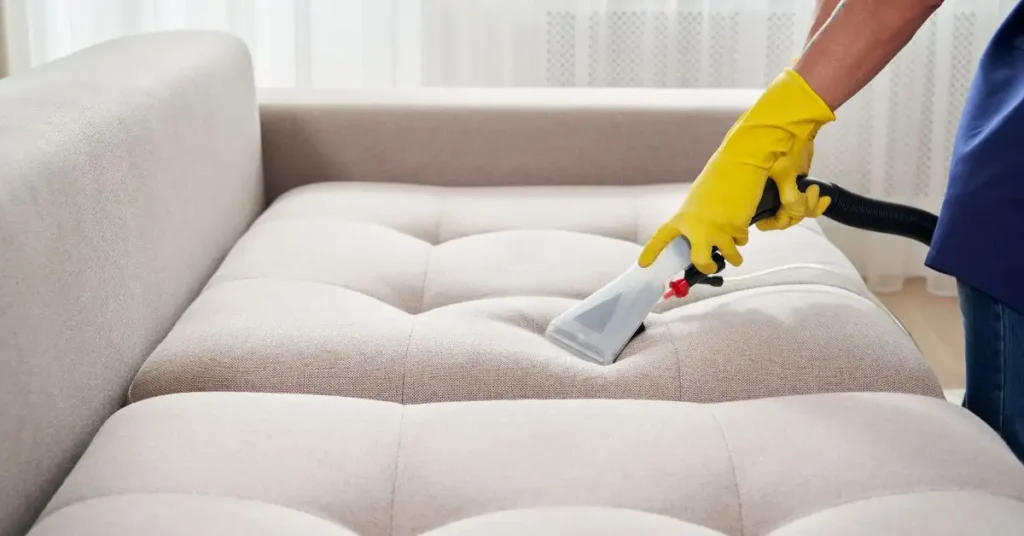
You can clean a sofa without a steam cleaner by vacuuming thoroughly, treating stains with a fabric-safe solution, wiping the upholstery carefully, and allowing it to dry completely before use. The right method depends on the sofa’s fabric type and care-tag code, so always check the manufacturer’s instructions before applying moisture or cleaning products.
For Toronto homes, condos, apartments, and rental properties, regular sofa care can help manage crumbs, pet hair, spills, surface dirt, and odours that build up with daily use.
TidyUp HandyCrew provides carpet and upholstery deep cleaning services in Toronto for furniture that needs more than routine DIY cleaning.
This guide explains how to clean a sofa without a steam cleaner, treat common stains safely, and decide when professional upholstery cleaning may be the better option.
Check Your Sofa’s Care Tag Before You Start
Skip this step and you risk ruining your sofa before you even begin cleaning it.
Every upholstered sofa has a care tag attached to the frame, usually tucked under the seat cushions or stapled to the underside. This small tag carries a letter code that tells you exactly which cleaning methods are safe for your specific fabric.
Here is what each code means:
- W means water-based cleaners are safe. Mild soap and water, vinegar solutions, and damp cloths all work without risk.
- S means solvent only. Water will leave watermarks, rings, or permanent damage. Use rubbing alcohol or dry-cleaning solvent applied with a white cloth.
- WS means both water-based and solvent-based cleaners are safe. This gives you the most flexibility.
- X means vacuum only. No liquids of any kind. Not water, not solvent, not even a damp cloth. Stick to baking soda and vacuuming.
Without a steam cleaner, the care tag matters even more. You are applying solutions by hand, which means less control over moisture levels. Using water on an S-tagged microfiber sofa leaves permanent rings. Using solvent on an X-tagged fabric can dissolve the finish.
If you cannot find the tag, check the manufacturer’s website using the sofa model number. And always test any cleaning product on a small hidden area first. The inside of a back cushion or the fabric under a seat works well. Wait ten minutes and check for discolouration before going further.
What You Need to Clean a Sofa Without a Steam Cleaner
The whole point of cleaning without a steam cleaner is that you do not need expensive equipment. Everything on this list costs under $20 total, and most of it is already in your kitchen.
- Vacuum with upholstery attachment for removing surface dust, crumbs, and pet hair. The crevice tool handles seams and tight corners.
- Baking soda for deodorising. The simplest, cheapest, and most effective fabric freshener available.
- White vinegar mixed 50/50 with water in a spray bottle for a natural all-purpose cleaning solution.
- Mild dish soap for spot-treating stains. A few drops in warm water handles most common marks.
- Spray bottle for applying solutions evenly without over-wetting the fabric.
- Clean white cloths or microfiber towels for blotting and wiping. White prevents dye transfer onto wet fabric.
- Soft-bristled brush for gently working cleaning solution into the fabric weave without damaging it.
- Rubbing alcohol for S-tagged sofas. Evaporates quickly and leaves no watermarks.
- Bucket for mixing solutions.
Choose non-toxic, eco-friendly products wherever possible. Chemical residue left in sofa fabric sits right where your skin, your children’s hands, and your pets’ faces make contact daily. Plant-based dish soap and plain white vinegar do the job without that concern.
How to Clean a Sofa Without a Steam Cleaner Step by Step
This process works for most fabric sofas. Match the cleaning solution to your care tag code. For S-tagged and X-tagged sofas, skip the wet steps and follow the dry methods noted in each section.
Step 1: Vacuum Every Surface Thoroughly
Pull off all removable cushions and throw pillows. Set them aside.
Vacuum the entire sofa frame using the upholstery attachment. Start with the seat platform where crumbs, coins, and pet hair collect for months. Use the crevice tool along every seam, fold, and tight corner. Switch to the armrests, backrest, and sides.
Flip the cushions and vacuum both sides. Do not skip the edges and zipper seams where dust compacts over time.
This single step removes most loose debris. Without it, you are just pushing dirt around during the cleaning phase.
Step 2: Deodorise with Baking Soda
Sprinkle baking soda generously over the entire sofa. Cushions, armrests, backrest, everything. Do not be light-handed. A thin dusting barely does anything. You want a visible layer.
Let it sit for 15 to 30 minutes. For strong odours from pets, cooking, or general staleness, leave it overnight. Baking soda absorbs trapped moisture and neutralises smells without any liquid or chemicals.
Vacuum it all off thoroughly the next morning or after the wait time. The sofa should smell noticeably fresher. Most people are surprised by how much difference this step makes with zero equipment.
Baking soda is safe for all care tag types including S and X, because it is applied dry and vacuumed off.
Step 3: Spot-Treat Stains Before Cleaning the Whole Sofa
Deal with visible stains individually before doing a full wipe-down.
For W and WS-tagged sofas: Mix a few drops of mild dish soap into a cup of warm water. Dip a clean white cloth, wring it out well, and blot the stain gently. Never rub. Work from the outside edge inward to prevent the stain from spreading.
For S-tagged sofas: Apply rubbing alcohol to a white cloth and dab the stain. The alcohol dissolves grime and evaporates quickly without leaving moisture behind. Rotate to a clean section of the cloth as the stain transfers.
For X-tagged sofas: Your only option is dry baking soda. Sprinkle directly on the stain, let it sit for 20 to 30 minutes, and vacuum off. If the stain remains, professional dry cleaning is the only safe next step.
Always test your cleaner on a hidden area first. The next section covers exact methods for each common stain type.
Step 4: Wipe Down the Entire Sofa by Hand
This step applies to W and WS-tagged sofas only. If your sofa is S or X-tagged, skip to drying.
Mix a few drops of mild dish soap into a bowl of warm water. Dip a microfiber cloth, wring until barely damp, and wipe the sofa surface section by section. Start at the top of the backrest and work down.
For a deeper clean, use a soft-bristled brush to gently work the soap solution into the fabric. This loosens embedded grime that a cloth alone misses. Work in one direction rather than scrubbing in circles to avoid matting the fibres.
Wipe again with a clean damp cloth (water only) to remove soap residue. This is important. Soap left in the fabric attracts dirt faster once the sofa dries, making it look dull again within weeks.
Step 5: Dry Completely Before Using
Pat the sofa down with clean dry towels to absorb excess moisture. Press firmly rather than wiping.
Open windows or point a fan directly at the sofa to speed up air circulation. Do not sit on it, cover it, or replace cushions until the fabric is fully dry. In Toronto’s summer humidity, this can take 3 to 4 hours. In winter with the heating on, it dries faster.
Damp fabric left in a closed room breeds mould and musty odours. Patience here prevents a bigger problem later.
How to Remove Common Stains Without a Steam Cleaner
No machine needed. Just the right product for the right stain.
Coffee and Tea Stains
Blot up as much liquid as possible immediately. Speed matters.
Apply cold water first. Not hot. Hot water sets tannin-based stains deeper into fabric. Blot with cold water and a clean white cloth until the stain lightens.
Mix one tablespoon dish soap, one tablespoon white vinegar, and two cups warm water. Apply to a cloth and blot gently. Repeat until the stain lifts. Rinse the area with a cold water cloth and blot dry.
Wine and Juice Stains
Blot immediately. Cover the wet stain with salt or baking soda to absorb the liquid. Let it sit for a few minutes, then vacuum or brush off.
Apply cold water and mild soap with a cloth. Blot gently. For stubborn red wine on lighter fabric, mix two parts water with one part hydrogen peroxide and apply sparingly. Test on a hidden area first. Never use hot water on wine stains.
Pet Stains and Odours
Blot excess moisture immediately. Apply an enzyme-based cleaner if you have one. Enzyme cleaners break down the proteins that cause lingering pet odour. Standard soap does not do this.
For a DIY alternative, use a 50/50 vinegar and water solution. Spray on, let sit for five minutes, blot dry. Follow with baking soda for any remaining smell.
If the odour keeps returning, the stain has soaked into the cushion foam. Surface treatments cannot reach that layer. Our guide on how to remove pet smell from house and furniture covers nine methods for handling deep pet odour.
Grease and Oil Stains
Do not apply water first. Grease and water do not mix.
Sprinkle baking soda or cornstarch directly on the spot. Let sit for 15 minutes to absorb the oil. Vacuum off. Then apply dish soap solution to a cloth and blot the remaining mark. Repeat if needed.
Ink Stains
Dab rubbing alcohol onto a white cloth and press gently against the stain. Do not pour alcohol directly onto the fabric. The ink should transfer onto the cloth. Rotate to a clean section and repeat.
Multiple light passes work better than one heavy application. Let the area dry between passes.
How to Deodorise a Smelly Sofa Without Steam
Sometimes a sofa does not look dirty. It just smells off. Cooking odours, pet scent, body odour, and general staleness build up in fabric over months. You do not need a steam cleaner to fix this.
Baking soda is your primary weapon. Sprinkle it generously over the entire sofa, including cushions and armrests. Leave it overnight for strongest results. Vacuum off thoroughly in the morning. One treatment handles most everyday odours.
For persistent smells that baking soda alone cannot fix, lightly mist the sofa with a 50/50 white vinegar and water solution. The vinegar smell disappears as it dries, taking the trapped odour with it. Do not soak the fabric. A light mist is enough.
If your cushion covers are removable, unzip them and sprinkle baking soda directly on the foam inside. Let it sit for several hours, then vacuum off before replacing the cover. This treats the source of the smell rather than just the surface.
One trick that works surprisingly well: on a dry, sunny day, take your cushions outside and set them in direct sunlight for a few hours. UV light kills bacteria and helps neutralise odours naturally. Toronto’s sunny summer days are perfect for this.
For deep odours that keep returning despite multiple treatments, the smell is embedded in the cushion foam beyond what any surface method can reach. At that point, professional cleaning is the only reliable solution.
Is Hand Cleaning as Effective as Steam Cleaning?
Honest answer: it depends on what you are trying to achieve.
For regular maintenance, hand cleaning works well. Surface dirt, fresh spills, light odours, and general freshening are all within reach of a cloth, baking soda, and a soap solution. If your sofa is in decent shape and you clean it regularly, hand methods keep it looking and smelling good between professional visits.
But hand cleaning has limits. A cloth and brush can only reach the top layer of the fabric. Dust mites, allergens, body oils, and bacteria that sit deep inside the cushion foam and fabric weave are beyond what any hand method can extract.
Steam cleaning uses high-pressure hot water injection and immediate extraction to reach those deeper layers. It pulls out embedded grime, kills dust mites and bacteria with heat, and removes far more moisture than hand drying. The result is a deeper, longer-lasting clean that hand methods simply cannot replicate.
Think of it this way. Hand cleaning is maintenance. Professional steam cleaning is the reset. Both serve a purpose. If you are doing hand cleaning every month or two and booking a professional deep clean every 6 to 12 months, your sofa stays in excellent shape year-round.
For a detailed breakdown of what each level of cleaning covers, our guide on deep cleaning vs regular cleaning explains when each one makes sense.
When to Hire a Professional Sofa Cleaning Service in Toronto
Hand cleaning handles most everyday situations. But some problems need equipment and expertise that a spray bottle and brush cannot provide.
- Stains that keep coming back after cleaning
- Pet odour that will not go away
- A sofa that has not been cleaned in years
- Allergy symptoms despite regular cleaning
- Delicate or expensive fabric
At TidyUp HandyCrew, our Carpet and Upholstery Deep Cleaning Services in Toronto handle exactly these situations. We send insured, background-checked professionals with eco-friendly products and commercial-grade equipment.
Your Sofa Does Not Need a Steam Cleaner to Stay Clean
A vacuum, baking soda, a cloth, and a simple soap or vinegar solution handle most of what a sofa throws at you. Check the care tag. Vacuum weekly. Deodorise monthly. Treat stains the moment they happen. And do a full hand clean every couple of months.
That routine keeps a sofa looking fresh, smelling clean, and lasting years longer than one that only gets attention when a guest is coming over.
The methods in this guide cost under $20 in total and use products most Toronto homes already have in the kitchen. No equipment rental. No expensive gadgets. Just the right technique for the right fabric.
But some situations go beyond what household products can fix. Stains that keep returning from the cushion foam. Pet odour that survives every round of baking soda. Allergens buried deep in the fabric weave that trigger symptoms despite regular cleaning. These are the jobs where professional equipment reaches what your hands cannot.
At TidyUp HandyCrew, we clean sofas across Toronto using eco-friendly products and commercial-grade hot water extraction. Our team is fully insured, WSIB-compliant, and background-checked. We assess your fabric type before we start, match the method to the material, and leave your sofa genuinely refreshed at a depth no hand method can match.
Need your sofa professionally cleaned? Call us at +1 (226) 201-3103 or book online through our Carpet and Upholstery Deep Cleaning Services in Toronto page.
Frequently Asked Questions
Question: What is the best homemade sofa cleaner without a steam cleaner?
Answer: Mix a few drops of mild dish soap, one tablespoon of white vinegar, and two cups of warm water. This works well on most W-tagged and WS-tagged fabric sofas for general cleaning and light stains. For odour removal, dry baking soda sprinkled and vacuumed off after 15 to 30 minutes is the simplest and most effective option. For S-tagged sofas, rubbing alcohol applied with a white cloth is the safest cleaning method.
Question: Can you clean a sofa with just baking soda?
Answer: For deodorising and light freshening, yes. Baking soda absorbs odours and surface moisture without any liquid or chemicals, making it safe for all care tag types including S and X-tagged fabrics. Sprinkle it generously, let it sit for 15 to 30 minutes, and vacuum off thoroughly. But baking soda alone does not remove stains or embedded grime.
Question: How do you clean a microfiber sofa without a steam cleaner?
Answer: Check the care tag first. Most microfiber sofas are S-tagged, which means water will leave permanent watermarks. Use rubbing alcohol sprayed lightly onto a white cloth and rub the surface in small sections. The alcohol cleans, sanitises, and evaporates within minutes without leaving any moisture behind. After the surface dries, brush the fabric with a soft dry brush to restore the texture and prevent matting. For the rare W-tagged microfiber, a mild soap and warm water solution applied with a damp cloth works fine. Either way, test on a hidden area first.
Question: How often should you clean your sofa without a machine?
Answer: Vacuum weekly using the upholstery attachment. Deodorise with baking soda once a month. Spot-treat stains immediately the moment they happen, because a fresh stain takes 30 seconds to blot out while a dried stain can become permanent. Do a full hand clean every 2 to 3 months using the step-by-step process in this guide. And book a professional deep clean every 6 to 12 months to remove what hand cleaning leaves behind.
Question: Is professional sofa cleaning worth it if I already clean by hand regularly?
Answer: Yes, for periodic deep cleaning. Hand methods handle surface dirt, fresh stains, and everyday odours effectively. That is genuine maintenance and it makes a real difference. But embedded allergens, dust mites living in cushion foam, and years of body oil buildup sit deeper than a cloth and brush can reach. Professional hot water extraction removes those layers and resets the sofa to a condition that hand cleaning alone cannot achieve.
