

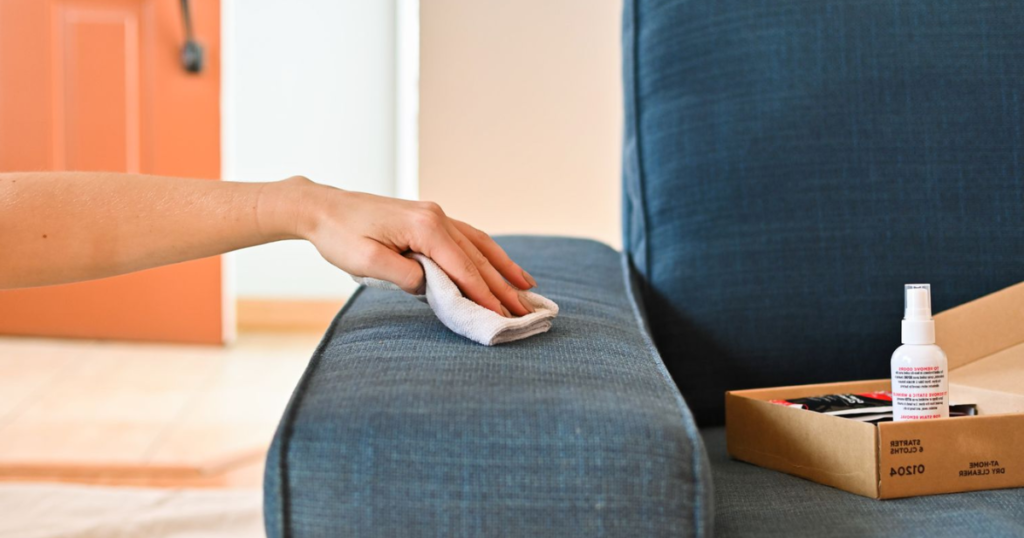
A fabric sofa collects more than you think. Body oils, dust mites, food crumbs, pet hair, and spilled drinks sink into the fibres week after week, even when the surface looks fine. So how do you clean a fabric sofa properly without damaging the material or pushing stains deeper?
Cleaning a fabric sofa means vacuuming all surfaces, deodorising with baking soda, spot-treating stains with the right cleaning solution for your fabric type, and drying everything fully before use. The method depends on your sofa’s care tag code, which tells you whether water-based cleaners, solvents, or vacuum-only cleaning is safe.
This matters more in Toronto than most cities. Our humid summers cause fabric to hold moisture and odours longer. A sofa that smells fine in January can turn musty by July if it has not been cleaned properly.
At TidyUp HandyCrew, we help Toronto homeowners restore their upholstered furniture with our professional Carpet and Upholstery Deep Cleaning Services in Toronto. Our insured team uses eco-friendly, fabric-safe products and commercial-grade equipment to remove what surface cleaning leaves behind.
In this blog, we’ll walk you through how to clean a fabric sofa at home step by step, tackle specific stains, and know when professional cleaning is the smarter choice.
Why Your Fabric Sofa Needs More Than a Quick Wipe
That throw blanket tossed over the armrest is hiding more than you realise. A fabric sofa sits in the centre of daily life. People eat on it, sleep on it, spill on it, and pets claim it as their own. Over months, the fabric absorbs everything.
Dust mites are the biggest invisible problem. They feed on dead skin cells and thrive in soft, warm fabric. A single sofa cushion can hold thousands of them. For anyone with allergies or asthma, this is a direct trigger sitting right in the living room.
Then there are the oils. Every time someone sits down, body oils transfer onto the fabric. These oils attract dirt and dust, creating that gradual darkening you see on armrests and headrests over time. A quick wipe with a damp cloth does not reach this layer. It sits in the fibres, building up month after month.
Toronto’s climate makes this worse. Our summers are humid. That moisture in the air gets absorbed by fabric upholstery, creating the perfect environment for mould spores and musty odours to develop. A sofa that seemed fine in the winter can start smelling stale once the humidity rises in June and July.
Regular vacuuming helps with surface debris. But it does not remove trapped odours, embedded oils, or allergens sitting deep inside the cushion foam. A proper cleaning routine does.
Check the Care Tag Before You Clean Anything
This is the step most people skip. And it is the one that causes the most damage.
Every fabric sofa has a care tag attached somewhere on the frame, usually tucked under the seat cushions or stapled to the underside of the sofa. This small tag carries a single letter code that tells you exactly what cleaning method is safe for your fabric.
Here is what each code means:
- W means water-based cleaners are safe. You can use mild soap and water, water-based upholstery cleaners, and damp cloths without risk.
- S means solvent only. Water will leave watermarks, rings, or damage the fabric permanently. Use dry-cleaning solvents or rubbing alcohol applied with a white cloth.
- WS means both water-based and solvent-based cleaners are safe. This gives you the most flexibility when choosing a cleaning method.
- X means vacuum only. No liquids of any kind. Not water, not solvent, not even a damp cloth. Stick to dry baking soda and vacuuming.
Ignoring this tag is how people ruin sofas. A water-based cleaner on an S-tagged microfiber sofa leaves permanent rings that no amount of rubbing fixes. We have seen it happen to nearly-new furniture.
If you cannot find the tag, check the manufacturer’s website using the sofa model number. And if you are still unsure, test any cleaner on a small hidden area first. The back lower corner or the underside of a cushion flap works well. Apply the product, wait ten minutes, and check for discolouration or texture change before going further.
What You Need to Clean a Fabric Sofa at Home
Gather everything before you start. Stopping mid-clean to search for supplies means your sofa sits half-wet while you dig through the cupboard. That leads to uneven drying and potential watermarks.
Here is what to have ready:
- Vacuum with upholstery attachment for removing surface dust, crumbs, and pet hair. The crevice tool handles seams and tight corners.
- Microfiber cloths for wiping and blotting. They absorb well and will not scratch or pill the fabric.
- Baking soda for deodorising. The most effective, cheapest odour remover you already have at home.
- Mild dish soap mixed with warm water for W-tagged sofas. A few drops in a bowl is enough.
- White vinegar for a natural all-purpose cleaner. Mix 50/50 with water in a spray bottle.
- Fabric-safe stain remover for tougher spots. Check that it matches your fabric’s care tag code.
- Rubbing alcohol for S-tagged sofas, especially microfiber. Evaporates fast and leaves no watermarks.
- Clean dry towels for blotting excess moisture after cleaning.
- Soft-bristled brush for gently working cleaning solution into fabric without damaging the weave.
- Spray bottle for applying vinegar solution or diluted soap evenly.
One thing worth noting. Choose non-toxic, eco-friendly products when you can. Chemical-heavy cleaners leave residue in the fabric that your skin contacts every time you sit down. If you have young children or pets who spend time on the sofa, this residue matters. Plant-based cleaners do the job without that concern.
How to Clean a Fabric Sofa Step by Step
This is the process that works for most W-tagged and WS-tagged fabric sofas. If your sofa has an S or X tag, skip ahead to the section on cleaning without water.
Step 1: Remove Cushions and Vacuum Everything
Pull off all removable cushions, throw pillows, and blankets. Set them aside.
Now vacuum the entire sofa frame. Start with the seat platform, the flat surface under the cushions where crumbs, coins, and pet hair collect for months. Use the crevice tool along every seam and fold. Switch to the upholstery attachment for the armrests, backrest, and sides.
Flip the cushions and vacuum both sides. Do not forget the edges and the zipper seams where dust compacts over time.
This single step removes most of the loose debris and makes every step that follows more effective. Skipping it means you are just pushing dirt around during the cleaning phase.
Step 2: Deodorise with Baking Soda
Sprinkle baking soda generously over the entire sofa, including the frame, cushions (both sides), and armrests. Do not be shy with the amount. A light dusting does very little.
Let it sit for 15 to 30 minutes. If the sofa has strong odours from pets, cooking, or general staleness, leave it for a full hour. The baking soda absorbs trapped moisture and neutralises smells without any liquid or chemicals.
Vacuum all of it off thoroughly. Use the upholstery brush and work in overlapping strokes to pick up every grain. Start with a clean vacuum bag or empty canister so baking soda does not clog the filter.
The sofa should already smell noticeably fresher after this step alone.
Step 3: Spot-Treat Stains the Right Way
Before you clean the whole sofa, deal with visible stains individually. Each stain responds better to targeted treatment than a general wipe-down.
The golden rule: blot, never rub. Rubbing pushes the stain deeper into the fibres and spreads it outward. Blotting lifts it up and out.
Use a clean white cloth for blotting. Coloured cloths or towels can transfer dye onto wet fabric, creating a new stain while you are trying to remove the old one.
Work from the outside edge of the stain inward. This prevents the stain from expanding into clean fabric.
For specific stain types, the next section covers each one with the exact method that works.
Step 4: Wipe Down and Let It Dry Completely
For W-tagged sofas, mix a few drops of mild dish soap into a bowl of warm water. Dip a microfiber cloth in, wring it out until it is barely damp, and wipe down the entire sofa surface. Work in sections. Rinse the cloth frequently so you are not spreading dirty water around.
For a deeper clean, use a soft-bristled brush to gently work the soap solution into the fabric. This loosens embedded grime that a cloth alone misses.
Wipe again with a clean damp cloth (water only) to remove any soap residue. Soap left in the fabric attracts dirt faster once the sofa dries, making it look dull again within weeks.
Now dry the sofa. Pat down with clean dry towels to absorb excess moisture. Then open windows or position a fan to circulate air across the surface.
Do not sit on it, cover it, or place cushions back until the fabric is fully dry. In Toronto’s summer humidity, this can take 3 to 4 hours. In winter with the heating on, it dries faster. Patience here prevents mould and musty odours from developing inside the cushions.
How to Remove Common Stains from a Fabric Sofa
Not all stains respond to the same treatment. Using the wrong method can set a stain permanently or damage the fabric. Here is what actually works for the most common fabric sofa stains.
Food and Grease Stains
Scrape off any solid residue gently with a butter knife or spoon. Do not press down.
For grease, sprinkle baking soda or cornstarch directly on the spot and let it sit for 15 minutes. The powder absorbs the oil before you even touch it with liquid. Vacuum it off.
Then mix a few drops of dish soap with warm water, dip a clean cloth in, and blot the area. Dish soap cuts through grease better than general fabric cleaners. Blot with a dry towel to absorb moisture and repeat if needed.
Coffee and Tea Stains
Act fast. Blot up as much liquid as possible immediately with a dry cloth.
Apply cold water first, not hot. Hot water sets tannin-based stains like coffee and tea deeper into fabric fibres. Blot with cold water and a clean cloth until the stain lightens.
Follow up with a mild soap and water solution for any remaining discolouration. For stubborn marks that will not lift, a 50/50 vinegar and water mix applied lightly and blotted can break down the residue. Let the area dry fully between attempts.
Pet Stains and Odours
Pet accidents need two things: stain removal and odour neutralisation. Surface cleaning alone leaves the smell behind, and your pet will return to the same spot.
Blot excess moisture immediately. Then apply an enzyme-based cleaner directly to the area. Enzyme cleaners break down the proteins in urine and vomit that cause lingering odour. Standard soap does not do this.
If you do not have an enzyme cleaner, a 50/50 white vinegar and water solution is a decent alternative. Spray it on, let it sit for five minutes, and blot dry.
For odour that keeps coming back despite cleaning, the problem is likely deep inside the cushion foam. Surface treatments will not reach it. Our detailed guide on how to remove pet smell from house and furniture covers nine methods for handling exactly this situation.
Ink Stains
Ink is one of the trickier stains because it spreads easily if you use the wrong approach.
Dab rubbing alcohol onto a white cloth and press it gently against the stain. Do not pour alcohol directly onto the fabric. The ink should begin transferring onto the cloth. Rotate to a clean section of the cloth and repeat.
This takes patience. Multiple light passes work better than one heavy application. Let the area dry between passes.
Wine and Juice Stains
Blot immediately. Every second counts with red wine on light fabric.
Cover the wet stain with salt or baking soda to absorb the liquid before it sets. Let it sit for a few minutes, then brush off the powder.
Apply cold water and mild soap with a cloth. Blot gently. For red wine on lighter fabric, you may need several rounds of this. Avoid hot water entirely. Heat bonds the pigment to the fibres permanently.
Can You Steam Clean a Fabric Sofa?
Yes. But not every fabric sofa can handle it.
Steam cleaning uses hot water vapour to penetrate deep into fabric fibres. It kills dust mites, bacteria, and mould spores that surface cleaning leaves behind. For sofas in homes with allergy sufferers, this is a significant advantage over wiping and vacuuming alone.
Before you steam clean, check the care tag. W-tagged and WS-tagged fabrics can generally handle steam. S-tagged and X-tagged fabrics cannot. Heat and moisture will damage them.
Consumer handheld steamers work for light surface refreshing. But they lack the pressure and extraction power to pull dirt and moisture back out of the fabric. You are essentially pushing hot water in without fully removing it. That trapped moisture becomes a mould risk, especially in a humid Toronto home during summer.
Professional steam cleaning equipment is different. It injects hot water and cleaning solution under pressure, then immediately extracts the dirty water back out with powerful suction. The result is a much deeper clean with significantly less moisture left behind. Most professional upholstery cleaning services in Toronto use this hot water extraction method because it is the approach recommended by the majority of furniture manufacturers.
Drying time after professional steam cleaning is typically 2 to 4 hours. After a consumer steamer, it can take longer because more moisture stays trapped in the fabric.
If you are considering steam cleaning your sofa yourself, test a small hidden area first. Check for shrinkage, colour bleeding, or texture change before doing the entire piece.
How to Clean a Fabric Sofa Without Water
Some sofas cannot touch water. Period.
If your care tag says S or X, water-based cleaners are off limits. Even a damp cloth can leave watermarks, shrink the fabric, or create permanent discolouration. But that does not mean you cannot clean it.
For S-tagged sofas:
Use a dry-cleaning solvent applied to a clean white cloth. Gently blot stained or dirty areas. The solvent dissolves oils and grime without introducing moisture. Work in a well-ventilated room because solvent fumes are strong.
For microfiber S-tagged sofas, rubbing alcohol is highly effective. Spray it lightly onto a white cloth and rub the surface in small circular motions. The alcohol cleans, sanitises, and evaporates within minutes, leaving no moisture behind. Brush the fabric with a soft dry brush afterward to restore the texture.
For X-tagged sofas:
Your only options are vacuuming and dry baking soda. Vacuum regularly with the upholstery attachment. Sprinkle baking soda for odour control, let it sit, and vacuum it off. That is it.
X-tagged sofas are the most restrictive. If they develop stains or deep odours that baking soda cannot handle, professional dry cleaning is really the only safe option. Attempting any liquid cleaner, even a “gentle” one, risks permanent damage.
The honest truth about X-tagged and S-tagged fabrics is that they need professional attention more often than W-tagged sofas. DIY options are limited, and the risk of making things worse is higher when you experiment with products that are not designed for solvent-only fabrics.
How Often Should You Clean a Fabric Sofa
Most people wait until a stain forces them to clean. By then, months of embedded dirt and oils have already dulled the fabric and shortened its lifespan.
Here is a realistic cleaning schedule that keeps a fabric sofa in good shape without turning it into a weekly project:
Weekly: Vacuum all surfaces with the upholstery attachment. Remove cushions and vacuum underneath. This alone prevents most buildup from becoming a problem.
Monthly: Deodorise with baking soda. Sprinkle, wait 20 to 30 minutes, vacuum off. Takes ten minutes and keeps the sofa smelling fresh between deeper cleans.
Immediately as needed: Spot-treat any spills or stains the moment they happen. The faster you blot and treat, the easier the stain comes out. A coffee stain blotted in the first 30 seconds is a non-issue. That same stain left overnight becomes a permanent mark.
Every 3 to 6 months: Do a full clean using the step-by-step process in this guide. Vacuum, baking soda, spot-treat, wipe down, dry. This is your reset.
Every 6 to 12 months: Book a professional deep clean. This is especially important for households with pets, children, or anyone with allergies. Professional equipment removes allergens and buildup that home cleaning cannot reach.
If you are unsure whether your sofa needs a deep clean or just regular maintenance, our guide on deep cleaning vs regular cleaning breaks down exactly what each level covers and when each one makes sense.
When to Hire a Professional Fabric Sofa Cleaning Service in Toronto
DIY cleaning handles most everyday dirt and minor stains. But there are situations where no amount of baking soda and blotting will get the job done.
Stains that keep coming back
You clean a spot, it disappears, and a week later it is back. This happens when the stain has soaked through the fabric into the cushion foam underneath. Surface cleaning removes the visible mark, but moisture wicks the stain back up from below. Professional extraction equipment reaches that deeper layer.
Pet odour you cannot eliminate
If a cat or dog has been sleeping on the same sofa for a year or more, the scent is not just on the surface. It is deep inside the foam padding. Baking soda and vinegar treat the top layer. Professional enzyme treatments and hot water extraction treat the source.
Allergies are getting worse despite regular cleaning
Dust mites, mould spores, and dander trapped deep in upholstery fabric are common allergy triggers. If symptoms persist even after vacuuming and cleaning, the allergens are beyond what home tools can extract.
Delicate or expensive fabric
Silk, velvet, antique upholstery, and certain high-end linens require specific handling. One wrong product or too much moisture can cause irreversible damage. Professional cleaners assess the fabric type first and adjust their method accordingly.
A sofa that has not been deep cleaned in years
If you cannot remember the last time the sofa had a proper clean, the buildup is beyond what a single DIY session can reverse. Years of oils, dust, and allergens compressed into the fabric need commercial-grade equipment to fully remove.
At TidyUp HandyCrew, our Carpet and Upholstery Deep Cleaning Services in Toronto handle exactly these situations. We send insured, background-checked professionals equipped with eco-friendly products and commercial extraction tools. We assess your fabric type, match the cleaning method to the material, and leave the sofa fresh, sanitised, and fully protected.
For anyone weighing the cost of professional cleaning against doing it themselves, our breakdown of steam vs deep clean carpet cleaning cost in Toronto gives you real pricing context for 2026. And if you are also looking to refresh your carpets alongside the sofa, our guide on how to deep clean carpets at home covers the full DIY process.
Frequently Asked Questions
Question: What is the best homemade cleaner for a fabric sofa?
Answer: Mix a few drops of mild dish soap into a cup of warm water. This works well on most W-tagged fabric sofas for general cleaning and light stains. For odour removal, sprinkling baking soda dry and leaving it for 20 to 30 minutes before vacuuming is the simplest and most effective option. A 50/50 mix of white vinegar and water in a spray bottle handles light surface stains and freshens the fabric. Always test any homemade solution on a hidden area of the sofa first and wait ten minutes before applying it to visible surfaces.
Question: Can you use baking soda on any fabric sofa?
Answer: In most cases, yes. Baking soda is applied dry and vacuumed off, so it does not involve moisture. This makes it safe for W, S, WS, and even X-tagged fabrics. The only situation where you should be cautious is on very dark fabrics. White baking soda residue can settle into a tight weave and become difficult to vacuum out completely, leaving a faint dusty appearance. For dark sofas, use a smaller amount and vacuum thoroughly with a clean upholstery brush attachment.
Question: How long does it take for a fabric sofa to dry after cleaning?
Answer: After a surface wipe with a damp cloth and mild soap, most fabric sofas dry within 2 to 4 hours with decent air circulation. Open a window or point a fan at the sofa to speed things up. After professional steam cleaning, drying typically takes 3 to 6 hours depending on the fabric type, cushion thickness, and room humidity. Toronto summers are humid, so expect the longer end of that range between June and September. Never cover the sofa, replace cushions, or sit on it until the fabric is fully dry. Trapped moisture leads to mould and musty smells that are harder to remove than the original stain.
Question: How do you get a bad smell out of a fabric sofa?
Answer: Baking soda is your first move. Sprinkle it generously over the entire sofa surface and let it sit for at least 30 minutes. For strong odours, leave it for a full hour. Vacuum it off completely. This handles most everyday staleness from cooking, body odour, and general use. For pet odour that keeps returning after baking soda treatment, the smell is likely trapped in the cushion foam beneath the fabric. An enzyme-based cleaner applied directly to the affected area breaks down the odour-causing proteins that baking soda cannot reach. If the smell persists after multiple attempts, professional upholstery cleaning with hot water extraction is the most reliable solution.
Question: Is professional sofa cleaning worth the cost in Toronto?
Answer: For sofas with surface-level dirt and minor stains, DIY cleaning works fine. But for deep-set stains, embedded pet odour, allergen buildup, or fabric that has not been properly cleaned in over a year, professional cleaning delivers results that home methods cannot match. Upholstery cleaning in Toronto typically costs between $35 and $60 per hour per cleaner. Most fabric sofa jobs take 1 to 2 hours depending on size and condition. Compare that to the cost of replacing a sofa, which runs anywhere from $800 to $3,000 or more in Toronto. Professional cleaning every 6 to 12 months extends the life of your furniture by years and keeps your home healthier.
Keep Your Fabric Sofa Clean, Fresh, and Lasting Longer
A clean fabric sofa starts with checking the care tag. That single letter tells you everything about what your fabric can handle. From there, the routine is simple. Vacuum weekly. Deodorise monthly with baking soda. Treat stains immediately using the right method for the stain type. And do a full clean every few months to reset the fabric.
Most everyday cleaning takes less time than people expect. Fifteen minutes of vacuuming and baking soda once a month keeps a sofa looking and smelling fresh for years. The stains that seem permanent often come out with the right approach and a bit of patience.
But some situations need more than a spray bottle and a cloth. Deep-set stains, persistent pet odour, allergy triggers buried in the cushion foam, and delicate fabrics that you cannot risk damaging. These are the jobs where professional equipment and expertise make the difference.
At TidyUp HandyCrew, we clean fabric sofas across Toronto using eco-friendly, fabric-safe products and commercial-grade extraction equipment. Our team is fully insured, WSIB-compliant, and background-checked. We assess your fabric type before we start, match the method to the material, and leave your sofa genuinely refreshed.
Book your fabric sofa cleaning with TidyUp HandyCrew today. Call us at +1 (226) 201-3103 or schedule online through our Carpet and Upholstery Deep Cleaning Services in Toronto page.
