

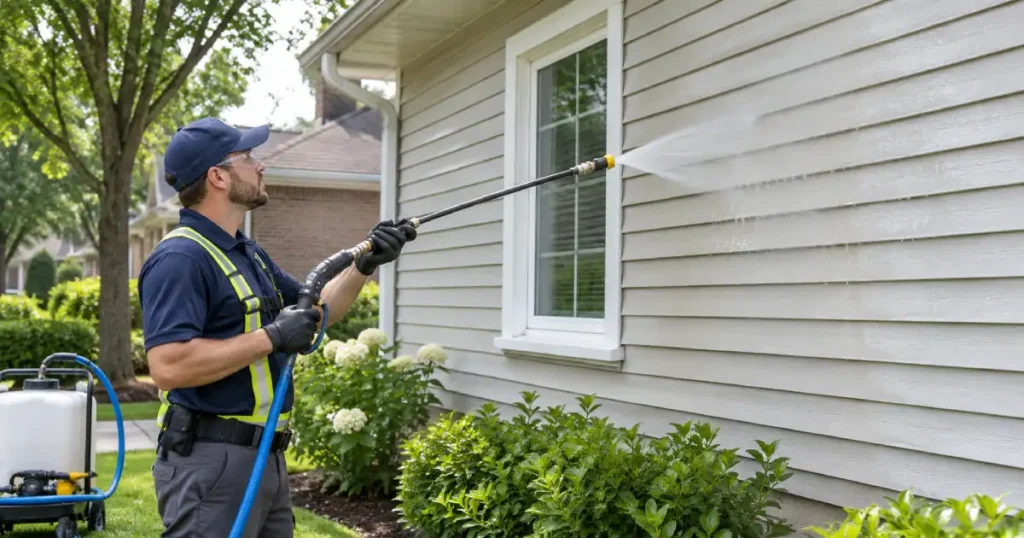
Soft washing in Toronto uses lower water pressure with a surface-compatible cleaning solution when appropriate to remove dirt, staining, and organic buildup from exterior surfaces that may not tolerate aggressive pressure washing. It can make sense for suitable siding, painted finishes, stucco, fences, and other delicate materials where excessive pressure could damage the surface or force water into joints.
For Toronto homeowners, the right method depends on the material, existing finish, surface condition, type of buildup, and surrounding drainage. Runoff also needs careful planning because the City of Toronto states that outdoor washing wastewater must not enter storm-sewer catch basins, even when water alone is used.
TidyUp HandyCrew provides soft pressure wash cleaning services in Toronto. This guide explains suitable surfaces, warning signs, runoff considerations, timing, cleaning methods, and what to ask before requesting a quote.
What Is Soft Washing?
Soft washing is an exterior cleaning method that combines low-pressure application or rinsing with a cleaning product chosen for the surface and buildup. The product helps loosen grime or organic material, while gentle rinsing limits mechanical force. Method suitability depends on coatings, manufacturer instructions, drainage, and the condition of the building.
It is not a guarantee against damage or future staining. For an existing overview of cleaning methods, read soft washing versus pressure washing.
Where Does Soft Washing Make Sense?
Low-pressure cleaning is worth considering when the exterior needs washing but high pressure could compromise its finish or joints. Inspect the actual material before choosing a technique.
Vinyl and Aluminum Siding
Suitable siding may benefit from gentle washing. Check loose panels and seals, follow manufacturer instructions, and avoid driving water beneath laps.
Stucco and Painted Exterior Walls
Textured surfaces and sound paint may suit low force. Assess peeling, cracks, and water penetration first; washing cannot restore failed coatings.
Fences, Deck Details and Trim
Painted fences and trim may need gentle washing. Assess splintered wood and quote repairs or refinishing separately.
Other Exterior Areas
Soffits and fascia need access checks. Roofs, fragile masonry, and elevated work require specialist assessment.
When Is Soft Washing the Wrong Choice?
Soft washing cannot fix loose cladding, rotten wood, leaks, damaged stucco, or indoor mould. Investigate problems before washing.
Rust, efflorescence, oxidation, and deep stains may require other treatments. Follow restrictions on specialty finishes.
Never promise complete stain removal.
Soft Washing vs Pressure Washing
The difference is how much the process relies on water force. Neither method is universally better.
| Surface or situation | Method to assess | Main limitation |
| Sound vinyl siding | Soft washing | Protect joints and openings |
| Painted wood fence | Gentle wash or brushing | Loose coating may detach |
| Sound stucco | Low-pressure, compatible care | Cracks need attention first |
| Durable concrete driveway | Controlled pressure washing | Etching remains possible |
| Loose mortar or rotten wood | Repair assessment | Washing cannot restore material |
| Specialty roof surface | Qualified specialist | Access, coating and runoff risks |
For durable concrete and hardscapes, consult TidyUp’s pressure washing services guide rather than using a siding-cleaning method everywhere.
What Happens During a Soft Wash?
A properly scoped service follows the condition of the property, not a universal chemical recipe.
- Inspect: Identify surface materials, coating failures, windows, vents, electrical fixtures, and stain types.
- Plan access: Check ladders or elevated work, water availability, parking, and neighbouring spaces.
- Protect: Address plants, furniture, pets, outlets, and sensitive finishes before products are applied.
- Control runoff: Determine how washing wastewater will be contained or lawfully handled.
- Test: Check a small, inconspicuous area using a compatible approach.
- Clean and rinse: Follow product labels, appropriate contact times, and gentle rinsing requirements.
- Inspect: Review remaining marks, vulnerable joints, and agreed cleanup before completion.
Follow instructions and qualified access requirements.
Toronto Runoff and Noise Rules
Toronto’s outdoor surface-washing guidance says wastewater from washing must not enter catch basins. Soap-free spray can still collect contaminants. Ask the contractor about containment, lawful disposal, and neighbouring property drainage before booking.
The City’s power-device noise rules include pressure washers. As described in current municipal guidance, prohibited hours generally run from 7 p.m. to 8 a.m. on weekdays and 7 p.m. to 9 a.m. on weekends and statutory holidays, subject to exceptions. Check current rules and any additional condo or property restrictions.
The CDC’s 2026 pressure-washer guidance warns of serious spray injuries and electrical hazards. Narrow side passages also affect access.
Are Cleaning Products Safe Around Plants?
No cleaner is automatically harmless because its label says biodegradable. Concentration, application, contact time, and runoff all matter. Ask what protection is planned for gardens, pets, outdoor furniture, painted fixtures, and neighbouring yards.
Health Canada advises following chemical labels and never mixing household cleaning products. Some combinations release toxic gases. Avoid improvised recipes, unsupported sanitization claims, or applying products where their labels prohibit use.
Also ask when people and pets may safely return to treated areas.
Does Soft Washing Prepare Walls for Paint?
Cleaning can be one preparation stage, but it does not replace scraping loose coatings, repairs, sanding where appropriate, priming, or checking dryness. Follow coating manufacturer requirements before repainting.
See power washing before painting for broader preparation and the washing-to-painting drying guide for timing considerations.
What Affects Soft Washing Cost?
Soft washing prices depend on surface area, material, staining, height, access, cleaning products, protection, and wastewater arrangements. A simple ground-level wall differs from intricate trim or a difficult side yard.
Use this original quote comparison worksheet:
| Quote detail | What to confirm |
| Surfaces | Siding, trim, fence or other agreed areas |
| Condition | Cracks, loose paint, staining and photos |
| Access | Height, gates, parking and water supply |
| Products | Material compatibility and protection |
| Wastewater | Containment and disposal responsibility |
| Inclusions | Rinsing, cleanup, extras and taxes |
How Should Homeowners Prepare?
- Photograph stained or damaged sections before the appointment.
- Identify loose panels, leaks, damaged coatings, and electrical fixtures.
- Move planters, furniture, toys, and fragile outdoor items.
- Explain access restrictions, locked gates, and parking requirements.
- Show where runoff could reach a sidewalk, neighbour, or catch basin.
- Confirm included surfaces, exclusions, water source, and cleanup.
- Keep children and pets away until the contractor confirms safe re-entry.
Soft Washing Toronto FAQs
Q1: Is Soft Washing Safe for Vinyl Siding?
It can be suitable for sound vinyl siding when the cleaning product and method follow manufacturer instructions. Inspect panels, seams, vents, and surrounding fixtures first. Low pressure reduces force but does not eliminate water-entry risks. A test area and careful rinsing help evaluate compatibility.
Q2: Is Soft Washing Better Than Pressure Washing?
It depends on the surface. Soft washing generally makes more sense for suitable delicate siding and painted finishes where forceful spray is risky. Controlled pressure washing may suit sound concrete or other durable hardscapes. Surface condition, coatings, stains, and drainage should determine the method.
Q3: Can Soft Washing Remove Algae and Mildew?
Appropriate cleaning may reduce visible organic buildup, depending on the material and product. Results vary with staining, access, moisture, and underlying conditions. Some discoloration can remain or return. Soft washing is not a mould-remediation service for indoor contamination or water-damaged building materials.
Q4: How Often Does a Toronto Home Need Soft Washing?
There is no universal interval. Monitor shaded siding, damp areas, tree exposure, and seasonal grime. Book when buildup warrants cleaning and the exterior is sound enough for treatment. Address persistent leaks or trapped moisture instead of relying on repeated washing to solve them.
Q5: Is Soft Washing Safe for Plants and Pets?
Safety depends on the product, application, protective measures, and rinsing. Ask how plants, gardens, and pet areas will be protected and when re-entry is appropriate. Follow product instructions. Never assume a cleaner is harmless just because it is marketed as biodegradable or gentle.
Book Soft Washing in Toronto
Soft washing in Toronto can be a practical choice for suitable siding, painted surfaces, stucco, fences, and other exterior materials that may not respond well to aggressive pressure washing. The right approach depends on the surface condition, existing finish, type of buildup, access, drainage, and the cleaning product being used.
Before booking, check for loose coatings, damaged siding, cracks, leaks, or other defects that cleaning cannot repair. Homeowners should also plan for plant protection, safe product use, wastewater control, and Toronto runoff requirements.
TidyUp HandyCrew provides soft pressure wash cleaning services in Toronto for suitable exterior surfaces. For a more accurate assessment, share photos of the area, approximate dimensions, access details, and visible problem spots before requesting a quote.
Need help choosing between soft washing and pressure washing? Contact TidyUp HandyCrew to discuss the surface and cleaning scope for your Toronto property.
