

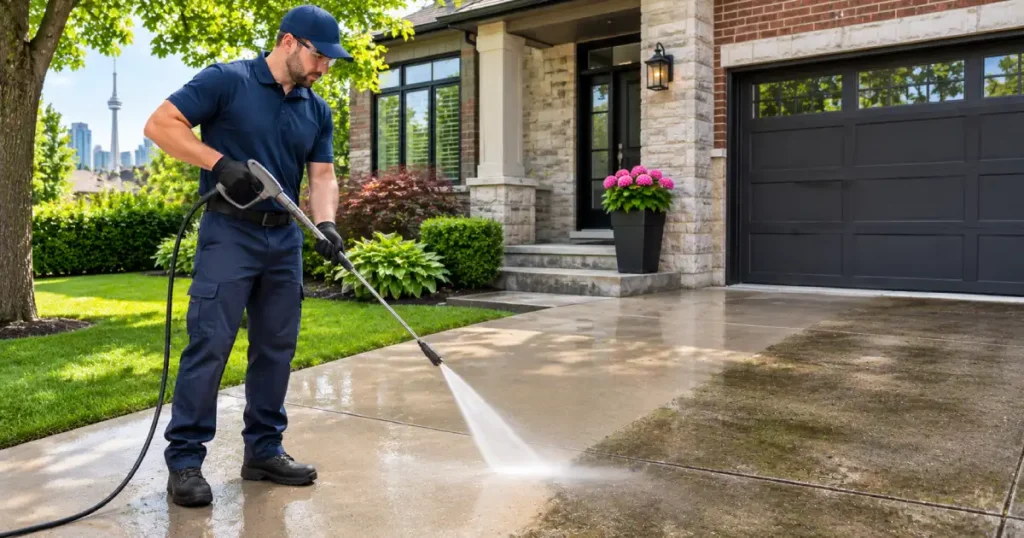
Driveway pressure washing in Toronto can help remove surface dirt, tire marks, road-salt residue, mud, and weather-related buildup from sound concrete. It is most useful after winter, before exterior maintenance, or when visible grime begins to affect the appearance of the driveway. However, cracked, flaking, coated, or badly deteriorated concrete should be assessed before higher-pressure cleaning.
For Toronto homeowners, surface condition matters as much as pressure. Drainage and runoff also need planning because the City of Toronto states that outdoor wash water, including power-washing wastewater, must not enter storm-sewer catch basins.
TidyUp HandyCrew provides soft pressure washing services in Toronto for suitable exterior surfaces. This guide explains when driveway washing makes sense, when a gentler method may be better, how to prepare concrete, what affects pricing, and what to check before booking.
What Is Driveway Pressure Washing?
Driveway pressure washing uses controlled water pressure to loosen grime from sound concrete. Scope may include sweeping, pretreatment, rinsing, and runoff management. Repairs, sealing, special stain removal, and walkway cleaning are not automatically included.
For other outdoor areas, read TidyUp’s pressure washing services Toronto guide.
When Should You Pressure Wash a Driveway?
Clean when residue or vehicle marks warrant it and concrete can tolerate washing. Spring is a useful inspection point; pre-sale preparation or sealing may justify another visit. Avoid freezing conditions.
After Winter Road Salt
Sweep grit first. Assess remaining residue. Toronto’s road-salt reduction guidance recommends using less salt; cleaning cannot reverse damage.
Before Selling or Hosting
Cleaning helps presentation but cannot restore cracked concrete.
After Oil or Organic Stains
Contain fresh vehicle drips; shaded areas may develop organic buildup. Neither guarantees full removal.
Is Pressure Washing Safe for Concrete?
Sound, cured concrete may tolerate controlled washing. Damaged, decorative, or coated surfaces need assessment. Concentrated spray can etch finishes or loosen weak material.
Check flaking, exposed aggregate, failing sealer, and loose patches. Assess unstable slabs first; nearby wood or siding needs different treatment.
How Does Driveway Material Affect Washing?
Poured concrete may suit controlled cleaning when sound and fully cured. Stamped or sealed concrete needs a coating check because concentrated spray can change its appearance. Exposed aggregate deserves care around loose stones and worn binder. Interlocking pavers are different again: high pressure can disturb joint sand and weak edges.
For older slabs, inspect scaling and previous patches before washing. The Concrete Network’s maintenance guidance recommends periodic cleaning and sealer maintenance based on exposure and traffic. Do not choose a machine setting from appearance alone; ask what method matches the actual material and finish.
Which Driveway Cleaning Method Works?
Use this original decision table to separate cleaning from repair.
| Driveway condition | Practical next step | Important limit |
| Sound concrete with ordinary grime | Assess controlled-pressure washing | Protect finish and drains |
| Winter grit and loose leaves | Sweep and collect debris first | Water may be unnecessary |
| Oil or rust staining | Assess targeted compatible treatment | Marks may remain |
| Moss-like buildup in shade | Assess surface and suitable cleaning | Avoid damaging weakened areas |
| Flaking, deep cracks, loose coating | Request repair or coating assessment | Washing cannot fix deterioration |
| Interlocking pavers | Review joints and sand condition | High pressure can disturb joint material |
For material differences, see TidyUp’s soft versus pressure washing comparison.
What About Moss, Oil and Tire Marks?
Tire marks, leaf stains, oil spots, and mineral deposits require different treatments. Some penetrate concrete.
For shaded concrete, review the existing guide to moss on concrete in Scarborough. Moss treatment deserves separate assessment.
Report oil leaks and share photographs. Keep residue away from drains. White mineral marks may return.
Driveway Washing Preparation Checklist
Prepare the area before booking.
- Identify material: Concrete, exposed aggregate, coating, or interlock.
- Inspect: Photograph cracks, flaking, and coatings.
- Clear: Move vehicles, bins, and loose items.
- Sweep: Collect grit and leaves.
- Protect: Identify outlets, seals, plants, and neighbours.
- Manage runoff: Confirm containment and disposal.
- Mark stains: Oil, rust, tires, and salt.
- Confirm access: Measurements, water, and parking.
- Discuss aftercare: Drying, sealing, and repairs.
- Request scope: Treatments, protection, and inspection.
Toronto Runoff Rules and Washer Safety
The City of Toronto’s outdoor-washing guidance says wash wastewater must not reach catch basins. Even clean-water pressure washing can dislodge contaminants. Arrange containment or lawful disposal; never route wastewater into streets.
Pressure-washer jets can also cause serious injuries. The US Centers for Disease Control and Prevention’s 2024 safety guidance warns about injection wounds, flying debris, and electrical hazards. Follow equipment instructions and keep people clear.
How Often Should Concrete Driveways Be Cleaned?
There is no fixed Toronto washing interval. Consider traffic, shade, winter residue, and surface condition. Some driveways need only sweeping between occasional washes.
Inspect drainage after winter; frequent washing is not necessarily better.
How Long Does Driveway Cleaning Take?
Time depends on size, stains, obstacles, water, and runoff control.
Ask for an appointment estimate; damaged or stained concrete may take longer.
How Much Does Driveway Washing Cost?
Cost depends on area, condition, stains, access, and wastewater control. List walkways and garage aprons separately. Advertised prices are not guaranteed quotes.
Use this quote comparison worksheet:
| Item | Details to confirm |
| Surface | Approximate dimensions, material, condition |
| Cleaning | Sweeping, method, surface cleaner, rinse |
| Stains | Pretreatment, likely limitations, added cost |
| Protection | Garage, landscaping, adjacent surfaces |
| Runoff | Containment and disposal responsibilities |
| Extras | Walkways, steps, sealing, repairs, taxes |
For wider price context, see TidyUp’s house power-washing cost guide.
Is Washing the Same as Concrete Repair?
No. Washing addresses removable dirt and surface buildup; repairs address damaged material. Deep cracks, settlement, loose patches, or persistent drainage problems need a different assessment. If the driveway slopes toward a garage or neighbouring property, mention that before cleaning. Pressure washing will not correct grading.
Should You Seal Concrete After Washing?
Sealing may suit sound concrete. Repairs, full drying, and manufacturer-compatible products may be necessary first.
Confirm sealing separately; never coat damp or damaged concrete.
Common Driveway Cleaning Mistakes
Avoid maximum pressure, crumbling edges, freezing weather, and runoff toward streets. Do not promise complete oil removal or confuse washing with restoration.
Driveway Pressure Washing FAQs
Q1: When Is the Best Time to Wash?
Spring after road-salt season is a useful time to inspect driveway buildup. Other suitable times include before exterior maintenance or property photos. Choose weather that allows controlled washing and drying without freezing. Surface condition and wastewater management matter more than a particular month.
Q2: Can Pressure Washing Damage Concrete?
Yes. Excessive pressure, concentrated spray, or washing already weakened concrete can cause etching or surface loss. Sound slabs may tolerate controlled cleaning. Inspect cracks, flaking, decorative finishes, and coatings first. Ask for a gentler method or repair assessment where necessary.
Q3: Can Washing Remove Oil Stains?
It may improve some oil stains, especially when treated promptly with appropriate products. Older oil can penetrate concrete and leave shadows. Tell the contractor about leaks, stain age, and nearby drains. Never assume every stain can be fully removed or safely rinsed away.
Q4: How Often Should I Clean My Driveway?
There is no universal schedule. Consider washing when stubborn buildup remains after sweeping, especially following winter or in heavily shaded areas. Avoid repeated aggressive cleaning. Review the surface condition each time, and use dry sweeping for routine leaves and grit whenever practical.
Q5: Does Driveway Washing Include Sealing?
Usually not unless listed in the quotation. Washing removes suitable surface buildup; sealing applies a separate protective coating. A sealing project may require repairs, additional preparation, complete drying, and manufacturer-compatible products. Ask for separate prices and clear responsibilities before booking both stages.
Book Driveway Pressure Washing Toronto
For driveway pressure washing in Toronto, inspect concrete and plan proper runoff handling. TidyUp HandyCrew can assess suitable exterior washing scope.
Clean a Toronto driveway when buildup warrants it. Inspect, sweep, control wastewater, and choose suitable methods. Written quotes should separate cleaning, stains, and repairs.
Send measurements, photos, stains, and access details. Request a driveway washing quote to review cleaning options and exclusions.
