

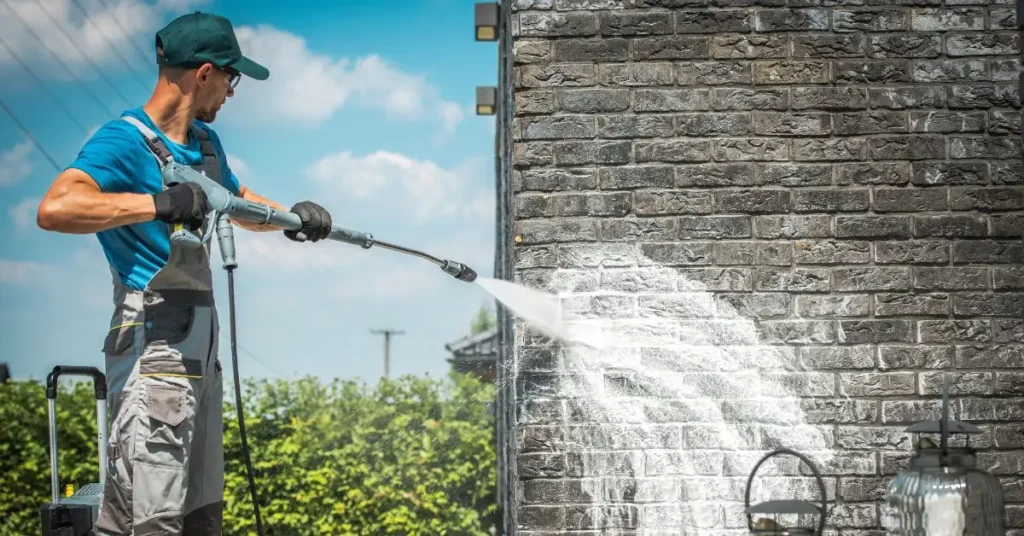
Power washing before painting helps remove dirt, dust, salt, algae, cobwebs, and surface buildup before exterior paint is applied. However, washing is only one part of preparation: the surface must also dry fully, loose paint must be removed, damage repaired, and bare or problem areas primed where required.
For Toronto homes, siding, trim, decks, fences, doors, and other exterior surfaces can collect seasonal dirt, road residue, moisture-related buildup, and debris that should be assessed before repainting.
TidyUp HandyCrew provides soft pressure washing services in Toronto for suitable exterior surfaces. Homeowners planning the full project can also explore house painting and surface finishing services in Toronto.
This guide explains when washing is appropriate, which method to use, how long surfaces need to dry, what preparation comes next, and when damaged or older surfaces need a different approach.
Key Takeaways
- Exterior surfaces should generally be clean, sound, and dry before painting.
- Pressure level should match the surface; stronger pressure is not always better.
- Soft washing may be more appropriate for delicate siding, painted surfaces, or older materials.
- Washing does not replace scraping, sanding, repair, caulking, or priming.
- Drying time varies with material, weather, shade, airflow, and moisture.
- Older painted surfaces need extra caution because disturbing old coatings can create hazardous dust or debris.
- In Toronto, washing and painting schedules should allow for rain, humidity, seasonal residue, and changing weather.
.
Why Power Washing Before Painting Matters
Power washing before painting is a preparation step that removes contaminants from surfaces that are otherwise suitable for washing. Dirt, chalky residue, organic buildup, cobwebs, and loose grime should not simply be painted over.
A freshly washed surface also makes the actual condition easier to evaluate. Once buildup is removed, you may notice peeling coating, cracks, soft wood, failed caulking, rust, or other areas that need attention.
The correct sequence is usually:
inspect → clean → dry → repair → scrape or sand where appropriate → prime → paint.
Skipping one stage can create problems later. Washing cannot stabilize rotten wood, fix damaged siding, or make loose paint sound again.
For a more direct decision guide, see should you power wash your house before painting?
Should You Power Wash Before Painting?
Many exterior surfaces benefit from cleaning before painting, but that does not mean every surface should receive high-pressure washing. The correct method depends on the material, existing coating, age, condition, and where water could enter.
Power or pressure washing may be useful when a sound exterior surface has:
- Dirt and dust
- Cobwebs
- Road or winter residue
- Surface algae or organic buildup
- Loose grime
- Mud or splash marks
- General weather exposure
A different method may be needed for fragile siding, deteriorated wood, loose paint, damaged trim, old masonry, window assemblies, or surfaces where water intrusion is a concern.
The goal is cleaning the surface without creating new damage before painting begins.
Power Washing vs Soft Washing
Pressure washing relies more heavily on water pressure, while soft washing uses lower pressure and an appropriate cleaning solution where suitable. Neither method is automatically best for every painting project.
| Method | Often Better Suited To | Main Consideration |
| Pressure washing | Durable exterior surfaces and controlled cleaning | Excess pressure can damage softer materials |
| Soft washing | Delicate siding, painted surfaces, some older materials | Product and surface compatibility matter |
| Hand cleaning | Small, fragile, detailed, or sensitive areas | Slower but offers greater control |
| No washing until assessed | Damaged, peeling, unsafe, or questionable surfaces | Repair or specialist assessment may come first |
Concrete can usually tolerate a different approach than painted siding or weathered wood. Likewise, an older fence should not automatically receive the same pressure used on a hard walkway.
For a deeper comparison, read soft washing vs pressure washing.
What Surfaces Need Cleaning?
Any exterior surface being painted should be assessed for contamination, loose coating, moisture, and physical damage first. The cleaning method should then match the material.
Siding and Exterior Walls
Siding can collect dust, grime, cobwebs, organic residue, and airborne dirt.
Before washing, inspect seams, joints, windows, vents, electrical fixtures, and damaged areas. Loose panels or failed seals may allow water to reach places it should not.
Older or already-painted siding often needs gentler treatment than durable hard surfaces.
Trim, Fascia and Doors
Trim, fascia, doors, and garage doors are highly visible after painting, so preparation defects can stand out.
Cleaning removes surface dirt, but peeling coatings, failed caulking, damaged wood, and rust still need separate preparation.
Detailed areas around edges, joints, hardware, and windows may be better handled manually.
Decks and Fences
Wood requires careful pressure control because aggressive washing can raise or damage fibres.
Its condition also matters. Weathered, splintered, painted, stained, or partially deteriorated wood may need a different process.
After cleaning, wood must dry properly before sanding, priming, staining, or painting.
Porches and Railings
Porches, stairs, railings, and entrances collect tracked dirt, mud, salt, and environmental debris.
These surfaces often contain multiple materials. For example, a porch may combine painted wood, metal railings, concrete, glass, and masonry.
One pressure setting should not automatically be used across all of them.
Nearby Concrete
Driveways and walkways may not be part of the painting scope, but nearby dirt can be tracked back into the preparation area.
Cleaning heavily soiled adjacent surfaces can help keep the work zone cleaner, especially around doors, siding, garages, fences, and porches.
Can High Pressure Damage a House?
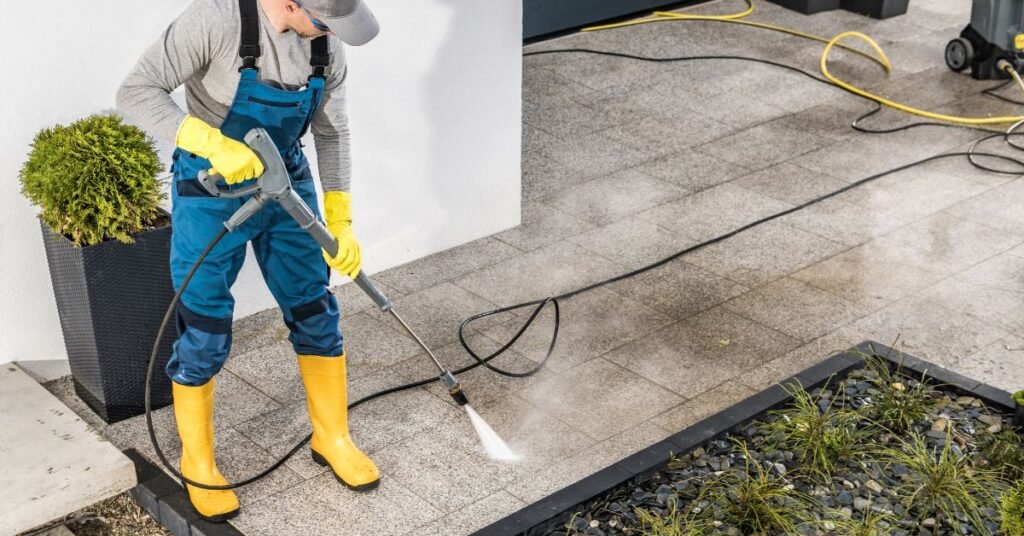
Yes. Excessive pressure or poor technique can damage wood fibres, existing paint, siding, seals, soft masonry, and other exterior materials. Water can also be forced behind siding or into gaps around building components.
Extra caution is appropriate around:
- Older or soft wood
- Loose or peeling coatings
- Cracked surfaces
- Window and door seals
- Electrical fixtures
- Damaged siding
- Aging masonry
- Roof materials
- Detailed trim
- Unknown surface conditions
This is why “more pressure” should never be treated as “better cleaning.”
What About Older Painted Surfaces?
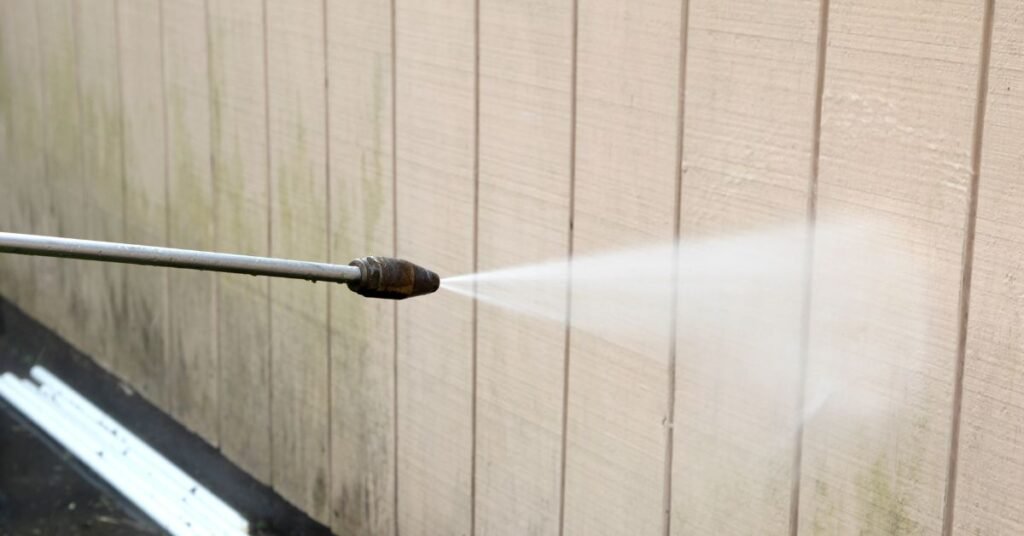
Older coatings should be assessed before washing, scraping, sanding, or otherwise disturbing them. This matters particularly when the age or composition of existing paint is unknown.
Health Canada states that Canadian homes built before 1960 are more likely to contain lead-based paint, while some homes built between 1960 and 1990 may contain lead in exterior coatings. Disturbing deteriorated lead-based paint can create hazardous dust and debris.
Do not treat aggressive washing as a shortcut for removing questionable old paint.
When an older coating is peeling, flaking, or deteriorated, identify the appropriate safety and preparation method before work begins.
How Long After Washing Can You Paint?
There is no single drying time that applies to every exterior surface. The material should be adequately dry for the coating system being used, and the paint manufacturer’s application requirements should be followed.
Drying depends on:
- Surface material
- How much water was used
- Temperature
- Humidity
- Sun exposure
- Shade
- Airflow
- Surface orientation
- Cracks and joints
- Moisture absorbed by wood or masonry
A sunny metal door and a shaded wood fence will not dry at the same rate.
Do not judge readiness only by touching the most exposed part of the surface. Moisture can remain in seams, end grain, cracks, joints, or shaded sections.
For this specific question, use our detailed guide on how long after power washing you can paint.
Power Washing Before Painting in Toronto
Toronto exterior projects need enough flexibility for changing weather, seasonal residue, drying, and surface repairs. Washing today does not necessarily mean painting should begin immediately afterward.
Spring projects may involve dirt and residue left after winter. Summer can provide favourable painting windows but also bring heat, humidity, or sudden rain. Early fall projects need closer attention to shorter days and changing temperatures.
Toronto homeowners should plan the project as a sequence rather than two separate appointments:
- Inspect the exterior.
- Choose the correct cleaning method.
- Wash suitable surfaces.
- Allow proper drying.
- Reinspect the surface.
- Complete scraping, sanding, repair, and caulking.
- Prime where required.
- Apply the chosen exterior coating under suitable conditions.
This sequence reduces the temptation to rush paint onto a surface that is not ready.
What Happens After Power Washing?
After washing, inspect the entire paint area again. Cleaning can expose problems that were difficult to see under dirt or organic buildup.
The next preparation steps may include scraping loose coating, sanding rough transitions, repairing damaged wood or trim, replacing failed material, treating rust appropriately, caulking suitable gaps, and priming bare or problem areas.
Not every surface needs every step.
The existing material, previous coating, new paint system, exposure, and condition determine what preparation is necessary.
Homeowners planning a larger exterior project can use our exterior painting Toronto guide for additional planning considerations.
Power Washing for Rental Properties
For landlords and property managers, washing and painting should be coordinated around access, repairs, photography, showings, and occupancy dates. The exterior should not be rushed simply because a listing deadline is approaching.
Common preparation areas include entrances, doors, fences, decks, siding, trim, porch areas, and garage doors.
If contractors are still completing exterior repair work, finish those tasks in the correct sequence before final cleaning or coating.
Property managers should also confirm water access, parking, tenant notice requirements, gates, pets, and any building-specific restrictions before the service date.
Power Washing Before Selling a Home
Curb appeal matters when selling a home. Buyers notice the front entrance, trim, siding, doors, garage doors, walkways, and porch areas quickly.
Power washing can help clean visible exterior surfaces before painting. It can also reveal areas that need repair, sanding, priming, or touch-ups.
Before listing photos, homeowners may focus on:
- Front entrance appearance
- Trim and door condition
- Driveway and walkway cleanliness
- Siding and exterior wall condition
- Deck or fence presentation
- Curb appeal updates
Avoid rushed prep before showings. Cleaning, drying, and painting all need time.
DIY Power Washing Before Painting vs Hiring Professionals
DIY washing may be reasonable for a small, accessible, durable surface when the homeowner understands the equipment and material limitations. Professional help becomes more useful as height, surface sensitivity, existing coatings, or project coordination becomes more complex.
DIY may fit a project when access is safe, the surface is straightforward, buildup is light, and no fragile materials are involved.
Professional assessment is more appropriate when washing involves multi-storey siding, aging wood, painted surfaces, extensive buildup, multiple materials, difficult access, or a painting schedule that depends on completing preparation correctly.
TidyUp HandyCrew’s soft pressure washing service can be planned according to the material and condition rather than applying one method everywhere.
When Washing Is Not Enough
Some surfaces need repair or specialist work before painting, regardless of how thoroughly they are cleaned.
Examples include rotten wood, loose siding, failed caulking, damaged trim, significant rust, cracked masonry, persistent moisture, pest damage, severely failing coatings, or structural deterioration.
Cleaning can expose these problems. It cannot repair them.
Mould remediation, major carpentry, roof work, significant masonry repairs, or hazardous old coatings may also fall outside normal pressure-washing or painting preparation.
Resolve the underlying problem before covering the surface with paint.
How to Prepare for Washing
Before the appointment, clear access around the areas being cleaned.
Move vehicles and movable outdoor furniture where necessary. Close windows and doors, identify electrical fixtures, secure pets, and tell the team about fragile surfaces, damaged areas, loose paint, leaking seals, or other concerns.
Also confirm:
- Areas being washed
- Areas being painted
- Water access
- Parking and entry
- Surface materials
- Known damage
- Delicate landscaping
- Painting schedule
- Drying window
- Other contractors on site
Photos can help communicate surface condition before the service.
How Long Does Power Washing Take?
The cleaning time depends more on scope and condition than on one universal hourly estimate. Surface area, height, access, material, buildup, water supply, preparation, and cleaning method all affect the appointment.
A single entrance or short fence section is different from a multi-level exterior with siding, decks, railings, and several surface types.
For a project-specific breakdown, read how long it takes to power wash a house.
Remember that cleaning time and drying time before painting are separate.
How Much Does Power Washing Cost?
Power-washing cost before painting depends on the area being cleaned, surface type, access, condition, height, cleaning method, and whether other preparation or painting work is included.
Other factors can include:
- Number of exterior areas
- Amount of buildup
- Delicate-material requirements
- Water access
- Equipment setup
- Multi-level access
- Soft-washing needs
- Additional exterior cleaning
- Timing with painters
For more detailed pricing factors, see how much it costs to power wash a house.
If washing is part of a repainting project, request the cleaning and painting scopes separately so you understand what preparation each quote includes.
Common Preparation Mistakes
The most common mistake is treating washing as the entire preparation process. A clean surface can still have failed paint, moisture, cracks, rough edges, or damaged material that needs attention.
Avoid painting over dirt, using excessive pressure, ignoring damaged surfaces, coating damp material, skipping necessary scraping or sanding, overlooking manufacturer instructions, and starting without checking the weather window.
Another mistake is scheduling washing too close to painting.
Leave enough flexibility for the surface to dry and for problems discovered after cleaning to be corrected.
Pre-Painting Checklist
Before painting begins, confirm:
- The correct surfaces were cleaned.
- The substrate is dry.
- Loose coating has been addressed.
- Damaged material has been repaired.
- Required sanding is complete.
- Suitable gaps have been caulked.
- Bare or problem areas are primed where necessary.
- Windows, landscaping, and nearby materials are protected.
- The paint system is compatible with the surface.
- Weather conditions meet the coating manufacturer’s requirements.
This checklist turns power washing from an isolated cleaning job into part of a complete preparation process.
FAQs About Power Washing Before Painting
Do you need power washing before painting?
Many exterior surfaces should be cleaned before painting, but high-pressure washing is not required for every material. Use a cleaning method that removes contamination without damaging the substrate, existing coating, seals, or surrounding components.
Is pressure washing safe before painting?
Pressure washing can be appropriate for suitable, sound surfaces when the pressure and technique match the material. Older wood, deteriorated coatings, damaged siding, windows, and delicate surfaces may require lower pressure, hand cleaning, or another method.
How long should you wait after power washing?
Wait until the surface is adequately dry for the coating being used. Drying varies with material, humidity, temperature, shade, airflow, and how much moisture the surface absorbed. Follow the paint or coating manufacturer’s requirements.
Is soft washing better before painting?
Soft washing can be a better option for some delicate, painted, or older surfaces because it relies on lower pressure. The correct choice depends on the material, condition, type of buildup, and planned coating system.
Can you paint over a dirty exterior?
Painting directly over dirt, chalky residue, loose grime, or other contamination can interfere with surface preparation. Clean the substrate appropriately first, then allow it to dry and complete any required repairs, scraping, sanding, caulking, or priming.
Does power washing remove old paint?
Pressure washing may dislodge already-loose coating, but it should not be treated as a universal paint-removal method. Aggressive washing can damage the substrate, and older coatings may require additional safety considerations.
How much does power washing before painting cost?
Cost varies with surface area, material, buildup, access, height, washing method, setup, and whether painting or other preparation is included. A site-specific scope gives a more useful estimate than one universal price.
Book Power Washing Before Painting
Power washing before painting can prepare suitable exterior surfaces by removing dirt, grime, seasonal residue, cobwebs, and other surface buildup before repair, priming, and painting. The safest approach depends on the material and condition of the property.
TidyUp HandyCrew supports Toronto homeowners, landlords, and property managers with exterior cleaning and painting preparation for siding, trim, doors, decks, fences, railings, and other suitable surfaces.
For exterior cleaning, explore soft pressure washing services in Toronto. For the next stage of the project, seehouse painting and surface finishing services in Toronto.
Request a power washing or exterior painting quote and share the surfaces, condition, access details, and planned painting timeline.
