

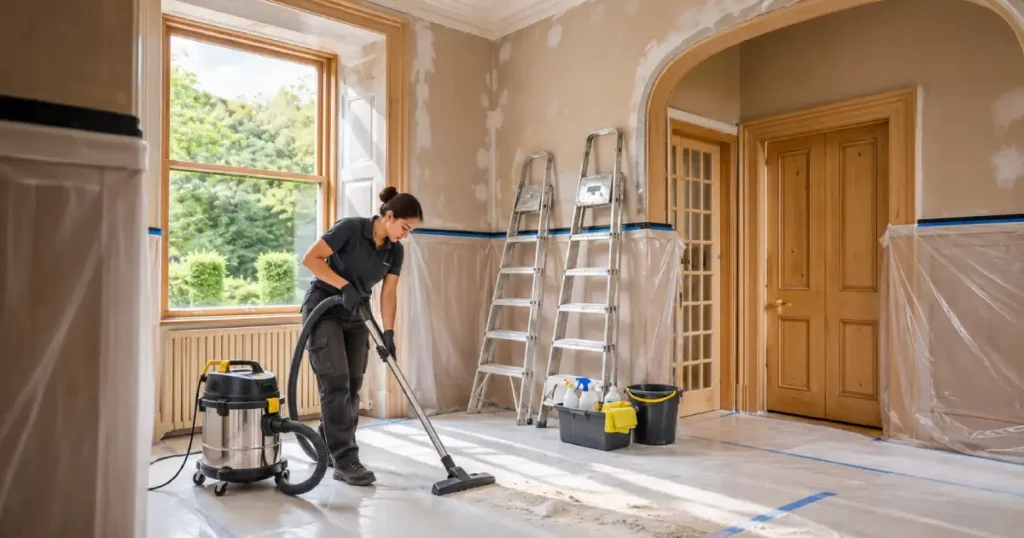
Construction cleaning for contractors in Toronto prepares a renovation, fit-out, or new-build space for inspection, client walkthrough, occupancy, or final handoff. A well-planned cleanup usually separates rough cleaning, final detailing, and touch-up work so construction dust, agreed debris, labels, residue, floors, fixtures, glass, cabinetry, and other completed areas are handled at the right stage.
For Toronto general contractors, builders, renovation teams, and project managers, timing matters as much as the cleaning itself. Returning trades, unfinished punch-list work, elevator access, floor protection, and last-minute installations can quickly create rework if the site is cleaned too early.
TidyUp HandyCrew provides post-construction cleaning services in Toronto for projects with an agreed scope and schedule. This guide covers cleaning phases, site-readiness checks, contractor handoff standards, quality control, scheduling, and what to include when requesting a quote.
What Is Contractor Construction Cleaning?
Contractor construction cleaning prepares completed work areas for a defined project handoff. It can cover ordinary construction dust, reachable finish surfaces, accessible glass, kitchens, washrooms, and floors. Unlike ongoing janitorial cleaning, it follows construction milestones and a room-by-room completion standard. The contractor and cleaning provider should identify exclusions before work begins.
Cleaning sign-off does not certify code compliance or occupancy approval.
What Are the Three Cleaning Phases?
Construction cleaning has three possible phases, depending on trade progress.
Rough Cleaning
Rough cleaning addresses agreed loose materials and surface dust between construction stages. The general contractor typically manages trade waste, tools, and sharp debris unless otherwise agreed.
Detailed Final Cleaning
After trades finish, cleaners detail installed surfaces. New coatings and delicate materials require suitable care.
Handoff Touch-Up
Touch-ups address fingerprints and settled dust before handoff. Returning trades may trigger an additional visit.
Construction Handoff Cleaning Checklist
Use this checklist after the superintendent releases each area.
Entrances, Corridors and Common Areas
- Clear ordinary loose dust from accessible doors, frames, and ledges.
- Check stair edges, baseboards, thresholds, and hand-contact surfaces.
- Clean appropriate finished floors without damaging new coatings.
- Temporary protection is removed only when authorized.
Kitchens, Millwork and Built-Ins
- Check cabinet doors, counters, handles, and accessible shelf surfaces.
- Include drawer interiors and toe kicks only where specified.
- Identify adhesive labels, protective films, or grout residue requiring approval.
- Protect sensitive stone, wood, and newly cured finishes.
Washrooms and Fixtures
- Check installed sinks, taps, toilets, partitions, and mirrors.
- Remove ordinary surface dust from compatible tiles and fittings.
- Flag silicone, grout haze, paint marks, or installation defects separately.
- Follow manufacturer care directions for new fixtures.
Glazing, Floors and Final Details
- Review accessible interior glass, frames, and tracks if included.
- Check floor corners, thresholds, and perimeter edges.
- Look for marks on doors, switches, exposed trim, and visible shelves.
- Photograph outstanding cleaning items and construction deficiencies separately.
For dust removal methods, read the post-renovation dust cleaning guide.
Rough Clean vs Final Handoff Clean
These phases serve different project needs. A basic rough clean cannot substitute for client-facing finish detailing.
| Factor | Rough cleaning | Final handoff cleaning |
| Timing | Between agreed trade stages | After major dusty work ends |
| Main focus | Accessible loose debris and dust | Finished surfaces and presentation |
| Materials | Basic collection within scope | Surface-compatible detail products |
| Inspection | Site readiness for next trade | Agreed room-by-room quality check |
| Re-cleaning | Depends on trade progress | Extra visits scoped separately |
Define every included phase in writing.
When Is a Site Ready for Final Cleaning?
A site is ready when major drilling, drywall sanding, cutting, and other dust-generating work has finished in the areas being cleaned. Tools and trade waste should be removed, surfaces accessible, utilities available, and site hazards addressed by responsible parties.
Confirm the following before dispatch:
- Superintendent releases each room or zone for cleaning.
- Electrical supply, lighting, and usable water are available where required.
- Trade materials, exposed sharp objects, and unfinished areas are controlled.
- Floors and coatings have reached their specified cleaning stage.
- Keys, site contacts, parking, and loading access are confirmed.
- The client walkthrough and any remaining trade callbacks are scheduled.
Newly painted cabinetry, sealed floors, and stone surfaces may not be ready for routine wet cleaning. Add these restrictions to the room-release sheet so cleaners do not guess.
How Should Construction Dust Be Managed?
Dust controls depend on site hazards. Ontario’s silica construction guidance discourages dry sweeping and compressed air where silica dust may be present. Appropriate engineering controls and HEPA-filtered equipment may be necessary.
The CCOHS construction housekeeping checklist recommends keeping walkways clear and planning waste disposal. Cleaning contractors should not undertake suspected asbestos, lead, mould, chemical spills, or uncontrolled silica cleanup as ordinary final cleaning. Refer these hazards for qualified assessment. Ontario’s construction housekeeping requirements also address safe site access and material storage. A cleaning sign-off does not replace the superintendent’s safety responsibilities.
Toronto Contractor Access and Scheduling
Downtown Toronto condo renovations, North York office refits, and Scarborough commercial sites may have different access rules. Confirm elevator reservations, loading bays, suite numbers, security registration, parking, and permitted hours.
Coordinate common-area protection with management. Mark released zones on the floor plan.
Toronto’s construction wastewater and debris rules prohibit waste or construction wastewater entering storm catch basins. Confirm lawful disposal responsibilities and avoid rinsing construction residue into street drains.
How Do Contractors Avoid Repeat Cleaning?
Schedule final cleaning after finishing trades and inspect before handover.
Illustrative example: A painter returns to sand one wall after the final clean. Nearby cabinets gather fresh dust. Log the callback and approve re-cleaning.
For broader homeowner-oriented sequencing, see post-renovation cleaning versus renovation services.
What Affects Construction Cleaning Cost?
Construction cleaning cost depends on floor area, dust conditions, completed phases, finish sensitivity, access, and the handoff deadline. Cabinet interiors and repeat visits may cost extra.
Use the published post-construction cleaning cost guide for detailed price context. Request a site-specific quotation.
Contractor Sign-Off and Quote Worksheet
This original handoff worksheet separates cleaning performance from unfinished construction tasks.
| Record | What the site supervisor confirms |
| Project and zones | Address, floor plan, released rooms |
| Scope | Rough, final, touch-up, and exclusions |
| Materials | Delicate finishes and manufacturer instructions |
| Waste | Trade debris, hauling, and disposal ownership |
| Access | Hours, parking, utilities, security contact |
| Sign-off | Photos, deficiencies, callback responsibility |
Assign one superintendent to approve scope changes.
Construction Cleaning FAQs
What Is Included in Contractor Cleaning?
A contractor cleaning quote may cover agreed construction dust removal, accessible finished surfaces, cabinetry, fixtures, interior glass, and floors. Rough debris collection, specialist residue treatment, hauling, high-access work, and touch-up visits should be identified separately. Scope varies by site and handoff requirements.
When Should Final Cleaning Be Booked?
Book final cleaning after major dust-producing work and finish installation end in each released zone. Confirm utilities, access, debris removal, and surface readiness first. If trades are returning, ask about staged cleaning or a separate touch-up pass before the client’s walkthrough.
Is Final Cleaning Different From Deep Cleaning?
Yes. Contractor final cleaning follows a construction schedule and agreed finishing standards. General deep cleaning addresses accumulated everyday dirt in occupied spaces. Construction cleaning may require dust controls and careful treatment of newly installed materials. Neither automatically includes hazardous-material remediation.
How Long Does a Final Clean Take?
Duration depends on released floor area, construction residue, access, finish detail, and the number of phases. Multiple trades, high-rise loading restrictions, and late touch-ups can change scheduling. Ask for an estimate after sharing photographs, drawings, and the project handoff deadline.
Can Cleaning Guarantee Inspection Approval?
No. Cleaning can support a presentable project handoff, but it cannot certify code compliance, eliminate construction defects, or guarantee occupancy approval. Building inspections, permits, safety controls, and deficiency repairs belong to the responsible professionals and authorities. Keep cleaning sign-off separate from regulatory approvals.
Book Contractor Construction Cleaning in Toronto
Construction cleaning for contractors in Toronto works best when the cleaning scope, site-release timing, and handoff responsibilities are defined before the final walkthrough. First, rough cleaning, final detailing, and touch-up work should be treated as separate phases. As a result, returning trades, unfinished punch-list items, and late construction dust are less likely to create unnecessary re-cleaning.
In addition, a successful handoff depends on safe site access, available utilities, protected new finishes, clear debris responsibilities, and room-by-room quality checks. Therefore, general contractors, builders, renovation teams, and project managers should confirm which areas are released for cleaning before the final visit.
Meanwhile, TidyUp HandyCrew provides post-construction cleaning services in Toronto for projects with an agreed scope and schedule.
If you are preparing for a project handoff, request a contractor construction cleaning quote and share your project plans, released areas, trade schedule, access details, finish requirements, and walkthrough date. This way, the cleaning scope can be confirmed before the final visit and last-minute confusion can be reduced.
