

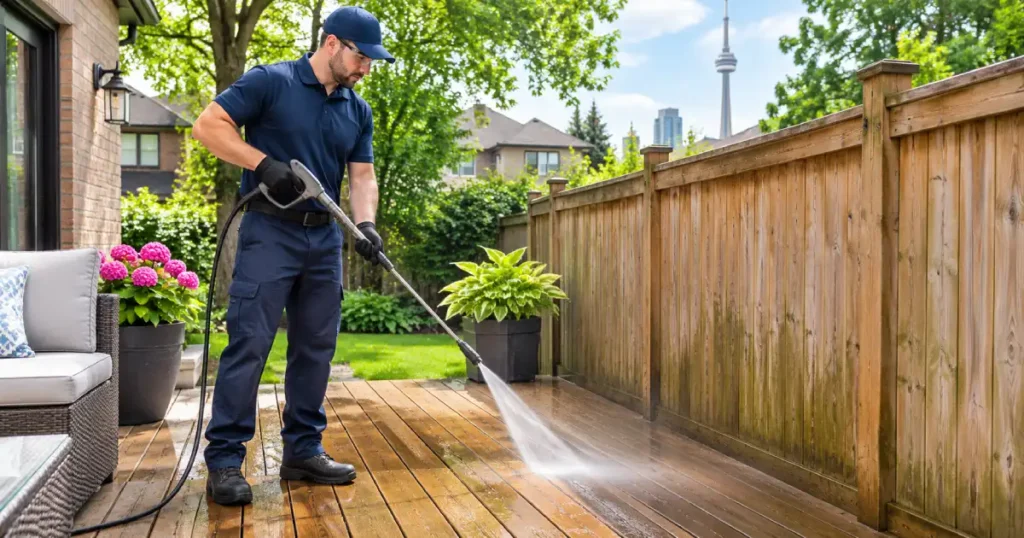
Deck and fence pressure washing in Toronto can help prepare suitable outdoor surfaces for staining or painting by removing dirt, loose debris, and weather-related buildup. However, the cleaning method should match the material and condition because cedar, pressure-treated wood, composite boards, painted fences, and weathered finishes can respond differently to water pressure.
Before applying a new coating, the surface should be properly cleaned, allowed to dry, and checked for loose fibres, peeling finish, or other defects. Coating manufacturers also recommend letting cleaned wood dry completely before staining.
Toronto projects also require runoff planning. The City states that outdoor wash water, including power-washing runoff, must not enter storm-sewer catch basins.
TidyUp HandyCrew provides soft pressure wash cleaning in Toronto for suitable decks and fences. This guide covers cleaning, drying, surface preparation, finishing choices, and project planning.
What Does Deck and Fence Washing Include?
Deck and fence washing removes loose dirt, pollen, road residue, and suitable surface buildup from outdoor boards, railings, stairs, gates, and fence panels. Depending on the material, cleaning may involve brushing, compatible wood cleaner, controlled-pressure rinsing, and debris collection. Repairs, coating removal, sanding, staining, and painting are separate tasks unless specifically quoted.
Washing cannot restore rotten wood or remove every stain.
What Should You Check Before Washing?
Inspect wood stability and its current finish before choosing equipment. Pressure can splinter wood or lift weak paint.
Check these areas:
- Deck boards: loose fasteners, soft sections, splinters, and raised edges.
- Railings and stairs: movement, peeling coatings, and exposed end grain.
- Fence panels: cracks, warped boards, unstable posts, and loose gates.
- Shaded areas: algae-like buildup, trapped leaves, and persistent dampness.
- Nearby surfaces: windows, outlets, landscaping, neighbours’ property, and drains.
Arrange assessment for rot, movement, or major coating failure.
Pressure Washing vs Soft Washing Wood
Pressure washing uses a directed water jet; soft washing uses gentler rinsing and an appropriate cleaning solution when needed. Neither approach suits every wood species or coating. Choose by condition, not a universal setting.
| Surface condition | Possible approach | Main caution |
| Sound, suitable decking | Controlled low-pressure cleaning | Avoid raised grain and splintering |
| Weathered cedar | Gentle washing or brushing | Soft fibres mark easily |
| Previously painted fence | Assess coating; gentle cleaning | Spray can lift weak paint |
| Composite decking | Manufacturer-approved cleaning | Avoid damaging surface finish |
| Loose or rotten boards | Repair assessment first | Washing cannot restore strength |
Our soft washing versus pressure washing guide compares methods across exterior surfaces. This article focuses on stain-ready wood.
Deck and Fence Cleaning Checklist
1. Clear and Protect the Area
Remove furniture, planters, decorations, and loose debris. Cover delicate fixtures where appropriate. Keep people and pets clear of work zones. Check outlets before starting.
2. Inspect and Choose the Method
Identify cedar, pressure-treated lumber, composite, or previously coated wood. Review product and equipment instructions. Use a small test area before committing to any spray method.
3. Apply Compatible Cleaning Products
Choose a cleaner approved for the material and existing coating. Follow label directions and never mix chemicals. Plan runoff containment.
4. Rinse Without Gouging Wood
Use the gentlest effective approach, keeping spray movement controlled and aligned with the grain where appropriate. Avoid people, outlets, and damaged joints. Stop if wood splinters.
5. Dry, Inspect, and Repair
Dry thoroughly. Check for raised grain, loose paint, damaged boards, and residue. Repair before finishing. Sand dry surfaces safely if needed.
Sherwin-Williams’ deck-preparation guidance emphasizes clean, dry wood, careful rinsing, and smoothing rough areas before finishing.
How Long Should Wood Dry?
Wood must be dry enough for the selected stain or paint system before coating. Drying varies with weather, shade, airflow, and wood type.
For planning, Sherwin-Williams’ deck-staining guidance suggests allowing approximately 24–48 hours after cleaning in suitable conditions. Longer waits may be necessary. Follow coating moisture requirements, especially after rain.
Our washing-to-painting timing guide covers the broader drying question. Avoid painting damp boards simply to meet a booking date.
Staining or Painting After Cleaning?
Choose a finish based on wood condition, old coatings, desired appearance, and product compatibility. Stains may retain more visible grain; solid-colour products offer more uniform coverage. Deck floors need traffic-rated coatings.
Before staining: Confirm whether the previous coating needs stripping, the wood needs sanding, and the selected stain can penetrate. Before painting: Remove unstable paint, repair surfaces, assess primer requirements, and select a coating approved for the application.
Read TidyUp’s exterior painting Toronto guide for broader planning, or explore painting and surface finishing services. Washing alone never completes preparation.
Toronto Runoff and Pressure-Washer Safety
In Toronto, wastewater from outdoor washing must not reach street catch basins. The City of Toronto’s outdoor washing guidance states that even water-only power washing can carry contaminants into storm drains. Plan containment and lawful disposal before work begins.
The US Centers for Disease Control and Prevention warns that high-pressure spray can cause serious injuries. Follow equipment directions; avoid bystanders and ladders.
Suspect old coatings need specialist assessment.
When Should Toronto Homeowners Schedule Washing?
Schedule cleaning when the deck or fence needs preparation and forecast conditions allow full drying. Spring cleanup, pre-sale maintenance, and planned exterior finishing are common opportunities. Avoid washing immediately before forecast rain or a fixed staining appointment.
Shaded yards in Scarborough, North York, or Etobicoke may dry differently from sunny decks. Confirm water, access, and managed-property rules.
What Affects Deck and Fence Washing Cost?
Deck and fence washing cost in Toronto depends on material, measured area, buildup, access, protection, and required cleaning method. Railings and stairs add preparation.
Use this quote worksheet to compare scope:
| Quote detail | Information to supply |
| Deck size | Approximate square footage, stairs, railings |
| Fence size | Length, height, and number of sides |
| Wood condition | Photos of damage and existing coating |
| Access | Gates, water source, parking, nearby plants |
| Follow-up work | Sanding, repairs, stain, paint, disposal |
Confirm whether washing, cleaner, runoff management, return visits, and finishing are included. Price staining or painting separately.
Common Deck and Fence Washing Mistakes
Avoid maximum pressure, spraying directly into joints, and assuming grey wood is structurally sound. Do not apply coating immediately after rinsing. Skipping repairs, ignoring existing stain, and failing to control runoff can create further problems.
Washing cannot replace stripping, sanding, or repairs. For general exterior sequencing, see power washing before painting.
Deck and Fence Washing FAQs
Question: Is Pressure Washing Safe for Wood Decks?
Sometimes. Sound wood may tolerate carefully controlled washing, but softer cedar, ageing boards, and weakened finishes can suffer fibre damage. Test a small area and follow material guidance. For fragile surfaces, a gentler rinse or brushing may be more appropriate than forceful spraying.
Question: Should I Wash a Fence Before Painting?
Usually, dirty fence surfaces need cleaning before painting. However, washing is only the first stage. Let the wood dry, remove unstable coatings, repair damage, and prime where required. A cleaner cannot make deteriorated boards or peeling paint suitable for immediate recoating.
Question: How Soon Can I Stain After Washing?
Wait until the wood meets the chosen stain manufacturer’s moisture and drying requirements. Some deck guidance suggests 24–48 hours in favourable conditions, but shade, rain, and wood type can extend drying. Confirm readiness before applying stain rather than relying only on elapsed time.
Question: Can You Pressure Wash a Painted Fence?
A painted fence needs careful assessment. Loose paint may detach under spray, and strong pressure can damage wood beneath it. Gentle cleaning may be suitable for sound coatings. If extensive peeling or suspected hazardous older paint exists, plan the appropriate removal or specialist assessment first.
Question: Is Deck Washing Different From Fence Washing?
Yes. Deck boards face foot traffic, railings and stairs create detail work, and horizontal areas retain moisture differently. Fences have upright panels, gates, and multiple exposed sides. Both require material checks, controlled water use, and drying, but preparation and quote measurements differ.
Question: Does Washing Include Staining or Painting?
Not necessarily. A washing quote commonly covers suitable cleaning and rinsing only. Repairs, stripping, sanding, primer, stain, paint, and return visits may be separate services. Request a written scope identifying each stage, the responsible contractor, weather requirements, and expected scheduling dependencies.
Deck and Fence Pressure Washing Toronto: Booking
Deck and fence pressure washing in Toronto works best when the cleaning method matches the surface and the finishing plan. TidyUp HandyCrew offers suitable exterior soft-washing and pressure-cleaning options; staining or painting scope should be confirmed separately.
Send photos, deck dimensions, fence length, wood type, visible damage, and your intended finish.
Request a deck and fence washing quote before choosing a cleaning date.
For deck and fence pressure washing in Toronto, inspect first, use gentle surface-appropriate cleaning, manage wastewater, and allow wood to dry completely. Then address damage and prepare the surface for its chosen stain or paint. Quote washing and finishing separately.
