

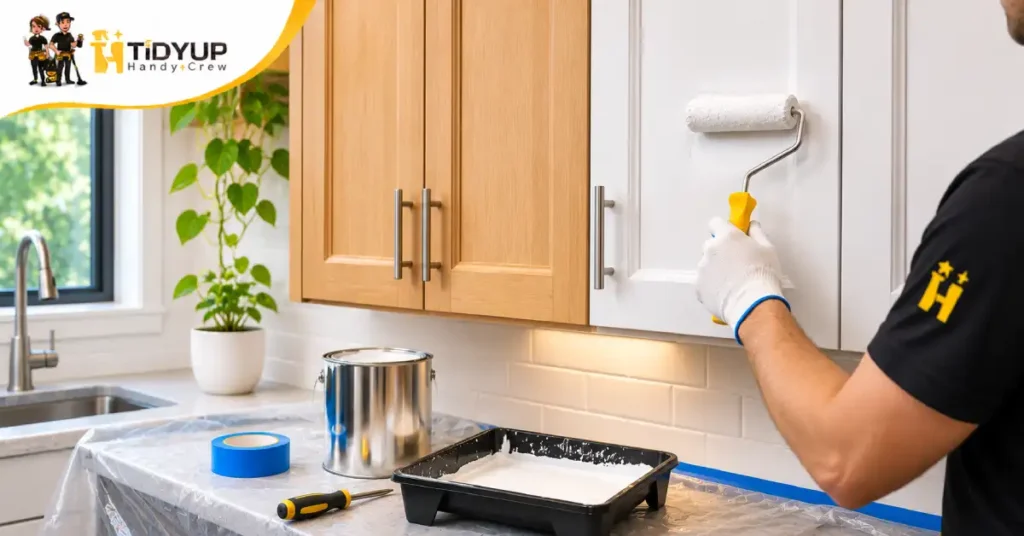
Cabinet painting in Toronto is a practical option when cabinet boxes and doors are structurally sound but the colour or finish looks dated. Repainting can refresh a kitchen without replacing the full cabinet system, while refinishing may suit attractive natural wood and replacement may be better when cabinets have serious water damage, swelling, delamination, warping, or layout problems.
For Toronto homeowners, condo owners, landlords, and property managers, the decision should start with cabinet condition rather than colour alone. Surface material, existing coating, grease buildup, hardware condition, ventilation, and access can all affect preparation and scheduling.
TidyUp HandyCrew provides house painting and surface finishing services in Toronto for suitable cabinet-finishing projects. This guide explains when to paint, refinish, or replace cabinets, plus preparation, curing, colour planning, costs, and what to check before requesting a quote.
Key Takeaways
- Repaint sound cabinets when the layout works but the colour feels outdated.
- Refinish suitable wood when retaining visible grain is the priority.
- Consider refacing for a new door style with serviceable cabinet boxes.
- Replace badly damaged boxes or cabinets that cannot support the desired layout.
- Confirm surface preparation, paint system, hardware, drying, and cleanup in every quote.
What Is Cabinet Painting?
Cabinet painting is a surface-finishing process that changes the colour of existing doors, drawer fronts, and exposed cabinet frames.
It typically involves removing hardware, cleaning grease, preparing the old coating, priming, painting, drying, and reassembly. Painting changes appearance, not cabinet dimensions or an unsuitable layout.
Wood refinishing may instead remove or renew an existing clear or stained finish. Refacing replaces doors or visible fronts while retaining usable cabinet boxes. Full replacement installs new cabinetry.
Cabinet Painting vs Refinishing vs Replacement
Choose based on material, condition, desired appearance, and layout.
| Option | Best when | What changes | Main limitation |
| Repainting | Sound cabinets need a new colour | Existing visible finish | Old layout remains |
| Wood refinishing | Suitable wood grain is worth preserving | Stain or clear finish | Not suitable for every material |
| Refacing | Boxes work; door style does not | Doors, fronts, visible surfaces | Cabinet footprint remains |
| Replacement | Boxes fail or layout must change | Cabinet system | Greater project scope |
Decision rule: Paint sound, dry boxes; investigate replacement when materials or layout fail. Refacing changes door style but does not expand storage or fix undersized cabinets.
When Should You Repaint Cabinets?
Repaint when cabinet boxes are stable, doors fit, and the main problem is an unattractive or worn colour. Scratches, faded finishes, and limited surface wear may be manageable after appropriate preparation.
Check hinges, exposed edges, and sink cabinets. Paint cannot repair rotten panels or crooked doors. Minor handle or hinge work may be a separate handyman repair.
When Is Cabinet Refinishing Better?
Refinishing is worth considering when solid or veneered wood has attractive grain that you want to retain. It may involve assessing the current coating, repairing small defects, and renewing an appropriate stained or clear finish.
Transparent finishes show more grain. Thin veneer, old coatings, or deep stains may limit refinishing. Request a sample first.
When Should Cabinets Be Replaced?
Replacement makes more sense when cabinet boxes are swollen, mould-damaged, broken, or unable to hold fittings securely. It may also suit a major layout change, such as relocating appliances or changing storage dimensions.
Investigate sink or dishwasher leaks before ordering. If the project includes counters, plumbing, or layout changes, consult the Toronto kitchen renovation guide rather than treating it as paint-only work.
Can Every Cabinet Material Be Painted?
No. Material and coating condition determine whether paint can adhere reliably. Identification comes before product selection.
- Solid wood: Often a promising candidate when dry and stable; grain may need extra preparation.
- MDF: Can be painted when intact, but swollen edges and water damage need assessment.
- Laminate or melamine: Slick surfaces require compatible preparation and adhesion products.
- Thermofoil: Lifting film or failed adhesive can make repainting unsuitable without repair or replacement.
- Veneer: Inspect for lifting layers before sanding or selecting a finish.
Test uncertain coatings discreetly; no primer suits every surface.
Cabinet Painting Toronto: Step by Step
Painting follows a sequence tailored to the surface and product.
- Inspect: Check boxes, doors, drawer fronts, water damage, and existing finishes.
- Label: Record doors, hinges, handles, and drawer positions before removal.
- Clean: Remove kitchen grease and residue; allow surfaces to dry.
- Prepare: Repair suitable small defects and abrade sound coatings only when safe and appropriate.
- Protect: Mask adjacent counters, floors, appliances, and openings.
- Prime: Apply a compatible bonding or stain-control primer where needed.
- Paint: Apply the specified cabinet-grade coating in suitable coats.
- Cure and reassemble: Respect handling times; inspect doors, edges, and hardware.
Benjamin Moore’s cabinet painting guide describes cleaning, surface preparation, priming, coating, and drying as separate stages. Grease and loose finishes compromise adhesion. If other renovations create dust, schedule coating afterward; see painting after renovation.
Which Colours and Finishes Work Best?
Compare colour against counters, backsplash, flooring, and daylight.
Satin and semi-gloss are common cabinet finish options. The right sheen depends on the product system, reflected light, and cleaning requirements. Choose physical samples and record the product, code, and sheen.
How Long Does Cabinet Painting Take?
Timing depends on door count, preparation, application method, coat intervals, and access.
Dry to the touch is not fully cured.Benjamin Moore’s finish-care guidance distinguishes drying from full hardness; certain cabinet coatings may need several weeks before demanding use or cleaning. Follow the actual product instructions, especially before reinstalling hardware or closing doors firmly.
In Toronto condos, confirm elevator, loading, and work-hour rules. Plan ventilation and kitchen access.
What Does Cabinet Painting Cost?
Pricing depends on door count, material, preparation, application, and hardware. Interiors and repairs may cost extra.
For price ranges and a more detailed cost breakdown, read TidyUp’s existing Toronto kitchen cabinet painting cost guide. Compare quote scopes carefully: lower totals may exclude repairs or reinstallation.
Your Cabinet Quote Checklist
Use this original comparison worksheet when requesting estimates:
| What to record | Detail to confirm |
| Door and drawer count | Both faces, edges, and interiors? |
| Cabinet material | Wood, MDF, laminate, or thermofoil? |
| Condition | Grease, peeling, swelling, broken hinges? |
| Finish system | Cleaning, primer, paint, application method? |
| Access and schedule | On-site work, removal, drying, reinstallation? |
| Quote boundaries | Hardware, taxes, cleanup, touch-ups, exclusions? |
Photograph damaged edges and ask about protection and off-site work.
Painting Safety and Common Mistakes
Do not sand unidentified older coatings without checking potential hazards.Health Canada warns that paint in older Canadian homes may contain lead. Choose appropriate assessment before disturbing suspected material.
Ventilate work areas and follow product safety instructions.
Avoid skipping degreasing, coating peeling film, or rushing reassembly.
Book Cabinet Painting in Toronto
Cabinet painting in Toronto is a practical option when cabinets are sound and a colour refresh meets your goals. When boxes or layouts fail, review refinishing, refacing, or replacement before committing to paint.
Send TidyUp HandyCrew photos, door counts, materials, preferred colours, and access details. Request a cabinet painting quote to confirm suitable scope and pricing.
Repaint sound cabinets for a colour update, refinish suitable wood to retain grain, reface usable boxes for a new door style, and replace damaged units or unsuitable layouts. Identify the substrate, document defects, and compare written quotes before starting.
Frequently Asked Questions(FAQs)
Q1: Is Cabinet Painting Worth It?
It can be worthwhile when the cabinet boxes are dry, secure, and functional, and you want a new colour. Painting preserves the existing layout. If doors are failing, finishes are lifting, or storage no longer works, compare repair, refacing, or replacement before spending on paint.
Q2: Can You Paint Laminate Cabinets?
Sometimes. Laminate and melamine can present adhesion challenges because their surfaces are smooth and non-porous. Successful painting depends on coating condition, suitable cleaning, correct preparation, and compatible primer. Test the system first. Badly peeling or damaged finishes may need specialist assessment or replacement instead.
Q3: Is Refinishing the Same as Painting?
Not exactly. Painting applies an opaque colour over prepared cabinetry. Wood refinishing often renews a stain or clear coating to preserve visible grain. Some contractors use “refinishing” broadly for sprayed painting, so ask what specific process and finish the quote includes before comparing providers.
Q4: Should I Replace Cabinet Doors Only?
Replacing doors or drawer fronts can make sense when cabinet boxes are strong but the door style looks dated. This is usually described as refacing or a partial upgrade. Confirm hinge compatibility, measurements, finish matching, and whether visible cabinet frames will also need work.
Q4: How Long Before Painted Cabinets Can Be Used?
Drying, reassembly, and full curing are different milestones. Some products allow careful handling after a day or two, while full hardness takes longer. Follow the coating manufacturer’s instructions and avoid heavy cleaning or abrasive contact too early. Ask your painter for a product-specific handover schedule.
Q5: Do Cabinet Painting Projects Need Permits?
Painting existing cabinetry normally does not require a Toronto building permit. The City’s permit guidance lists cabinet and millwork installation among work that generally does not need one. Structural or plumbing alterations can change requirements, so verify larger renovation plans separately.
