

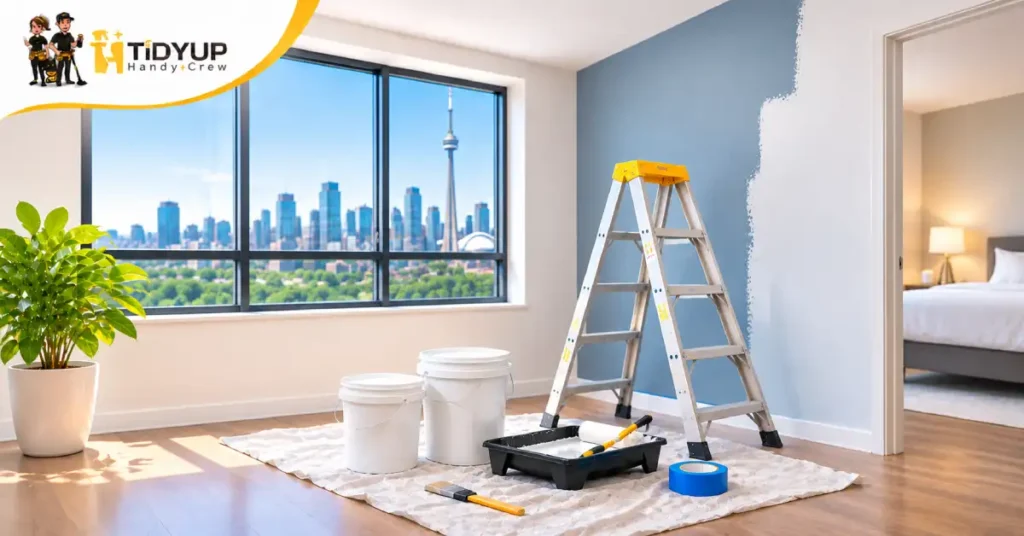
Rental property painting in Toronto should start with a room-by-room condition check, not an automatic full repaint after every tenancy. Landlords and property managers should inspect walls, ceilings, trim, stains, nail holes, damaged drywall, and previous touch-ups, then decide whether the unit needs repairs, spot painting, or complete wall repainting before the next tenant moves in.
Ontario’s Residential Tenancies Act, 2006, section 20, requires landlords to keep rental units in a good state of repair and fit for habitation, but it does not set a fixed repainting schedule. Therefore, turnover painting should be based on actual condition, maintenance needs, and the planned handover standard.
TidyUp HandyCrew provides Toronto house painting and surface finishing services for rental turnovers. This guide covers painting scope, repairs, neutral colour planning, scheduling, costs, and the best sequence before final turnover cleaning.
What Is Rental Property Painting?
Rental property painting is interior repainting planned around landlord maintenance, tenant turnover, and property presentation. Depending on condition, it covers walls, ceilings, doors, trim, small surface repairs, priming, and finishing. Unlike general residential painting, turnover work also needs a vacancy schedule, repeatable colour records, and coordination with cleaning or maintenance contractors.
When Should Landlords Repaint?
Landlords should consider repainting when paint peels, repairs remain visible, stains cannot be addressed through appropriate preparation, or heavy scuffs affect the finish. A clean wall with minor marks may only need a touch-up. Conditions matter more than a fixed calendar.
Ontario’s Landlord and Tenant Board maintenance guidance distinguishes ordinary wear from undue tenant-caused damage. Landlords must maintain rental properties in good repair. This does not mean every tenant automatically pays for repainting or that every move-out demands new paint.
What Does a Turnover Paint Quote Include?
Quotes should define surfaces, preparation, paint, protection, and cleanup.
Wall and Drywall Preparation
Check holes, loose paint, corners, and patches. Major drywall damage may require separate repairs. Active leaks or mould concerns need assessment before cosmetic work. For broader small repairs, see the handyman services Toronto guide.
Primer, Coats and Paint Finish
Specify primer, paint product, colour code, sheen, and coverage. Colour changes may need extra coats. Agree who supplies paint and keeps leftovers.
Protection and Cleanup
Assign furniture protection, masking, and disposal. Confirm who checks the final finish and handles minor deficiencies.
Touch-Ups vs Full-Unit Painting
Match the scope to wall condition. Touch-ups may suit matching paint; faded walls can need broader coverage.
| Option | Suitable condition | Main trade-off |
| Spot touch-ups | Few marks; matching paint available | Differences may remain visible |
| One-wall repaint | Localized wear or patching | Adjacent walls may vary slightly |
| Room repaint | Multiple marked walls | More materials and drying time |
| Full-unit repaint | Widespread wear or colour reset | Higher scope and scheduling demands |
Illustrative decision: A bedroom has three small anchor holes, while a hallway shows repeated scuffs along its length. The bedroom may suit repair and touch-up; the hallway may need full-wall painting.
Which Colours Work for Rental Units?
Compare warm whites, soft greys, and muted beige against flooring, cabinets, and daylight.
For multiple units, keep a paint specification record: brand, colour code, sheen, room, and date. It simplifies future touch-ups.
For broader colour and surface considerations, read the interior painting guide for Toronto.
Vacant vs Occupied Rental Painting
Vacant units usually allow simpler scheduling. Confirm lawful possession first. An expected move-out is not permission to repaint.
For occupied units, respect lawful entry and reasonable enjoyment. The City of Toronto’s renter-rights guidance describes the usual requirement for 24 hours’ written notice for repairs or work, including a reason and entry time between 8 a.m. and 8 p.m., subject to lawful exceptions.
Cosmetic painting does not itself justify forcing tenants to vacate. Seek tenancy advice when the work affects occupancy.
Toronto Rental Turnover Painting Timeline
Paint after dusty repairs, but before final cleaning and move-in preparation. No fixed duration suits every unit.
- Confirm lawful vacancy or occupied-unit access arrangements.
- Inspect walls and approve the repainting scope.
- Finish necessary drywall, flooring, and fixture repairs.
- Confirm colours, products, supplies, and building access.
- Protect floors, prepare surfaces, and apply primer where needed.
- Paint the agreed surfaces, observing product drying instructions.
- Inspect finishes and complete agreed touch-ups.
- Arrange rental property cleaning in Toronto before handover.
Humidity, wall condition, coating requirements, and limited elevator hours can change completion dates. The painting-after-renovation guide explains why dusty work comes first.
Condo, Apartment and House Access
Condo rentals may require concierge registration, elevator bookings, parking, and corridor protection. Apartments may have superintendent or hallway requirements. Townhouses may have parking constraints. Across North York, Scarborough, Etobicoke, and downtown Toronto, building access arrangements vary.
Share keys, loading details, and management contacts. Confirm how contractors will remove waste.
Is Low-VOC Paint Worth Considering?
Low-VOC paint may suit smaller units with limited airflow. Follow product labels and allow suitable drying before occupancy.
Health Canada’s healthy-home guidance notes that homes built before 1991 may contain lead-based paint. Assess suspected coatings before sanding or scraping. Also investigate moisture damage rather than sealing it under fresh paint.
How Much Does Rental Painting Cost?
Rental property painting cost in Toronto depends on wall area, surface condition, patching, coats, paint products, occupied-unit protection, and access.
Ask for itemized surfaces, repairs, materials, taxes, and cleanup. For general budgeting context, use TidyUp’s Toronto interior painting cost guide; the final rental quote must still reflect its actual condition.
Landlord Painting Preparation Checklist
- Confirm occupancy status and permitted access.
- Photograph every wall, ceiling, door, and trim area.
- Note stains, holes, peeling paint, and moisture concerns.
- Choose touch-ups, room painting, or wider repainting.
- Save colour codes, product names, and sheen.
- Confirm furniture, flooring, and appliance protection.
- Share condo access, parking, elevator, and work-hour rules.
- Agree on primer, coats, exclusions, cleanup, and inspection.
- Allow drying time before photographs or move-in.
Book Rental Property Painting in Toronto
Rental property painting in Toronto works best when landlords inspect wall condition, select a practical finish, and coordinate access, repairs, drying, and cleaning. TidyUp HandyCrew helps owners and property managers discuss suitable painting and surface-finishing projects across Toronto.
Share photos, unit size, preferred colours, occupancy status, building instructions, and the next handover date. Request a rental property painting quote to confirm scope and scheduling.
For rental property painting in Toronto, assess wear before choosing touch-ups or full repainting. Follow lawful access requirements, fix underlying damage, document colours, and paint before final cleaning. A written scope and walkthrough help landlords prepare a consistent finish for the next tenancy.
Rental Property Painting FAQs
Q1: Must Landlords Repaint Between Tenants?
No fixed Ontario law requires a complete repaint after every tenancy. Landlords must maintain rental homes in good repair, while tenants may be responsible for undue damage rather than normal wear. Inspect wall condition and apply the appropriate repair or repainting scope. Do not assume automatic tenant liability.
Q2: How Often Should Rental Walls Be Painted?
There is no universal repainting interval for Toronto rentals. Frequency depends on wall condition, wear, repair history, paint quality, and property use. Review high-traffic hallways and damaged rooms first. A well-maintained unit may need only limited touch-ups instead of repainting the entire property.
Q3: Is Spot Painting Better Than Repainting?
Spot painting suits small marks when matching paint and sheen are available. A whole-wall or room repaint may look more consistent where sunlight has faded older paint or patches are widespread. Ask the painter to assess the finish under normal lighting before deciding on coverage.
Q4: Can Painters Work While Tenants Live There?
Some painting can occur in occupied rentals with lawful access and appropriate arrangements. Ontario generally requires written notice for entry to perform work, with statutory exceptions. Plan ventilation, room access, and furniture protection. Painting is not an automatic reason to displace a tenant or disregard reasonable enjoyment.
Q5: How Long Does Rental Repainting Take?
Timing depends on unit size, repairs, surfaces, number of coats, product drying, and building access. Touch-ups and a whole-unit repaint require different schedules. Ask for milestones covering preparation, paint application, inspection, and cleaning. Leave room for delays before the next agreed move-in date.
