

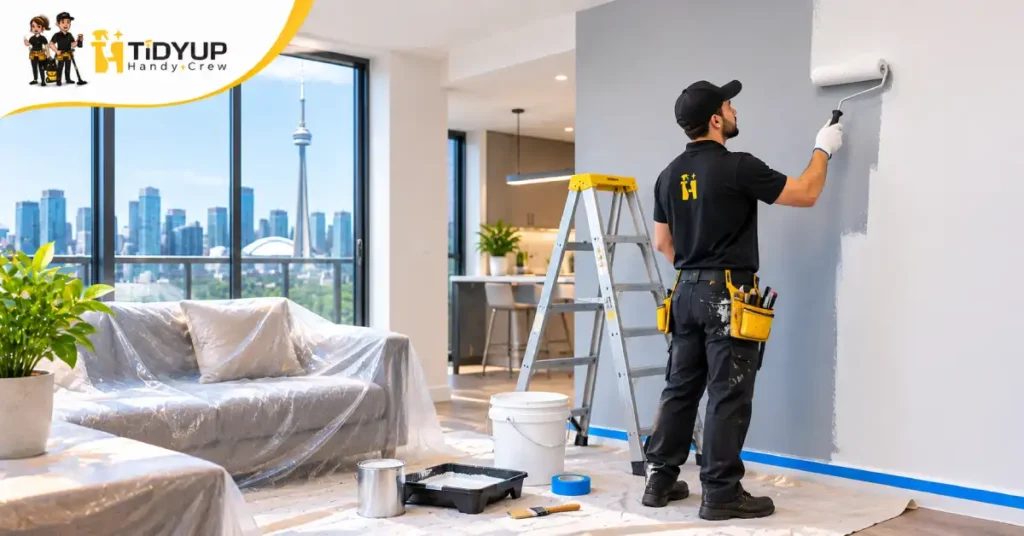
Condo painting in Toronto starts with more than choosing a colour. Before work begins, owners should review condo rules, confirm whether board approval or notice is required, arrange contractor access, check permitted work hours, and plan elevator or common-area protection where applicable. The Condominium Authority of Ontario recommends reviewing your corporation’s declaration, by-laws, and rules before making changes to a unit.
For Toronto condo owners, landlords, tenants with permission, and property managers, painting also requires practical planning around ventilation, limited space, natural light, furniture protection, and building access.
TidyUp HandyCrew provides condo painting and surface finishing services in Toronto for interior repainting projects. This guide explains condo painting rules, access planning, colour selection, preparation, scheduling, and what to check before requesting a quote.
What Is Condo Painting?
Condo painting is interior painting adapted to a condominium and its building requirements. Depending on the quotation, it may cover walls, ceilings, trim, doors, minor preparation, priming, and finishing. Contractors may also need registration, specific work hours, elevator access, and common-area protection.
The same planning applies to occupied condos and vacant rental units.
Do You Need Approval for Condo Painting?
Approval depends on the corporation and proposed work. Private interior repainting may not need formal colour approval, but access procedures and contractor requirements can still apply. Check your declaration, bylaws, rules, and renovation package.
Ask management about work descriptions, insurance documents, registration, permitted hours, and shared areas. The Condo Authority’s governing-document guidance explains how these rules operate. Painting a common corridor differs from repainting your bedroom.
Questions for management:
- Is notice or an application required?
- Which contractor documents are needed?
- What work hours and delivery rules apply?
- Does the project affect common elements?
For more extensive alterations, consult the Toronto home renovation planning checklist.
Toronto Condo Painting Access and Scheduling
Condo projects can stall when elevator bookings, parking, or registration are unresolved. Confirm logistics before choosing a painting date.
Elevators, Parking and Concierge
Ask about service elevators, loading hours, contractor parking, concierge sign-in, and suite access. Share necessary contact details securely.
Work Hours and Noise
Follow building hours. Toronto’s construction-noise requirements restrict clearly audible construction noise overnight, on Sundays, and statutory holidays, with Saturday provisions. Building rules may be stricter. Confirm whether sanding and repairs trigger these restrictions.
Common-Area Protection
Confirm elevator padding, corridor coverings, equipment storage, and approved disposal. Keep shared exits clear.
Illustrative example: A Tuesday paint delivery conflicts with a reserved move-in elevator. Rescheduling materials delays preparation. Confirm the booking first.
How to Choose Condo Paint Colours
Choose colours using your unit’s daylight, bulbs, flooring, and furniture. Test samples on actual walls, not only screens.
Small Condo Colour Planning
Continuous neutrals can connect open-plan rooms, while a darker accent may define one wall. Check undertones in morning and evening light.
Colour and Finish Comparison
| Area | Colour planning | Finish consideration |
| Living room | Compare undertones and flooring | Cleaning needs |
| Bedroom | Review day and evening light | Glare and touch-ups |
| Entryway | Coordinate adjacent rooms | Scuff resistance |
| Kitchen | Compare cabinets and counters | Product suitability |
| Ceiling and trim | Decide contrast | Sheen and condition |
Photograph sample boards and record product codes. A colour name alone may not identify an exact formulation. For broader techniques, read the Toronto painting services guide.
What Is Included in Condo Painting?
A quote should define painted surfaces, preparation, coats, and protection. Ask about walls, ceilings, trim, patching, primer, paint, cleanup, and furniture movement. Significant drywall damage, moisture, or specialty coatings may need separate assessment.
Confirm whether pricing includes materials, taxes, parking, and return visits. Specify whole-wall painting versus touch-ups; ageing paint and sheen differences can remain visible.
Furnished and Vacant Condo Painting
Furnished condos need more protection and staged access. Vacant units may offer easier movement between rooms, but building rules and drying requirements still apply. For furnished spaces, confirm who moves heavy items, whether closets need clearing, and which rooms remain accessible during painting.
For vacant rentals, schedule wall repairs and painting before final cleaning or listing photographs. Tenants should obtain the owner’s permission when required rather than assuming they can change permanent finishes.
Condo Painting Preparation Checklist
Before painters arrive:
- Confirm owner or landlord permission.
- Review rules and contractor documents.
- Book elevators, loading, and parking.
- List walls, ceilings, doors, and trim.
- Photograph damage and repair areas.
- Test colours; save product codes.
- Move valuables and small furniture.
- Arrange floor and hallway protection.
- Discuss ventilation, pets, and drying.
- Confirm pricing, cleanup, and walkthrough.
Keep management instructions and the approved quotation together.
Ventilation and Paint Safety in Condos
Compact units need ventilation planning. Health Canada recommends low-emission or low-VOC products and ventilation. Follow paint labels and coordinate airflow with building rules.
Identify damp or damaged surfaces before repainting. Health Canada also notes homes built before 1991 may have lead-based paint. Suspected coatings need assessment before sanding or scraping; routine painting should not disturb hazardous materials.
How Long Does Condo Painting Take?
Condo painting timelines depend on wall area, existing conditions, furniture, number of colours, preparation, drying, and building hours. A small unit is not automatically a one-day project, especially when ceilings, trim, or repairs are included.
Ask for separate milestones covering protection, patching, priming, painting, drying, and walkthrough. Allow time for access restrictions and product instructions. For multi-stage projects, the painting-after-renovation guide explains sequencing with other trades.
How Much Does Condo Painting Cost?
Condo painting cost in Toronto depends on surface area, condition, preparation, products, access, and included rooms. Floor area alone cannot capture complex layouts or ceiling and trim work.
Provide photographs and building instructions. Compare quotations for primer, coats, repairs, protection, parking, cleanup, and taxes. TidyUp’s interior house painting cost guide offers general context, not a guaranteed condo price.
Common Condo Painting Mistakes
Avoid these planning problems:
- Booking painters before checking management rules.
- Forgetting elevators, parking, or concierge registration.
- Choosing colours without testing actual lighting.
- Assuming every patch can be concealed by spot paint.
- Ignoring damaged surfaces or moisture problems.
- Forgetting drying and ventilation arrangements.
- Comparing quotes that cover different surfaces.
- Scheduling move-in too early.
Request Condo Painting in Toronto
Condo painting in Toronto works best when building rules, access, colours, surface conditions, and the quotation align before work begins. TidyUp HandyCrew offers condo painting through its Toronto painting and surface-finishing services, with scope and scheduling confirmed for each property.
Send your unit location, photos, room list, colour choices, building access requirements, and preferred dates.Request a condo painting quote to discuss practical options and next steps.
Condo painting in Toronto requires more than a paint colour. Confirm building permissions, elevator and contractor access, permitted hours, protection, ventilation, and finish choices first. A written scope helps owners, landlords, and property managers compare quotations and plan a smoother handover.
FAQs About Condo Painting
Q1: Do I Need Board Approval to Paint My Condo?
Possibly, depending on the corporation and project. Ordinary private interior repainting may not require colour approval, but contractor documents and building access rules can still apply. Contact management, review governing documents, and confirm whether any common elements are affected before booking.
Q2: Can Painters Work on Weekends?
Only when the building permits the work and applicable noise rules allow it. Many condominiums set specific contractor hours. Ask management about Saturday, Sunday, and holiday arrangements before choosing a date, particularly if sanding or repairs will create noise.
Q3: What Colours Work in Small Condos?
There is no universally best colour. Test neutral, warm, cool, or accent shades against flooring, cabinets, daylight, and evening lighting. Consider visual continuity in open-plan rooms. Keep a record of paint codes and sheen for consistent future touch-ups.
Q4: Should I Choose Low-VOC Paint?
Low-VOC or low-emission products can be useful choices for indoor painting. However, product labels and ventilation still matter. Ask which paint is suitable for each surface and how the space should be aired during and after application. Follow manufacturer guidance.
Q5: How Much Does Condo Painting Cost?
Pricing depends on room size, wall condition, ceilings, trim, paint, preparation, and access. Elevator scheduling, parking, repairs, and furniture protection can change the quotation. Compare itemized scopes and ask for a unit-specific estimate rather than relying on a single advertised price.
Q6: How Should I Prepare for Condo Painters?
Confirm approvals, access arrangements, room scope, final colours, and repair priorities. Move small belongings, secure valuables, and discuss floor protection. Ask about ventilation, drying time, cleanup, and the final inspection. Share your building’s contractor instructions before the appointment.
