

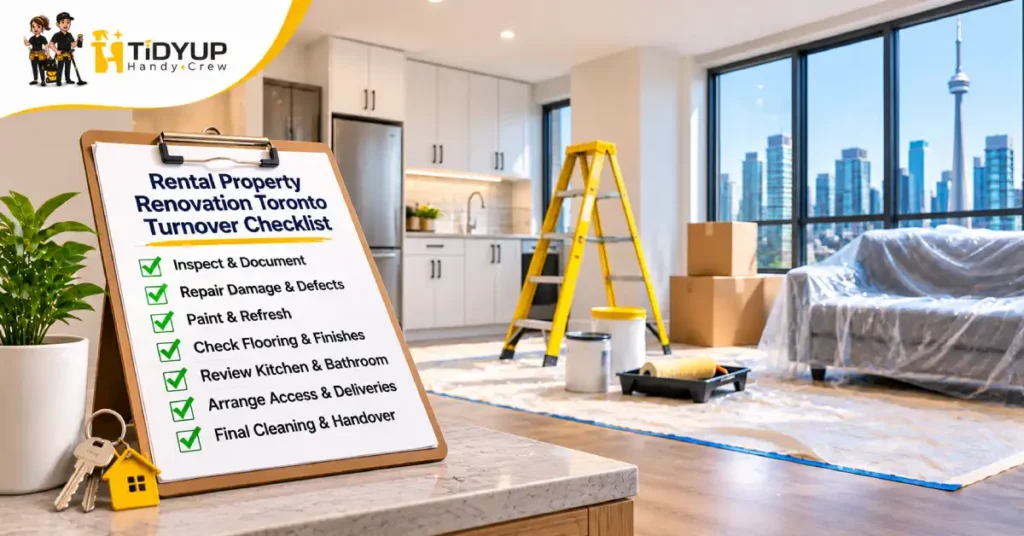
Rental property renovation Toronto means repairing or upgrading a rental unit’s walls, flooring, fixtures, and finishes before turnover or during legally coordinated work. Landlords should assess damage, confirm occupancy status, and plan repairs, permits, contractors, and handover before choosing cosmetic upgrades.
For landlords and property managers, the scope depends on whether a unit is lawfully vacant or occupied. Turnover work may include drywall repairs, painting, flooring, cabinet hardware, or bathroom fixtures. Occupied-unit renovations require lawful entry and respect for tenant rights.
This guide explains repair priorities, renovation versus cleaning, Toronto rules, costs, and timelines. It also provides a landlord checklist for requesting a quote. Explore TidyUp HandyCrew’s home renovation and upgrades services in Toronto for project enquiries.
Key Takeaways
- Inspect and photograph each room before selecting upgrades.
- Repair damage and investigate leaks before installing finishes.
- Distinguish a lawfully vacant turnover from an occupied rental.
- Check permits, building access, materials, and contractor responsibilities.
- Schedule final cleaning after dusty renovation work.
What Is Rental Property Renovation?
Rental property renovation means repairing, replacing, or upgrading physical parts of a rental home. Common projects include drywall repairs, flooring replacement, cabinets, fixtures, and interior finishing. Maintenance keeps existing features functioning; renovation improves or changes them. Cleaning removes dirt and residue rather than repairing worn materials.
For broader options, see our renovation services Toronto guide.Not every turnover requires remodelling.
Vacant vs Tenant-Occupied Renovations
A lawfully vacant rental offers greater scheduling flexibility. An expected move-out date does not establish vacant possession. Rental condos may still require elevator bookings, parking, and management approval.
Occupied rentals require different planning. Ontario’s renting rights guidance explains landlord maintenance responsibilities and lawful entry. Repairs generally require 24 hours’ written entry notice, with statutory exceptions. Most notified entries must occur between 8 a.m. and 8 p.m.
Cosmetic refreshes do not automatically justify displacing tenants. Extensive work needing vacancy involves separate procedures. Before arranging an occupied-unit project, identify which rooms remain usable, agree on communication channels, and avoid disrupting essential services. Keep written records of notices, contractor visits, and changes to the schedule.
What Should Landlords Renovate First?
Prioritize defects before optional upgrades. Choose materials suitable for rental use.
- Investigate leaks, water damage, or other potentially serious defects.
- Repair damaged doors, hardware, and loose or broken fixtures.
- Assess unsafe, lifting, or heavily damaged flooring.
- Patch drywall, wall holes, and worn trim.
- Review kitchen cabinets, hinges, countertops, and bathroom fittings.
- Plan repainting only after dusty repairs finish.
- Consider storage or layout upgrades if they solve a clear problem.
An older cabinet might need hardware, not replacement. Water stains require investigation before repainting.
Rental Property Renovation Checklist
Inspect and Document the Unit
Photograph damage and inspect walls, floors, cabinets, fixtures, doors, and visible plumbing. Measure before ordering. See our home renovation checklist for Toronto homeowners for general preparation.
Separate Repairs From Upgrades
Separate necessary repairs, worthwhile refreshes, and optional improvements. Agree on who authorizes unexpected work.
Plan Painting and Flooring
Inspect subfloors and transitions before selecting flooring. Complete dusty repairs before painting. See our interior painting guide.
Review Kitchens and Bathrooms
Inspect cabinets, hardware, counters, taps, caulking, and moisture. Determine whether repairs suffice. Regulated alterations may need qualified trades.
Arrange Access and Deliveries
Confirm keys, lawful access, elevators, parking, and material storage. Condo rentals require checking corporation rules. Measure delivery routes.
Organize Cleanup and Handover
Arrange debris removal, touch-ups, and a walkthrough. Photograph the handover. Consider post-renovation dust cleaning in Toronto after construction.
Rental Renovation vs Turnover Cleaning
Renovation repairs property; cleaning prepares surfaces afterward.
| Service | Main focus | Typical tasks | Best stage |
| Rental renovation | Physical upgrades | Flooring, cabinets, fixtures | Before cleaning |
| Handyman repairs | Individual defects | Doors, trim, hardware | Early turnover |
| Rental painting | Surface finishing | Patch and repaint | After dusty repairs |
| Turnover cleaning | Dirt and residue | Kitchen, bathroom, floors | Final preparation |
| Maintenance | Ongoing condition | Inspection and repairs | When required |
For cleaning scope rather than construction, consult rental property cleaning in Toronto.
Rental Property Renovation Toronto: Rules and Permits
Structural or material alterations, certain plumbing changes, and changes of use may require permits. Check the City of Toronto’s building permit guidance.
Toronto’s Rental Renovation Licence Bylaw has applied to qualifying N13 notices since July 31, 2025. It concerns extensive repairs or renovations that require a tenant to vacate under the provincial N13 process. It does not impose a renovation licence on every vacant-unit repainting or routine turnover. The City says a qualifying licence application must follow an N13 notice within seven days.
N13 also involves tenant protections and return rights. September 21, 2026 updates added return-date notification duties. Seek legal advice before planning displacement.
Rental Renovation Timeline: Practical Sequence
The schedule depends on possession, damage, permits, materials, and trades. Confirm constraints before promising dates.
- Confirm occupancy status and authorized access.
- Inspect, photograph, and prioritize repairs.
- Review permit and specialist requirements.
- Approve an itemized quote and order materials.
- Complete underlying repairs and installations.
- Finish drywall, painting, trim, and touch-ups.
- Remove debris and arrange final cleaning.
- Inspect the unit, document deficiencies, and complete handover.
Allow contingency for hidden damage and delivery delays.
Rental Renovation Costs in Toronto
Rental property renovation cost in Toronto depends on unit size, existing condition, materials, labour, and the number of repairs. Replacing damaged flooring differs from refreshing cabinet hardware. Plumbing, electrical, building access, and permit requirements can also change the budget.
Request itemized labour, materials, disposal, taxes, and cleaning costs. Compare scope exclusions and change-order procedures. No renovation guarantees higher rent. A useful quote worksheet has three columns: necessary repairs, optional improvements, and potential hidden work. Ask contractors to price alternatives separately. This gives landlords a clearer decision when the budget cannot cover every preferred upgrade.
Choosing Rental Renovation Contractors
Ask contractors about tenant access, trade qualifications, permits, deliveries, and cleanup. Compare materials, exclusions, timelines, and change-order procedures. Confirm who sources replacement parts, protects shared hallways, and checks the finished work. Ask for a single contact person when several trades are involved.
See our guide to choosing a renovation company in Toronto.
Common Landlord Renovation Mistakes
Avoid these planning problems:
- Starting before confirming lawful access or building permissions.
- Covering water damage with paint or new finishes.
- Replacing sound materials without a clear need.
- Ordering flooring before checking measurements and subfloors.
- Treating an occupied rental like an empty unit.
- Overlooking permits, specialist work, or written change orders.
- Booking cleaners before construction and touch-ups finish.
- Assuming renovations automatically justify a rent increase.
Final Landlord Turnover Checklist
- Confirm occupancy status, property address, and access.
- Photograph damage and identify urgent repairs.
- List optional upgrades separately.
- Check building rules, permits, and qualified trades.
- Record flooring, painting, kitchen, and bathroom decisions.
- Compare itemized quotations and exclusions.
- Agree on deliveries, scheduling, and disposal.
- Arrange finishing, cleaning, and final inspection.
Request Rental Renovation in Toronto
TidyUp HandyCrew helps Toronto owners discuss renovation and upgrade projects for apartments, rental condos, and townhouses.
Rental property renovation in Toronto works best when landlords document conditions, fix necessary damage, and plan upgrades around lawful access. Confirm permits and contractor responsibilities before work starts. Complete repairs before cleaning and document the final handover.
For a scope-specific estimate, request a rental property renovation quote from TidyUp HandyCrew.
Rental Property Renovation FAQs
Q1: What Should Landlords Renovate Between Tenants?
Prioritize necessary repairs to flooring, walls, doors, cabinets, and fixtures. Investigate leaks before cosmetic work. Repaint or upgrade functional areas when their condition warrants it. Finish with cleaning and a documented walkthrough rather than assuming every turnover needs a complete renovation.
Q2: How Much Does Rental Renovation Cost?
Costs depend on property size, existing defects, materials, labour, specialist trades, access, and permit requirements. Request itemized quotations with clear exclusions and contingency allowances. A minor refresh and a multi-room renovation need different budgets, so avoid relying on a single universal Toronto price.
Q3: Can Landlords Renovate Occupied Rentals?
Yes, some repairs and improvements can occur during a tenancy with lawful access and appropriate coordination. More extensive work may require additional processes. Landlords cannot treat ordinary upgrades as automatic grounds for displacement. Confirm tenant rights and seek legal advice when vacancy could be required.
Q4: Do Rental Renovations Need Permits?
Permit requirements depend on the work. Some cosmetic updates differ from structural changes, plumbing alterations, or changes of use. Check Toronto Building before starting. A municipal building permit and an N13-related Rental Renovation Licence serve different purposes and should never be confused.
Q5: How Long Does Rental Turnover Renovation Take?
Timing varies with the unit’s condition, repair scope, access, materials, permits, and contractor availability. Establish milestones for repairs, installation, finishing, cleaning, and inspection. Confirm lawful possession before planning a vacant-unit schedule, and allow time for unexpected findings or delayed deliveries.
Q6: Is Rental Renovation Different From Cleaning?
Yes. Renovation repairs or changes the property, including flooring, drywall, cabinetry, and fixtures. Cleaning removes dirt, dust, and residue from existing surfaces. Landlords generally schedule major repairs first, painting and touch-ups next, and final turnover cleaning near the end of preparation.
