

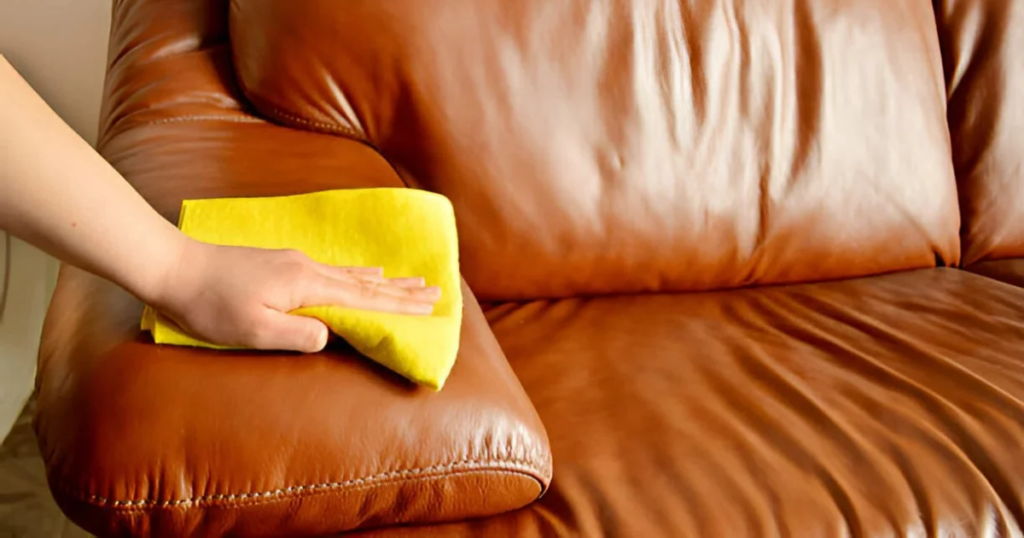
Your leather sofa is one of the most expensive pieces of furniture in your home, and most people clean it incorrectly. Harsh products, too much water, or simply skipping care altogether, these mistakes cause leather to crack, fade, and age years before its time.
Cleaning a leather sofa means removing dirt, oil, and stains from the surface using the right cleaner for your leather type, then conditioning it to restore moisture and prevent cracking.
Toronto’s dry winters make this even more urgent. Indoor heating pulls moisture out of leather fast, and without regular care, damage builds quietly until it is too late.
At TidyUp HandyCrew, we offer professional carpet and upholstery deep cleaning services for Toronto homes, handling everything from stubborn stains to full sofa restoration.
In this blog, we’ll cover everything you need to know.
Know Your Leather Type Before You Clean Anything
Most people grab a cloth and start wiping. That is the mistake.
Leather is not one material: There are several distinct types, and the wrong cleaner on the wrong leather can cause permanent discolouration, drying, or cracking within a single cleaning session. Before you touch your sofa with anything, spend two minutes figuring out what you are working with.
Pigmented (Protected) Leather
This is the most common type in Canadian homes, and the most forgiving. Pigmented leather has a polymer coating on the surface that gives it an even colour and a slightly smooth, almost plastic-like feel.
The easiest way to identify it: drop a small amount of water on an inconspicuous spot. If it beads up and sits on the surface, you almost certainly have pigmented leather. It handles mild soap and water well, which is why most of the cleaning steps in this guide apply to this type.
Aniline and Semi-Aniline Leather
This type looks richer and more natural. You can see the grain of the hide clearly, and the colour has more depth and variation. But that natural beauty comes with a cost. Aniline leather has no protective coating, which means liquids absorb directly into the hide.
Semi-aniline has a light protective layer, but it is still far more sensitive than pigmented leather. Use minimal moisture, work quickly, and never let any liquid sit on the surface.
Suede and Nubuck
These are a completely different category. Both have a soft, brushed texture. And both require a completely different cleaning approach. No water. No soap. Full stop.
Suede and nubuck need dry cleaning methods only, such as a soft suede brush or a dedicated dry eraser. Using water on these materials causes permanent watermarks and matting that cannot be reversed at home.
How to Do a Quick Patch Test
Whatever leather type you have, always do a patch test first. Apply a small amount of your chosen cleaner to a hidden area, such as the back of a cushion or the underside of an armrest. Wait five minutes. Check for colour change, darkening, or any surface reaction.
If nothing happens, you are safe to continue. If the leather reacts at all, stop and reassess your product choice. This one step takes less than ten minutes and can save your sofa.
What You’ll Need to Clean a Leather Sofa
No expensive kits required. Most of what you need is already in your home.
Here is what to gather before you start:
- A soft-bristle vacuum attachment: Standard vacuum heads can scratch the surface. Use the brush attachment only.
- Two microfibre cloths: One for cleaning, one for rinsing. Microfibre is gentle and highly absorbent without being abrasive.
- Distilled water: Not tap water. Toronto’s tap water contains minerals that can leave faint marks on leather as it dries. Distilled water avoids this entirely.
- A small amount of mild soap: A few drops of castile soap or a pH-neutral dish soap works well. You do not need much.
- A purpose-made leather conditioner: This is the step most people skip, and it is arguably the most important one. Any reputable leather conditioner from a hardware or furniture shop will work.
- Optional: a store-bought leather cleaner: If you prefer not to mix your own solution, a dedicated leather cleaning product is a reliable alternative. Check that it is suitable for your specific leather type before applying.
That is the full list. Simple, low-cost, and effective.
How to Clean a Leather Sofa: Step by Step
These steps are written for pigmented or protected leather, which covers the vast majority of sofas in Toronto homes. If you have aniline, suede, or nubuck, refer back to the leather type section above before proceeding.
Step 1: Remove Cushions and Vacuum First
Start by removing all seat cushions and setting them aside. Then vacuum the entire sofa using your soft brush attachment.
Never skip the vacuum step; Dirt and grit sitting on the surface will act like sandpaper the moment you apply a damp cloth. Pay close attention to seams, creases, and the areas along the base where crumbs and dust accumulate. The sofa needs to be completely free of loose debris before any liquid touches it.
Step 2: Mix Your Cleaning Solution
Fill a small bowl with distilled water and add two to three drops of mild soap. That is all.
Do not increase the soap ratio; more soap does not mean a better clean. It means more residue left behind, which dulls the leather over time. A lightly soapy solution is all the surface needs.
Step 3: Wipe Down the Surface
Dip one microfibre cloth into the solution and wring it out thoroughly. The cloth should feel damp, not wet.
Work in sections; Start at the top of the backrest and move downward. Use gentle circular motions rather than straight scrubbing strokes. Never press hard. The goal is to lift dirt from the surface, not to push it deeper into the leather. If your clothes get visibly dirty, rinse it before continuing.
Step 4: Rinse Off the Soap Residue
Once you have wiped the full surface, take your second microfibre cloth, dampen it with plain distilled water, and go over the sofa again.
This step is not optional. Soap residue left on leather attracts dust and causes the surface to look dull within days. A clean rinse takes an extra five minutes and makes a visible difference.
Step 5: Dry Properly
Leave the sofa to air dry naturally. Do not use a hair dryer, a fan heater, or place the sofa in direct sunlight to speed things up.
Forced heat is one of the fastest ways to crack leather; It strips moisture from the hide far faster than the material can handle. An hour or two of natural air drying is all it needs. Open a window if the room is humid.
Step 6: Apply a Leather Conditioner
Once the sofa is fully dry, apply a small amount of leather conditioner to a clean cloth and work it across the surface in gentle circular motions.
This is the step that extends your sofa’s life; Conditioner restores the natural oils that cleaning removes, keeping the leather supple and resistant to cracking. Apply it every six to twelve months as part of your regular care routine. In Toronto winters, you may want to do this every three to four months given how dry indoor heating makes the air.
How to Remove Specific Stains from a Leather Sofa
General cleaning handles everyday grime. Stains are a different problem entirely, and each type needs its own approach.
Ink or Pen Marks
Act fast. Fresh ink is far easier to remove than dried ink.
Dip a cotton swab into rubbing alcohol and dab, do not rub, directly onto the mark. Use light pressure and replace the swab frequently. Rubbing spreads the ink further into the leather. Keep dabbing with fresh swabs until the mark lifts.
For dried ink that has been sitting for days, results will vary depending on how deeply the ink has absorbed. If dabbing with alcohol does not shift it, a professional clean is your safest next step.
Grease or Oil Stains
Water makes grease worse. Do not reach for a damp cloth.
Instead, sprinkle a small amount of cornstarch or talcum powder directly onto the stain and leave it for a minimum of four hours, ideally overnight. The powder draws the oil up and out of the leather. Once it has sat long enough, brush it away gently with a soft cloth and follow up with your mild soap solution.
This method works well on fresh grease. Old oil stains that have fully absorbed into the hide are much harder to shift without professional equipment.
Water Marks and Rings
Water marks on leather look counterintuitive. More water actually fixes them.
Take a damp cloth and lightly moisten the entire panel around the mark, not just the spot itself. When you wet only the stain, it dries with a new ring around the edge. Wetting the whole section evenly allows it to dry uniformly, and the mark disappears as it dries. Follow with conditioner once dry.
Pet Hair and Pet Odour
For pet hair, a slightly damp rubber glove works better than most lint rollers. Run your hand across the surface with light pressure and the hair clumps together and lifts off easily.
Pet odour is a separate issue. Pet oil and dander absorb into leather over time in a way that regular wiping cannot fully address. For light odour, sprinkle a small amount of baking soda on the surface, leave it for a few hours, then vacuum it off gently with the brush attachment. For a persistent or strong pet smell, professional upholstery cleaning is the only reliable solution.
Mold or Mildew Spots
Mold on a leather sofa usually means there is a moisture problem in the room, not just on the surface.
Mix equal parts rubbing alcohol and water in a small bowl. Apply to the affected area with a cloth, using light circular motions. This kills the surface mold without soaking the leather. Once clean, dry the sofa thoroughly and improve ventilation in the room.
But here is the thing. If mold has penetrated deeply into the cushioning or seams, surface treatment will not solve it. The mold will return. At that point, professional assessment is the right call.
What You Should Never Use on a Leather Sofa
Some of the most common household cleaning products can damage leather badly. Before you reach for something from your kitchen or bathroom cabinet, check this list.
- Bleach. It strips colour permanently and breaks down the leather’s surface coating. Even diluted bleach is not safe on any leather type.
- Ammonia-based sprays. Many multi-surface cleaners contain ammonia. It dries leather out aggressively and causes long-term cracking.
- Baby wipes. Most baby wipes contain alcohol, fragrance, or preservatives that strip natural oils from leather. Occasional use on pigmented leather may not cause immediate damage, but regular use degrades the surface over months.
- Excess dish soap. A few drops in distilled water is fine. Using dish soap at full strength, or in large amounts, leaves a residue that attracts dirt and dulls the finish.
- Hair dryers and heat sources. Already covered in the drying step, but worth repeating. Forced heat causes leather to dry unevenly and crack.
- Paper towels. They feel soft, but paper towels are abrasive on leather surfaces. Over time, they cause micro-scratches that dull the finish. Always use a microfibre cloth.
- Saddle soap on delicate leather. Saddle soap is designed for thick, heavy-duty leather like saddles and boots. On aniline or semi-aniline sofa leather, it is far too harsh.
- Too much water. Leather is not waterproof. Soaking it causes swelling, watermarks, and weakens the hide over time.
How Often Should You Clean a Leather Sofa?
The answer depends on how much use the sofa gets, whether you have pets or children, and how dusty your home tends to be. But as a general rule, this three-tier schedule works well for most Toronto households.
| Frequency | What to Do |
| Weekly | Wipe down with a dry microfibre cloth to remove dust and surface debris |
| Monthly | Light damp wipe using your mild soap and distilled water solution |
| Every 6 to 12 months | Full deep clean followed by leather conditioning |
Stick to this schedule and your sofa will stay in good condition with minimal effort. Skip it for a year and you are dealing with built-up grime, dull leather, and early cracking.
One note for Toronto winters
The heating season runs from roughly October through April. During those months, indoor air gets significantly drier due to forced-air heating. Consider moving your conditioning cycle to every three to four months during winter rather than waiting the full six to twelve months.
Toronto Homeowners: Why Your Leather Sofa Needs Extra Attention in Winter
Toronto winters are hard on leather in a way that most cleaning guides never mention. And most of those guides are written for the US or the UK, where indoor heating conditions are completely different.
Forced-air heating systems
These are standard in the vast majority of Toronto homes, pushing dry heated air through the house continuously from October through April. Indoor humidity during this period regularly drops to 20 to 30 percent. The recommended range for leather furniture is 45-50%.
That gap matters. At 20 to 30 percent humidity, leather loses moisture steadily. You will not notice it happening week by week, but by spring the surface will feel stiffer, look duller, and show fine cracks along the seams and fold lines.
The worst spots in any Toronto home are the areas closest to baseboards, heating vents, and radiators. If your sofa sits near a vent, the leather on that side will dry out faster than the rest. Rotate cushions occasionally and, if possible, move the sofa slightly away from direct heat sources.
A simple humidifier in the living room makes a real difference
Keeping indoor humidity between 45 and 50 percent during winter reduces the strain on leather furniture significantly. It also helps with dry skin, wood floors, and houseplants, so it is worth the investment regardless.
Condition your leather sofa every three to four months during the heating season rather than waiting the standard six to twelve months. This one adjustment alone extends the life of the leather noticeably.
And if your sofa is already showing signs of dryness, stiffness, or early cracking after a long winter, a professional clean and condition can restore a significant amount of that lost suppleness before permanent damage sets in.
When Should You Call a Professional to Clean Your Leather Sofa?
DIY cleaning handles regular maintenance well. But there are situations where it is simply not enough, and pushing on regardless can make things worse.
Here are the situations where a professional clean is the right call.
Deep-set stains that have not responded to home treatment
Once a stain has fully absorbed into the leather and dried, home methods rarely shift it completely. A professional has access to cleaning agents and equipment that work at a deeper level without risking surface damage.
Cracking or peeling leather
If the surface is already showing cracks, aggressive wiping or the wrong product can worsen the damage quickly. A professional can assess whether the leather can be restored and condition it properly to stop further deterioration.
Mold that keeps returning
Surface mold you can treat at home. Mold that has penetrated the cushioning or the sofa’s internal structure is a different problem and needs proper treatment to remove it fully.
Large or heavily used sofas
A three or four-seat sectional used daily by a family with pets accumulates a level of grime, oil, and odour that a home clean cannot fully address. The results from a professional clean are simply not comparable.
Unknown leather type
If you genuinely cannot identify your leather type and you are unsure what products are safe, do not guess. A professional will identify the material correctly and use the right method.
Get in touch with us today for a free quote. We will tell you honestly what your sofa needs.
Frequently Asked Questions
Q1: Can I use baby wipes to clean a leather sofa?
Answer: baby wipes contain alcohol or fragrance that strips natural oils from leather over time. Occasional use on pigmented leather may be fine, but not recommended for regular cleaning.
Q2: Does vinegar damage leather sofas?
Answer: Straight vinegar can dry out and discolour leather. A very diluted solution (1 part vinegar to 10 parts water) can be used cautiously on some leather types, but a mild soap solution is always safer.
Q3: How do I get a bad smell out of a leather sofa?
Answer: Baking soda lightly sprinkled and left overnight can absorb odours. Ventilating the room and keeping humidity controlled also helps. For deep pet odour or mold smell, professional cleaning is more effective.
Q4: Can I use olive oil or coconut oil to condition my leather sofa?
Answer: These home oils can temporarily soften leather but often leave residue, attract dirt, and can go rancid over time. A purpose-made leather conditioner is much safer and longer-lasting.
Q5: How long does it take for a leather sofa to dry after cleaning?
Answer: Air drying typically takes 1–2 hours for a light clean. After a full deep clean, allow 3–4 hours before sitting. Never speed the drying with heat sources.
Conclusion
Your leather sofa is built to last decades. But only if you treat it right.
Dust builds up weekly. Stains set fast. And Toronto’s dry winter heating quietly strips moisture from the leather month after month. Waiting until the damage is visible means the damage is already done.
At TidyUp HandyCrew, we offer professional carpet and upholstery deep cleaning services for homes across Toronto and the GTA. Whether you are dealing with stubborn stains, pet odour, or leather that needs a full restoration, our team handles it properly.
Do not wait until your sofa is past saving. Book your carpet and upholstery deep cleaning service today.
