

Your carpet could be hiding up to 200,000 bacteria per square inch. That’s not a scare tactic. That’s just what happens when dirt, moisture, and daily life build up inside carpet fibres over time. Knowing how to deep clean carpets at home is one of the most useful skills a homeowner can have.
Deep cleaning a carpet means going beyond surface vacuuming to remove embedded dirt, allergens, bacteria, and odours from deep within the carpet fibres. It typically involves pre-treating stains, applying a cleaning solution, agitating the fibres, and extracting or blotting the dirt until the carpet is fully refreshed.
At TidyUp HandyCrew, we offer professional Carpet & Upholstery Deep Cleaning Services for homeowners across Toronto and the GTA who need results that go further than any DIY method can deliver. In this blog, we’ll walk you through everything you need to know.
Why Deep Cleaning Your Carpet Actually Matters
Most Toronto homeowners vacuum regularly. But vacuuming only removes surface-level debris. It does nothing for what is buried deep inside the fibres. And a lot is buried there.
Carpet fibres trap dust mites, pet dander, mould spores, bacteria, and allergens that build up silently over months. You cannot see them. You cannot smell most of them. But they are there, and they affect the air quality inside your home every single day. Regular vacuuming removes roughly 85% of dry soil but leaves behind the fine particles, moisture-based grime, and biological matter that actually cause damage over time.
The Carpet and Rug Institute recommends professional deep cleaning every 12 to 18 months to remove embedded dirt that home vacuuming cannot reach. But the health case matters just as much as the lifespan case.
How to Deep Clean Carpets at Home: Step by Step
Here is the full process, from start to finish. Follow these steps in order. Skipping ahead, especially skipping the vacuum step, makes every stage less effective.
Step 1: Clear the Room and Vacuum Thoroughly
Move as much furniture out of the room as possible. Tables, chairs, anything lightweight. For heavier pieces like sofas, clean in sections around them, then shift them slightly to reach underneath. Vacuum the entire carpet twice. First pass in one direction. Second pass at a 90-degree angle. This lifts more dirt from different angles within the fibre.
Step 2: Identify and Pre-Treat Stains
Greasy stains need a dish soap solution to cut through the residue. Non-greasy stains respond well to a white vinegar and water mix. Before applying anything to a visible area, test your chosen solution on a hidden patch of carpet first. Leave it for 10 minutes and check for colour change or fibre damage.
Step 3: Deep Clean Using Your Chosen Method
Once stains are pre-treated, apply your chosen cleaning method across the full carpet. The three main DIY methods are covered in detail in the next section. Choose based on your tools and the level of dirt you are dealing with. Work in sections. Do not try to clean the whole room in one pass.
Step 4: Rinse and Remove Residue
This step is one most people skip. That is a mistake. Soap residue left in carpet fibres acts like a magnet for new dirt. A carpet cleaned with soap but not rinsed will look dull again within days.
Step 5: Dry the Carpet Completely
Open every window in the room. Point a fan directly at the carpet. If you have air conditioning or a dehumidifier, run it. Steam-cleaned carpets take 4 to 8 hours to dry fully. Dry methods using baking soda and light solutions typically dry within 1 to 2 hours. Do not walk on the carpet until it is completely dry.
Three Methods to Deep Clean Carpets at Home
There is no single right way to deep clean a carpet at home. The best method depends on what tools you have, what type of carpet you own, and how dirty it actually is. These three methods cover the full range.
Method 1: How to Deep Clean Carpet Without a Machine
This method works well for light to moderate dirt. It is also the best option for renters who cannot bring in specialist equipment or who are working with a smaller budget.
Your cleaning solution: Mix two cups of warm water, one tablespoon of white vinegar, and one teaspoon of dish soap in a spray bottle. Shake gently.
Here is how to apply it:
- Vacuum the carpet thoroughly (twice, as covered in Step 1).
- Lightly mist a section of the carpet with your solution. Do not saturate it.
- Use a stiff-bristle brush to work the solution into the fibres using short circular strokes.
- Let the solution sit for 10 to 15 minutes.
- Blot the area firmly with a dry microfiber cloth to lift the dirt out.
- Lightly mist with plain cold water to rinse, then blot dry again.
- Move to the next section and repeat.
Method 2 : How to Deep Clean Carpet With a Steam Cleaner or Machine
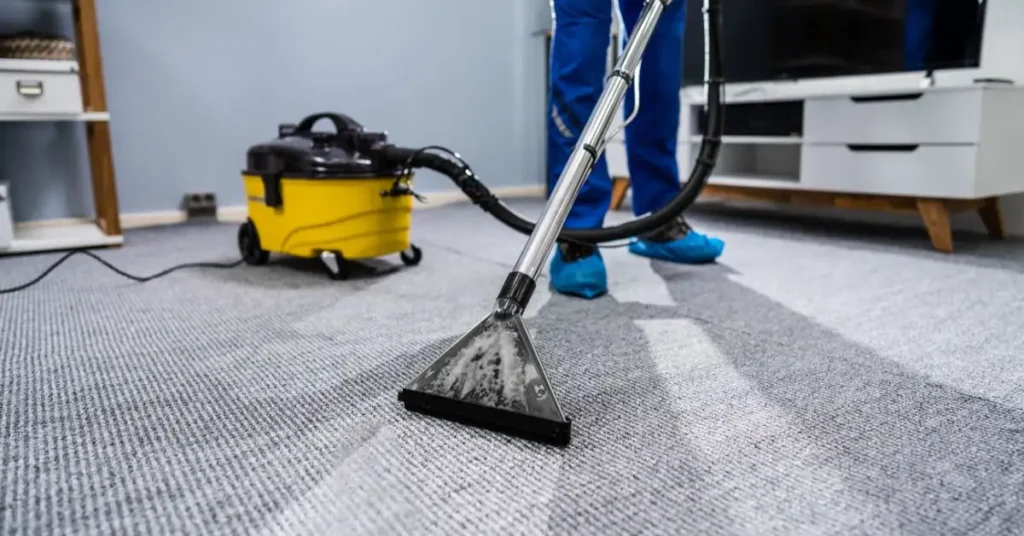
Steam cleaning is the method most carpet manufacturers recommend. It uses hot water extraction to push cleaning solution deep into the fibres and then pull the dissolved dirt back out with strong suction. If you are renting a machine, read the instructions before you start. Different machines have different fill levels, heat settings, and nozzle types.
Method 3 : The Baking Soda and Vinegar Method (Quick Refresh)
This method will not replace a full deep clean. But it is excellent for refreshing a carpet between deep cleans, controlling odours, and lifting surface-level grime quickly. For odour control specifically, you can leave the baking soda overnight before adding the vinegar. The longer it sits, the more odour it absorbs.
How to Deep Clean Carpet With Pets and Kids in the Home
Pets and young children change the equation completely. Standard cleaning solutions, including many commercial carpet shampoos, contain chemicals that are safe for adults but can irritate a child’s skin or a pet’s respiratory system. And pet accidents create a specific type of stain that most general cleaning methods simply cannot fully remove.
How to Remove Pet Urine Stains and Odours from Carpet
You need an enzyme-based cleaner for pet accidents. Enzyme cleaners contain biological compounds that break down uric acid at a molecular level. Most pet stores and supermarkets carry them. For deeply embedded pet odours that home methods cannot fully remove.
Safe Cleaning Methods for Homes With Young Children
Baking soda and diluted white vinegar are both child-safe and effective. Neither contains synthetic chemicals, fragrances, or compounds that pose a risk to young children or pets.Ventilate the room during and after cleaning. Open windows and run a fan. The smell of vinegar fades completely once the carpet dries.
Carpet Type Guide: Does Your Method Match Your Carpet?
Not every carpet can handle every cleaning method. Using the wrong technique on the wrong fibre type can cause shrinkage, colour fading, or permanent damage to the pile. Check your carpet label before starting. If the label is gone, contact the manufacturer or building manager if you are renting.
Nylon and Polyester Carpets
Both fibres are durable, stain-resistant, and generally safe for steam cleaning and most DIY methods. Nylon handles repeated cleaning well without losing its shape. Polyester is naturally hydrophobic, which means it resists liquid stains, but it attracts oily residues over time.
Wool and Natural Fibre Carpets
Wool carpets need gentle handling. Full stop. Avoid hot water, aggressive scrubbing, bleach-based products or anything with strong acid or alkali content. Hot water causes wool fibres to shrink and felt, and that damage is irreversible. Use cold or lukewarm water only. Apply cleaning solutions sparingly. Blot, do not scrub.
Polypropylene (Olefin) Carpets
Polypropylene is moisture and mould resistant, which makes it a popular choice for basements and high-humidity areas. But it has a low melting point. High-heat steam cleaning can distort the fibres, cause discolouration, or leave permanent marks. Stick to dry cleaning methods or low-temperature options for polypropylene.
When DIY Isn’t Enough: Signs You Need a Professional Carpet Cleaner
There is no shame in reaching the limit of what home cleaning can do. Some situations genuinely require professional-grade equipment, and recognising them early saves both your carpet and your time.
Here are the signs that DIY has run its course.
- Stains keep coming back after cleaning.
- Pet odours return within days of cleaning.
- You can see mould or mildew spots.
- The carpet has not been cleaned in more than two years.
- Allergy symptoms are worsening at home.
- The carpet looks flat and dull no matter what you do.
And if your whole home needs attention, our House Deep Cleaning Services cover every room from top to bottom.
Carpet Maintenance Tips to Keep It Clean Longer
A deep clean is only worth the effort if you protect the result afterwards. These habits take very little time but significantly slow down how fast your carpet gets dirty again.
- Use doormats at every entrance
- Adopt a no-shoes policy indoors.
- Treat spills within the first two minutes.
- Use furniture pads under heavy legs.
- Rotate furniture twice a year.
- Do a baking soda refresh monthly.
For ongoing home maintenance that goes beyond carpets, our Regular House Cleaning Services keep your entire home in consistently good condition between deep cleans.
Final Thoughts
Deep cleaning your carpet is not a big project. It is a series of small, deliberate steps that protect your home, your health, and the money you have already spent on your flooring. Every week you leave it, more dirt settles deeper into the fibres. More allergens, odours and wear.
At TidyUp HandyCrew, we work with Toronto homeowners who have tried the DIY route and need results that go further. Our team arrives fully equipped, background-checked, and ready to handle everything from stubborn pet stains to carpets that have not seen a proper clean in years. Your home deserves better than a quick vacuum. Book our Carpet & Upholstery Deep Cleaning Services today and get a free quote from Toronto’s trusted cleaning crew.
Frequently Asked Questions About Deep Cleaning Carpets at Home
Question: How do you deep clean a carpet without a machine?
Answer: Mix one tablespoon of white vinegar, one teaspoon of dish soap, and two cups of warm water in a spray bottle. Vacuum the carpet thoroughly first, then mist the solution onto the carpet in sections, work it in with a stiff-bristle brush, let it sit for 10 to 15 minutes, and blot dry with a microfiber cloth.
Question: Can I use baking soda and vinegar to deep clean my carpet?
Answer: Yes, but this method works best as a maintenance refresh rather than a full deep clean. Baking soda absorbs odours and loosens surface grime, while diluted white vinegar helps lift stains and disinfect the fibres. For heavily soiled carpets, embedded allergens, or persistent stains, this method alone will not reach deep enough into the carpet backing to fully resolve the problem.
Question: How long does it take for carpet to dry after deep cleaning?
Answer: Steam-cleaned carpets typically take 4 to 8 hours to dry completely. Dry methods using baking soda and light solution take 1 to 2 hours. Open windows, run a fan, and turn on your air conditioning or heating to speed up the process.
Question: How often should you deep clean your carpets?
Answer: For most households, a DIY deep clean every 3 to 6 months is a good baseline, combined with weekly vacuuming and a monthly baking soda refresh. Homes with pets, young children, or allergy sufferers should deep clean more frequently, every 2 to 3 months.
Question: When should I hire a professional carpet cleaner instead of doing it myself?
Answer: Hire a professional when stains keep returning after cleaning, pet odours come back within days, you notice mould or mildew spots, or the carpet has not been properly cleaned in over two years.
