

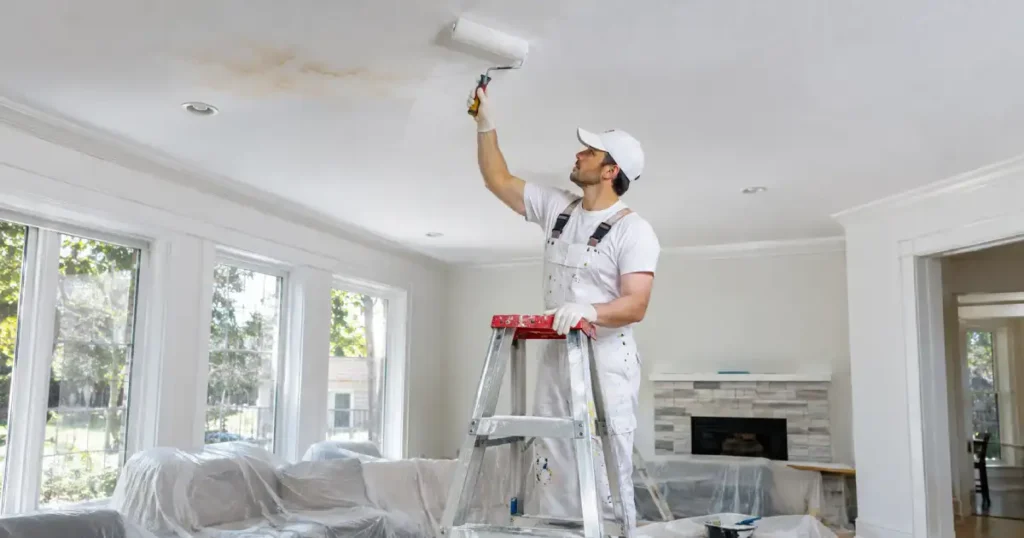
Ceiling painting in Toronto works best when the surface is clean, dry, stable, and properly prepared before the finish coat is applied. Water stains should be traced to their source first, damaged drywall repaired, and stains or bare areas primed where needed. Paint alone will not fix an active leak, loose texture, or recurring moisture problem.
For Toronto homeowners, landlords, and condo managers, ceiling projects also require planning for furniture protection, overhead access, lighting, texture, and the condition of existing coatings. Benjamin Moore notes that stain-blocking primer may be needed for water, smoke, or other stains before repainting.
Older homes may need extra caution before sanding or scraping. Health Canada notes that older Canadian homes can contain lead-based paint.
TidyUp HandyCrew provides house painting and surface finishing services in Toronto for suitable ceiling-painting projects.
What Is Ceiling Painting?
Ceiling painting is the preparation and recoating of an interior overhead surface. Work may include inspection, minor patching, surface cleaning, spot priming, protecting the room, and applying finish coats. Smooth drywall, plaster, and textured ceilings require different approaches. Painting changes the appearance; it does not repair active moisture or structural defects.
For broader room-painting choices, see our interior painting Toronto guide.
What Causes Ceiling Stains?
Brown rings may indicate previous leaks, while yellowing can result from smoke, cooking residue, or ageing finishes. Inspect plumbing, roofing, and recurring dampness before painting; appearance alone cannot identify the cause.
Water Stains and Leaks
A resolved mark may need stain-blocking primer. Fresh dampness, bubbling paint, sagging board, or a recurring stain requires investigation first. Never cover soft, wet material just to meet a decorating deadline.
Smoke and Surface Discolouration
Smoke residue and kitchen deposits need appropriate cleaning and drying. Some marks bleed through ordinary topcoat; extensive contamination needs assessment.
Should You Repair or Repaint?
Repaint sound ceilings with cosmetic wear. Repair first when material is loose, cracking, water-damaged, or uneven. Severe defects need specialist evaluation.
| Ceiling condition | Recommended next step | Limitation |
| Sound, dull finish | Clean and assess repainting | Colour or sheen may still vary |
| Dry, resolved stain | Assess stain-blocking spot primer | Leak must be fixed |
| Small drywall patch | Finish patch and prime | Texture matching may remain visible |
| Peeling or sagging area | Investigate and repair | Paint cannot stabilize failed board |
| Unidentified older texture | Assess hazardous materials first | Avoid scraping or sanding |
| Large or recurring crack | Investigate movement or joint failure | Cosmetic filler may fail again |
For the patching stage, refer to our drywall repair and painting Toronto guide.
Ceiling Painting Toronto: Preparation
A good ceiling finish depends on the condition of everything underneath it. Follow material and manufacturer instructions.
- Inspect: Identify stains, cracks, texture, peeling paint, and possible moisture.
- Protect: Cover flooring, furniture, walls, light fixtures, and belongings as agreed.
- Clean: Remove compatible surface dirt and dust without soaking the ceiling.
- Repair: Address sound, repairable cracks or patches; refer serious problems for assessment.
- Prime: Seal porous drywall or resolved staining where a suitable primer is needed.
- Paint: Cut in edges, roll or apply compatible finish coats, then inspect after drying.
Benjamin Moore’s ceiling-painting guidance recommends protecting the room, cutting in before rolling, and working with a consistent wet edge. It distinguishes bare drywall from previously painted ceilings.
Which Ceiling Paint Finish Works?
Flat or ultra-flat ceiling paint is often selected because lower sheen makes minor surface imperfections less noticeable. Coating choice still varies. Consider lighting, humidity, and maintenance.
Smooth living-room ceilings: A compatible flat finish often gives a less reflective appearance.
Kitchens and bathrooms: Check moisture conditions, ventilation, and product recommendations before selecting paint.
Decorative ceilings: Colour can coordinate with trim or walls, but strong daylight may reveal roller marks.
Previously textured ceilings: Confirm that the coating suits the texture without damaging it.
Sample colours in different light; record paint codes and sheen.
Can Popcorn Ceilings Be Painted?
Sometimes, a stable textured ceiling can be recoated without removal. However, older texture may contain asbestos, and forceful preparation can release hazardous material. Never assume an unfamiliar popcorn or stipple ceiling is safe to scrape, sand, or disturb.
Ontario’s asbestos workplace guidance explains that Regulation 278/05 can apply to building repair and construction work involving asbestos-containing materials. Arrange qualified assessment where material is suspect. Texture removal and remediation need separate scopes.
How Do You Avoid Roller Marks?
Uneven loading, drying edges, and strong side lighting can expose visible lines. Plan a manageable sequence, use compatible tools, and follow recoat instructions. A second coat does not automatically correct poor preparation.
Paint ceilings before walls in combined projects. Our painting-after-renovation guide discusses sequencing after other trades finish.
Toronto Condos, Homes and Access
Condo ceiling painting may require contractor registration, elevator bookings, parking arrangements, and permitted work hours. Occupied North York condos, Scarborough rentals, and older Etobicoke houses require different access plans.
Toronto’s construction-noise guidance restricts clearly audible construction noise during specified evening, overnight, Sunday, and holiday periods. Condo rules may be stricter. Confirm whether repair or sanding work falls under applicable restrictions instead of assuming all painting activities have identical noise requirements.
Older homes may have plaster or multiple coating layers. Health Canada’s renovation safety advice recommends assessing suspected lead paint before disturbance and ventilating during renovations. Protect occupants and follow product labels.
How Long Does Ceiling Painting Take?
Timing depends on area, height, surface damage, texture, primer, coat requirements, and drying conditions. A smooth ceiling with sound paint usually needs fewer preparation stages than a stained ceiling requiring repairs or specialist access.
Ask about drying, setup, visits, and walkthroughs. Allow extra time if a leak or damaged substrate must be corrected first.
What Affects Ceiling Painting Cost?
Ceiling painting cost in Toronto depends on ceiling area, height, texture, room protection, repairs, primer, and paint coverage. Ceiling-only work still requires masking and protection.
Use this original ceiling quote comparison worksheet:
| Quote detail | What to confirm |
| Ceiling size | Room dimensions, ceiling height, slopes |
| Condition | Stain photos, cracks, texture, prior leaks |
| Preparation | Furniture protection, patching, cleaning |
| Paint system | Primer, product, sheen, coverage standard |
| Access | Ladders, stairwells, condo instructions |
| Finishing | Cleanup, return visits, taxes, walkthrough |
For wider painting budgets, see our Toronto interior painting cost guide. Request a ceiling-specific estimate.
Before-Booking Ceiling Painting Checklist
- Photograph stains, cracks, peeling, and textured areas.
- Confirm suspected leaks have been investigated and repaired.
- Identify ceiling material and any older-coating concerns.
- Measure rooms and note stairwells or high ceilings.
- Specify ceiling-only work or combined wall painting.
- Discuss primer, sheen, colour, and number of coats.
- Confirm furniture protection, ventilation, and access.
- Ask who handles repairs, cleanup, and the final inspection.
Ceiling Painting FAQs
Q1: Can You Paint Over Water Stains?
Yes, when the water source is resolved and the ceiling is dry and sound. Cleaning, repair, and a compatible stain-blocking primer may be needed before finish coats. Ordinary paint alone may let discoloration show through. If stains return or the board remains soft, investigate before repainting.
Q2: Does Every Ceiling Need Primer?
No. Sound, previously painted ceilings may not require a separate primer when a compatible system is used. Bare drywall, patches, staining, or a difficult existing coating can change that decision. Confirm primer choice against the surface and paint manufacturer’s instructions, rather than automatically adding or skipping it.
Q3: Is Flat Paint Best for Ceilings?
Flat finishes are popular because reduced reflection can help disguise small flaws. However, kitchens, bathrooms, textured finishes, and specialty ceilings may need different products. Choose based on material, ventilation, cleaning expectations, and manufacturer guidance. Colour and lighting also affect the final appearance.
Q4: Can You Paint a Popcorn Ceiling?
Some stable popcorn ceilings can be coated, but not every texture is suitable. Older materials may contain asbestos. Obtain an appropriate assessment before disturbing unknown texture, especially when sanding or removal is proposed. Painting and texture removal must be separately scoped, with specialist work handled where required.
Q5: How Much Does Ceiling Painting Cost?
Pricing depends on ceiling area, height, repairs, stain preparation, texture, paint system, and furniture protection. Ask whether the estimate covers ceiling-only painting, primer, minor patching, cleanup, and taxes. Comparing itemized scopes is more reliable than accepting a generic per-room price without a site assessment.
Q6: Should Ceilings Be Painted Before Walls?
Usually, yes, when both surfaces are being repainted. Starting overhead reduces the risk of ceiling spatter affecting finished walls. Protect floors and fixtures, and coordinate surface preparation with other trades. Allow paint to dry as instructed before beginning the next stage or removing protection.
Conclusion: Book Ceiling Painting Toronto
Ceiling painting in Toronto delivers the best result when stains, moisture problems, damaged drywall, loose texture, and surface defects are addressed before the finish coat goes on. A fresh coat of paint can improve appearance, but it should not be used to hide an active leak, unstable surface, or unresolved stain source.
For homeowners, landlords, and condo managers, proper preparation may include cleaning, repairs, sanding where appropriate, stain-blocking primer, and a ceiling paint suited to the existing surface. In older homes, extra care may also be needed before disturbing unidentified coatings.
TidyUp HandyCrew provides house painting and surface finishing services in Toronto for suitable ceiling-painting projects.
Planning a ceiling repaint? Request a painting quote and share photos of the ceiling, stain locations, texture type, room size, access conditions, and any known repair history so the scope can be reviewed before work begins.
