

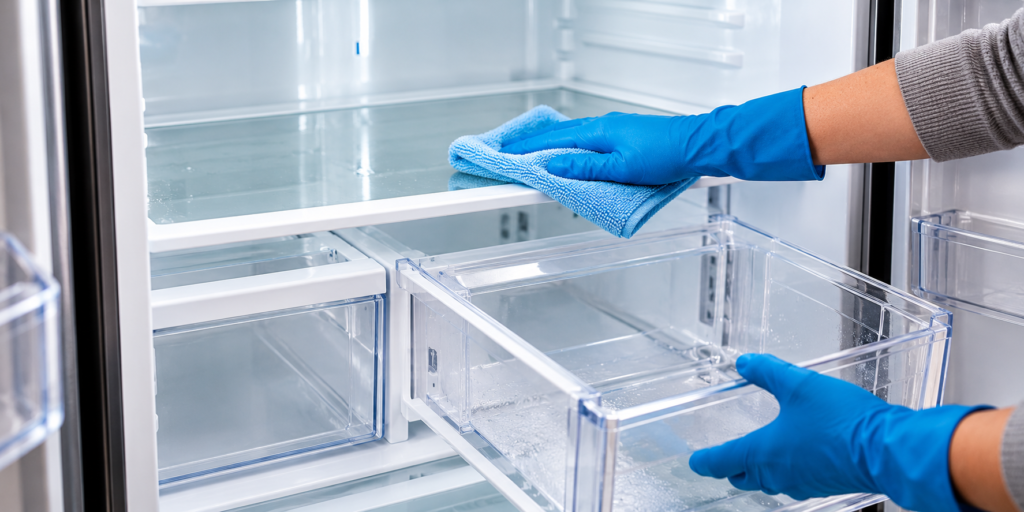
If you want to know how to deep clean a refrigerator, start by removing the food, keeping perishables cold, and taking out removable shelves and drawers. Then wash the removable parts with mild soap and warm water, wipe the interior from top to bottom, clean spills and door seals, dry everything thoroughly, and return food only after the fridge is clean and cold.
The process sounds simple, but a refrigerator needs more care than an ordinary kitchen surface. Cold glass shelves can react badly to sudden temperature changes, strong cleaners may damage interior materials, and perishable food should not sit at room temperature while you clean.
At TidyUp HandyCrew, we focus on practical, surface-safe cleaning methods that help homeowners handle detailed kitchen cleaning without damaging common finishes or materials.
This guide explains how to deep clean a refrigerator safely, including shelves, drawers, sticky spills, food odours, door seals, and the final food-storage setup.
Key Takeaways
- Keep perishable food cold while the refrigerator is being cleaned.
- Follow your refrigerator owner’s manual before removing shelves or bins.
- Let cold glass shelves warm gradually before washing them.
- Use mild, non-abrasive cleaning products unless the manufacturer says otherwise.
- Clean from the top of the refrigerator downward.
- Dry shelves, drawers, and interior surfaces before reinstalling them.
- Keep the refrigerator at 4°C or lower after cleaning.
- Store raw meat and seafood sealed on the bottom shelf.
What Do You Need to Deep Clean a Refrigerator?
You do not need a large collection of chemicals to clean most refrigerator interiors.
A basic cleaning kit can include:
- A cooler with ice packs
- Microfiber cloths
- Soft sponge
- Mild dish soap
- Warm water
- Small soft brush or old toothbrush
- Clean towels
- Garbage or compost bags
- Refrigerator thermometer
Always check your appliance manual before using a cleaner that is stronger than mild soap.
How to Deep Clean a Refrigerator Step by Step
1. Prepare Your Food Before You Start
First, remove refrigerated food and keep perishable items cold while you clean. Use a cooler with ice packs if the refrigerator will be open or switched off for an extended period.
Health Canada advises keeping refrigerated food at 4°C or lower because bacteria can grow more quickly when food enters the temperature danger zone between 4°C and 60°C.
As you empty the refrigerator, check:
- Best-before dates
- Leftovers
- Open containers
- Leaking packages
- Wilted produce
- Old sauces
- Foods with unusual appearance or odour
However, smell alone should not be used to decide whether food is safe.
2. Turn Off or Unplug the Refrigerator if Appropriate
Before a full deep clean, check your owner’s manual.
Some manufacturers recommend unplugging the refrigerator or switching cooling off before removing parts and cleaning the interior. Whirlpool includes this step in its refrigerator cleaning instructions.
If your model has an ice maker, water dispenser, removable filters, or electronic controls, follow the manufacturer’s instructions instead of assuming every refrigerator works the same way.
3. Remove Shelves, Drawers, and Door Bins
Take out removable parts only if the manual says they can be removed safely. Work slowly, especially with glass.
Do not move a very cold glass shelf directly into hot water. Whirlpool advises allowing glass shelves to warm before washing, which helps reduce thermal stress.
Place each part on a towel while it reaches a safer temperature. This is also a good time to vacuum or wipe crumbs from areas that are normally hidden beneath drawers.
How to Clean Refrigerator Shelves
Wash removable refrigerator shelves with warm water, mild dish soap, and a soft cloth or sponge after they have adjusted from refrigerator temperature.
For sticky residue, let the soapy water soften the spill rather than immediately scraping the surface with something sharp.
Then:
- Wash both sides of the shelf.
- Clean around shelf edges and supports.
- Rinse away detergent residue if appropriate.
- Dry the shelf completely.
- Inspect it before reinstalling.
Avoid abrasive scrubbers unless your manufacturer specifically approves them.
For glass shelves, gentle cleaning is especially important because scratching or thermal stress can shorten the life of the part.
How to Clean Refrigerator Drawers and Door Bins
Refrigerator drawers collect food particles, vegetable debris, sticky liquid, and condensation, so remove and wash them separately when possible.
Use warm water and mild soap.
Pay attention to:
- Drawer corners
- Handles
- Sliding rails
- Crisper edges
- Door-bin corners
- Areas beneath removable inserts
A small soft brush can help reach narrow grooves. Afterward, rinse or wipe away any remaining soap and dry every piece thoroughly.
Do not reinstall wet drawers if water can collect beneath them.
How to Clean the Inside of a Refrigerator
Once the removable parts are out, clean the fixed interior.
Start near the top and work downward so loosened crumbs and residue fall onto areas that have not yet been cleaned.
Clean the Interior Walls
Use a damp microfiber cloth with a mild cleaning solution.
Wipe:
- Ceiling
- Back wall
- Side walls
- Fixed shelves
- Shelf supports
- Door liner
- Lower interior surface
Avoid soaking vents, control panels, lights, or electrical components.
Clean Corners and Seams
Food residue often collects along seams and around shelf supports. Use a soft brush or folded microfiber cloth rather than a sharp metal object.
Wipe Again if Needed
If soap residue remains, follow with a clean damp cloth. Finally, dry the interior before reinstalling the shelves.
How to Clean Refrigerator Spills
Clean refrigerator spills as soon as possible because dried food residue becomes harder to remove and leaking raw foods can contaminate other items.
For an ordinary sticky spill, place a warm damp cloth over the area briefly to soften the residue. Then wipe gently.
Avoid aggressively scraping plastic or painted surfaces.
What If Raw Meat Leaked in the Refrigerator?
Take extra care. Remove nearby food and prevent the liquid from spreading to other surfaces.
Health Canada recommends storing raw meat, poultry, fish, and seafood in sealed containers or bags on the refrigerator’s bottom shelf so juices cannot drip onto other food.
For cleanup, follow the sanitation instructions in your refrigerator manual. Cleaning chemicals that are safe on a countertop may not be suitable for refrigerator plastics, gaskets, or coatings.
How to Remove Bad Smells From a Refrigerator
To remove refrigerator odours, first identify and remove the source rather than trying to cover the smell with fragrance.
Common sources include:
- Spoiled food
- Leaking containers
- Forgotten leftovers
- Produce hidden under drawers
- Liquid beneath a shelf
- Unclean door bins
- Food residue around seals
Start by emptying the refrigerator and cleaning the removable parts, walls, floor, and hidden areas. If the smell remains after a complete cleaning, inspect areas beneath drawers, drainage components where accessible, and the owner’s manual for model-specific troubleshooting.
Persistent odours can sometimes come from areas that routine interior wiping does not reach.
How to Clean Refrigerator Door Seals
Door seals, also called gaskets, can collect crumbs, moisture, and sticky residue. Use a soft damp cloth and mild soap if your manufacturer permits it.
Gently clean inside the folds without stretching or damaging the seal. Then dry the gasket.
A damaged or poorly sealing gasket can affect refrigerator performance, so inspect it while cleaning. If the seal is cracked, loose, or no longer making proper contact, cleaning alone may not solve the problem.
Should You Use Baking Soda in a Refrigerator?
Baking soda is commonly used for refrigerator odours and mild residue, but that does not mean it should automatically be used on every appliance surface.
Some manufacturers allow mild baking-soda solutions for certain refrigerator interiors. Whirlpool, for example, includes baking soda among possible options for stubborn residue in some of its refrigerator-care guidance.
However, follow your appliance manual first.
Avoid treating online DIY mixtures as universally safe for stainless steel, plastic, glass, painted surfaces, or seals.
Clean the Outside of the Refrigerator
After the inside is finished, clean the exterior. The correct method depends on the finish.
For painted surfaces, stainless steel, glass doors, handles, or touch-control panels, use the manufacturer’s recommended method.
Do not assume that a general kitchen degreaser is safe for every refrigerator finish.
Handles usually need more frequent cleaning because they are touched regularly. If the surrounding kitchen also has heavy cooking residue, our guide on how to remove kitchen grease and oil buildup covers broader kitchen surfaces.
How to Put Food Back Safely
Once the refrigerator is clean, dry, reassembled, and cooling properly, organize food to reduce future spills and cross-contamination.
Health Canada recommends:
- Refrigerator temperature of 4°C or lower
- Raw meat, poultry, seafood, and fish stored separately
- Raw foods stored in sealed containers
- Raw meat and seafood placed on the bottom shelf
- Enough space for cold air to circulate
Consider using a refrigerator thermometer rather than relying only on the control dial. Also wipe sticky jars and containers before returning them to the refrigerator. Otherwise, a freshly cleaned shelf can become dirty immediately.
How Often Should You Deep Clean a Refrigerator?
There is no single schedule that fits every household. Instead, use condition-based cleaning.
Deep clean sooner when you notice:
- A leaking package
- Persistent odour
- Sticky shelves
- Food debris under drawers
- Raw-food leakage
- Mold or suspicious residue
- Heavy buildup
- A move-in or move-out
Between deep cleans, wipe small spills quickly and check for old food regularly. This reduces the amount of work required during a full cleaning.
Refrigerator Cleaning vs Kitchen Deep Cleaning
Deep cleaning a refrigerator focuses on one appliance, while kitchen deep cleaning covers a much wider set of surfaces and fixtures.
A whole-kitchen project can include cabinets, countertops, backsplash, stove areas, floors, fixtures, appliances, and grease buildup.
If you are cleaning more than the fridge, use our step-by-step guide to deep cleaning a kitchen for the wider process.
For Toronto-specific professional planning, our kitchen deep cleaning Toronto guide explains how detailed kitchen cleaning fits into a larger service.
This keeps the intent of this article specific: how to deep clean a refrigerator, not how to clean the entire kitchen.
Common Refrigerator Cleaning Mistakes
Several shortcuts can create more work or damage.
Avoid:
- Putting cold glass into hot water
- Using abrasive pads without checking compatibility
- Spraying cleaner directly into vents or electrical controls
- Returning wet shelves to the refrigerator
- Leaving perishable food at room temperature for too long
- Ignoring spills beneath drawers
- Using strong chemical mixtures without appliance approval
- Assuming every removable part is dishwasher safe
- Covering odours without removing their source
The safest approach is simple: mild cleaning first, manufacturer instructions always.
When Should You Consider Professional Deep Cleaning?
DIY refrigerator cleaning is manageable for many households.
However, professional cleaning may be useful when the refrigerator is part of a larger move-in, move-out, rental turnover, or whole-kitchen cleaning project.
For example, a property may also need cabinets, floors, counters, fixtures, grease removal, bathrooms, and other areas cleaned at the same time.
TidyUp HandyCrew provides house deep cleaning services in Toronto for more detailed residential cleaning needs. Because service inclusions can vary, confirm whether inside-fridge cleaning is included in your quote rather than assuming it is part of every cleaning package.
FAQs About Deep Cleaning a Refrigerator
What is the best way to deep clean a refrigerator?
Remove the food, keep perishables cold, take out removable parts, wash shelves and drawers with mild soap and warm water, wipe the interior from top to bottom, clean spills and seals, dry everything, then reinstall the parts and return food once the fridge is cold.
What should I use to clean the inside of a refrigerator?
For many models, mild dish soap, warm water, and a soft cloth are suitable. However, your owner’s manual should guide the final choice because interior materials vary between appliances.
Can I wash refrigerator glass shelves with hot water?
Avoid moving a cold glass shelf directly into hot water. Allow it to warm gradually first. Some manufacturers warn that sudden temperature changes can stress glass refrigerator shelves.
How do I get a bad smell out of my refrigerator?
Remove spoiled food, check for hidden spills, wash removable parts, clean the interior walls and bottom, and dry everything thoroughly. If the smell remains, inspect hidden areas and consult your refrigerator’s troubleshooting instructions.
What temperature should a refrigerator be?
Health Canada recommends keeping your refrigerator at 4°C (40°F) or lower.
Where should raw meat be stored in a refrigerator?
Store raw meat, poultry, fish, and seafood in sealed containers or bags on the bottom shelf so juices cannot drip onto other food.
How long does it take to deep clean a refrigerator?
There is no universal time. The amount of food, number of shelves and drawers, dried spills, odours, and appliance design all affect the job.
Final Thoughts
The best way to deep clean a refrigerator is to protect the food first, remove and clean removable parts carefully, wipe the interior from top to bottom, deal with spills at their source, dry all surfaces, and restore the refrigerator to a safe temperature before reorganizing food.
Keep the fridge at 4°C or lower, store raw meat and seafood securely on the bottom shelf, and clean spills before they become dried residue or persistent odours.
If refrigerator cleaning is only one part of a larger kitchen or home reset, TidyUp HandyCrew can help with deep cleaning services in Toronto. For a property-specific cleaning scope,
