

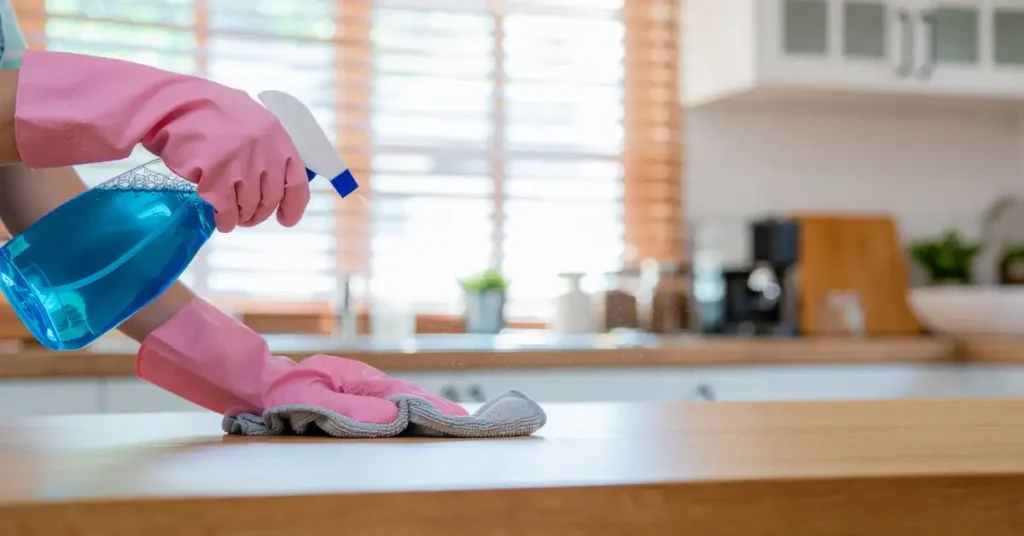
Most Toronto homeowners clean their kitchen every week. But here’s the thing: weekly wiping is not deep cleaning. The grease behind your stove, the grime inside your oven drawer, the buildup under the refrigerator – that stuff doesn’t go away with a quick spray and wipe.
A kitchen deep clean is a thorough, top-to-bottom process that goes beyond daily tidying. It targets hidden grease, bacteria hotspots, forgotten surfaces, and neglected appliances to restore your kitchen to a genuinely clean and hygienic state.
At Tidyup Handycrew, we specialize in helping Toronto homeowners achieve spotless kitchens with our detailed deep cleaning services. In this article, we’ll walk you through a complete kitchen deep clean checklist for 2026 – what to clean, in what order, and what most people miss.
Why Deep Cleaning Your Kitchen Is Essential In 2026?
Did you know that your kitchen is one of the most bacteria-prone areas in your home? In fact, according to studies, kitchens harbor more bacteria than bathrooms due to food particles, moisture, and grease buildup. In 2026, as we become more health-conscious and aware of environmental factors, deep cleaning your kitchen has never been more essential. It’s about more than just aesthetics-it’s about health, hygiene, and protecting your investments.
At Tidyup Handycrew, we understand that deep cleaning a kitchen goes beyond wiping down counters. In Toronto, where humidity and salt can add to grease buildup and mold growth, regular deep cleaning can help combat these challenges and provide a healthier living environment.
Health Benefits: Reducing Bacteria and Allergens
A deep clean removes more than just visible grime-it helps to reduce bacteria, mold, and allergens that thrive in kitchens. By cleaning hard-to-reach areas, such as grout lines and behind appliances, you eliminate mold spores and foodborne pathogens that can cause health problems.
- Germs and bacteria can live in cracks, under appliances, and on countertops, increasing the risk of illness.
- Allergens, including dust and mold, often accumulate in neglected kitchen areas.
- Toronto homes are particularly vulnerable to humidity-related mold, which thrives in warm, damp kitchen environments.
At Tidyup Handycrew, we ensure that your kitchen is thoroughly sanitized using eco-friendly kitchen cleaning products, reducing exposure to harmful chemicals.
Long-Term Benefits: Protecting Your Appliances
Regular house deep cleaning service doesn’t just keep your kitchen hygienic-it also extends the life of your appliances. Grease, food particles, and moisture can damage appliances over time, leading to costly repairs or replacements. For example, built-up grease can cause clogging in vents and air filters, decreasing the efficiency of your range hood and oven.
- Refrigerators can accumulate dirt in hard-to-reach areas, which affects their performance and leads to energy inefficiency.
- Dishwashers can collect debris, leading to slow drainage or even a clogged pump.
- Microwaves and ovens become harder to clean if food spills are left untreated for long periods.
At Tidyup Handycrew, we recommend deep cleaning appliances at least twice a year to keep them running smoothly and efficiently.
Essential Tools and Products for a Successful Deep Clean Service
When deep cleaning your kitchen, having the right tools and products can make the job easier and more efficient. Whether you’re tackling tough stains, grease, or grime, having the right cleaning supplies on hand ensures you get the best results.
Cleaning Tools You’ll Need: Brushes, Sponges, and Scrapers
To effectively clean every surface, you’ll need the proper tools:
- Brushes with stiff bristles for scrubbing grout and tough spots.
- Sponges for wiping down counters and appliances.
- Scrapers to remove stubborn grease from stove tops and ovens.
A long-handled brush can also help with cleaning hard-to-reach areas, like the back of appliances.
Best Eco-Friendly Cleaning Products for Your Kitchen
Using eco-friendly products ensures a clean kitchen without harmful chemicals. Some great options include:
- Vinegar: A natural disinfectant that cuts through grease and stains.
- Baking Soda: Perfect for scrubbing surfaces and deodorizing.
- Lemon: Its acidity helps break down grease and leaves a fresh scent.
These products are safe for most kitchen surfaces, especially in Toronto homes, where many people prefer green cleaning solutions.
Step-by-Step Deep Cleaning Checklist for Your Kitchen
For regular house cleaning, deep cleaning your kitchen may seem daunting, but breaking it down into manageable steps makes it much easier. Here’s a detailed checklist to guide you through the process.
Clean and Disinfect Countertops and Surfaces
- Stone surfaces: Use a gentle cleaner or a mixture of vinegar and water. Avoid acidic products for granite or marble.
- Wood surfaces: Use a damp cloth with mild dish soap, then dry immediately.
- Laminate surfaces: Clean with baking soda or a mixture of water and vinegar. Scrub gently to avoid damage.
Deep Clean Your Appliances: Oven, Fridge, and Microwave
- Oven: Remove racks and clean with a baking soda paste (mix with water). Let sit before scrubbing.
- Fridge: Wipe shelves with vinegar water solution to remove spills and prevent mold, especially if you’re dealing with Toronto’s high humidity.
- Microwave: Place a bowl of water with lemon juice inside and microwave for a few minutes to loosen grime, then wipe clean.
Tackle the Sink and Faucets
- Clean the sink and faucet with a mixture of baking soda and water, scrubbing away grime and stains. For hard water stains common in Toronto, use a mix of vinegar and water.
- Don’t forget to clean the drain using a natural cleaner or a combination of baking soda and vinegar to clear buildup and odors.
Don’t Forget the Floors and Grout
- Tile floors and grout: Use a scrub brush and baking soda paste to clean grout lines. For floors, use a gentle cleaner suitable for your flooring type.
- Wooden floors: Sweep or vacuum first, then mop with a mild, wood-safe cleaner to avoid damage.
By following these steps, you’ll have a kitchen that’s not only sparkling clean but also safer and healthier for you and your family.
How Often Should You Deep Clean Your Kitchen?
Deep cleaning your kitchen is really important to keep it clean and working well. However, the frequency of deep cleaning varies based on usage, specific features, and local factors like Toronto’s humidity and seasonal grime buildup. Regular deep cleaning helps remove grease, food debris, and bacteria that accumulate in even the most well-maintained kitchens.
General Deep Cleaning Frequency for Kitchens
For most homes, deep cleaning your kitchen every 3 to 6 months is ideal. This allows for thorough cleaning of surfaces, appliances, and corners that aren’t addressed during daily or weekly tidying. However, if you do a lot of cooking, especially with greasy foods, or have high-traffic areas like a family kitchen, you may need to clean more frequently.
Areas That Require More Frequent Cleaning
Certain areas of your kitchen will require more attention due to frequent use or exposure to grease and spills. These include:
- Stove and Oven: Clean after every heavy use to prevent grease buildup.
- Fridge: Wipe down spills immediately to prevent bacteria and odors.
- Sink: Clean daily, as it’s prone to collecting food debris, water stains, and bacteria.
Professional vs. DIY Kitchen Deep Cleaning in Toronto
When it comes to deep cleaning your kitchen in Toronto, you may wonder whether it’s best to do it yourself or hire a professional cleaning service. Here’s a comparison of the benefits of each option, factoring in time and cost.
When to Hire a Professional Cleaning Service
Hiring a professional cleaning service is more time-effective when dealing with:
- Hard-to-reach areas like under the fridge or behind the stove.
- High-end appliances that require specialized cleaning techniques (e.g., ovens, wine coolers).
- Heavy grease buildup or mold in hard-to-clean areas, which professionals are equipped to handle.
Cost and Time Comparison: DIY vs. Professional Cleaning
- DIY Cleaning: Costs are limited to supplies and time. While you may save on labor costs, DIY cleaning can take longer, especially for deep cleaning tough spots.
- Professional Deep Cleaning: Professional services are more expensive upfront, but the time saved and the higher-quality results make them worthwhile, especially for thorough cleans and tough tasks.
Final Thoughts
A proper kitchen deep clean takes time, the right approach, and a bit of patience. But working through this checklist from top to bottom – ceiling and vents, appliances, counters, cabinets, and floors – means you’re actually cleaning the kitchen rather than just tidying it. That’s the difference that keeps a space genuinely hygienic and more pleasant to cook and live in.
At Tidyup Handycrew we are good at cleaning kitchens, in Toronto. If you want your kitchen to look great without having to do all the work you should call us today. Also Get a free quote for house deep cleaning in Toronto. We will tell you how much it will cost to clean your kitchen and help you make your kitchen sparkling clean and ready for the year. We will make sure your kitchen is clean and nice so you can use it. Enjoy it.
For more information on our Regular cleaning services, Visit Us or give us a call to explore how we can assist you with maintaining a clean, safe, and welcoming environment.
Frequently Asked Questions
Question: How often should I deep clean my kitchen?
Answer: Most households benefit from a kitchen deep clean two to four times per year. If you cook frequently or have a large family, once every two to three months is a reasonable target. A quick monthly wipe-down of appliances helps extend the time between full deep cleans.
Question: What is the best order to deep clean a kitchen?
Answer: Always start from the top and work your way down. Begin with ceiling areas, cabinet tops, and range hood, then move to appliances, counters, and backsplash, and finish with mopping the floor. This prevents you from re-dirtying surfaces you’ve already cleaned.
Question: How long does it take to deep clean a kitchen?
Answer: A thorough kitchen deep clean typically takes three to five hours for an average-sized Toronto kitchen. Larger kitchens with more appliances, or ones that haven’t been deep cleaned in over a year, can take longer. Professional teams can complete it faster because they work in a coordinated system.
Question: What cleaning products are safe for kitchen surfaces?
Answer: For most surfaces, a diluted dish soap solution or a pH-neutral all-purpose cleaner is safe. Avoid vinegar or citrus-based cleaners on stone counters and hardwood floors. For oven interiors and grease-heavy areas, a commercial degreaser or a baking soda paste is effective and reasonably non-toxic.
Question: Should I hire a professional to deep clean my kitchen?
Answer: It depends on how much time you have and the current condition of the kitchen. If the kitchen hasn’t been deep cleaned in six months or more, or if you’re preparing the home for sale, moving out, or hosting an event, a professional deep clean saves significant time and delivers more consistent results. Our house deep cleaning service in Toronto covers the full kitchen along with every other room in the home.
