

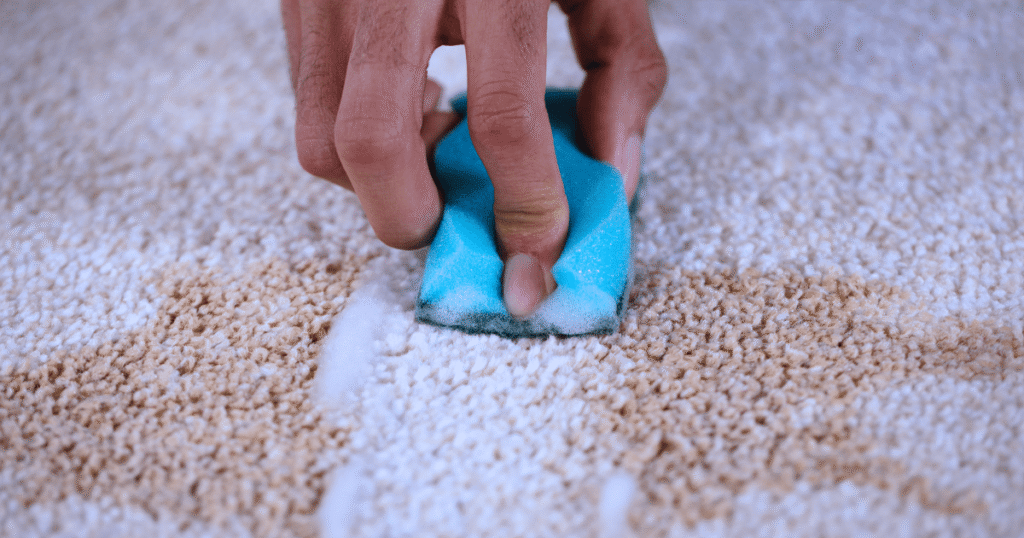
A carpet stain can go from a small spill to a permanent mark faster than most people think. If you want to know how to remove stains from carpet, the first rule is simple: act fast, blot gently, and use the right method for the stain type.
To remove stains from carpet, blot the spill first, lift any solid residue, apply a carpet-safe cleaning solution, blot again with a clean cloth, rinse lightly, and let the area dry fully. Avoid rubbing, soaking the carpet, or using heat too early because these mistakes can push the stain deeper into the fibres.
For homes, rentals, offices, and move-out situations, stain removal matters because one visible mark can make the whole carpet look poorly maintained. At TidyUp HandyCrew, we help with carpet and upholstery cleaning in Toronto when DIY cleaning is not enough.
In this blog, we’ll cover the safest ways to treat common carpet stains, what mistakes to avoid, and when it makes sense to call a professional carpet cleaner.
How Do You Remove Stains From Carpet?
If you are learning how to remove stains from carpet, start by working slowly and avoiding panic cleaning. Most stains get worse when people rub hard, pour too much cleaner, or use hot water before they know what caused the stain.
Start by blotting the area with a clean white cloth or paper towel. Press down gently and lift. Do not drag the cloth across the carpet because that can spread the stain into a larger mark.
Next, remove any solid residue. For food, mud, or thick spills, use a spoon or dull edge to lift the material from the outside of the stain toward the centre. This keeps the mess from spreading.
Use only a small amount of cleaning solution. A few drops of mild dish soap mixed with cool water can help with many fresh stains, but it is not right for every carpet or every stain. Before using any cleaner, test it in a hidden area first.
After treating the stain, blot again with a damp cloth to remove leftover cleaner. Then press the area with a dry towel and let it air dry fully.
For a full carpet maintenance guide, we also explain how to clean carpet properly in a separate blog.
What to Do Before Using Any Carpet Stain Remover
A carpet stain remover can help, but knowing how to remove stains from carpet safely matters more than using the strongest product. The wrong cleaner can fade colour, leave sticky residue, or damage delicate fibres.
Before using anything on the stain, check three things: the carpet material, the stain type, and how long the stain has been sitting.
Check the Carpet Material First
Not all carpets react the same way to cleaning products. Synthetic carpets often handle mild cleaning solutions better than wool, silk, or delicate area rugs.
Check the care label or manufacturer instructions when possible. If the carpet is expensive, handmade, wool, or has strong colour dyes, do not experiment with harsh products. A small mistake can leave a pale patch, colour bleed, or fibre damage.
This is where patience helps. One hidden spot test can save the whole room. If your carpet is under warranty, check the carpet care and maintenance instructions before using homemade cleaners.
Test the Cleaner in a Hidden Spot
Always test your cleaner in a corner, under furniture, or another low-visibility area. Apply a tiny amount, wait a few minutes, then blot with a white cloth.
If the cloth picks up carpet dye, stop. If the carpet looks lighter, rougher, sticky, or fuzzy after drying, do not use that cleaner on the stain.
This matters even with homemade options like vinegar, baking soda, dish soap, or hydrogen peroxide. Natural does not always mean safe for every carpet.
Avoid These Common Mistakes
Most carpet stain damage comes from the cleaning method, not the spill itself.
Avoid these mistakes:
- Do not scrub the stain. Scrubbing can push the stain deeper into the fibres and roughen the carpet surface.
- Do not soak the carpet. Too much water can reach the backing or padding, which may lead to odour, wicking, or slow drying.
- Do not use hot water on unknown stains. Heat can set some stains, especially protein-based stains like blood.
- Do not mix cleaning chemicals. Mixing products can create unsafe fumes or damage the carpet.
- Do not use too much soap. Soap residue can stay in the carpet and attract more dirt later.
Carpet Stain Removal Guide by Stain Type
Different stains need different treatment. Coffee, pet urine, mud, grease, and blood do not behave the same way in carpet fibres.
Use this quick guide before choosing a cleaner.
| Stain Type | First Step | What to Use | What to Avoid | Call a Pro When |
| Coffee or tea | Blot the liquid quickly | Cool water and mild dish soap solution | Hot water too early | A brown mark keeps returning |
| Red wine or juice | Blot, then dilute lightly | Cool water and carpet-safe cleaner | Scrubbing the colour deeper | Colour remains after drying |
| Pet urine | Blot and treat odour fast | Enzyme cleaner made for pet stains | Steam heat at first | Smell reaches the padding |
| Mud | Let it dry, then vacuum | Mild soap solution after vacuuming | Spreading wet mud | Dirt is ground deep into fibres |
| Grease or oil | Lift excess grease first | Tiny amount of dish soap solution | Over-wetting the area | Oily mark keeps coming back |
| Blood | Use cold water only | Cold water and mild cleaner | Hot water | The stain has dried or spread |
| Old stains | Rehydrate carefully | Carpet-safe stain remover | Strong chemicals without testing | The stain is set or unknown |
This table gives a safe starting point, but it does not replace professional advice for delicate carpets, large stains, or repeated pet accidents.
How to Remove Coffee and Tea Stains From Carpet
Coffee and tea stains are common because they happen fast. One cup tips over near the couch, and within seconds the liquid starts moving through the carpet fibres.
Start by blotting the stain with a clean white cloth. Work from the outside toward the centre so the stain does not spread.
Add a small amount of cool water to dilute the stain, then blot again. If the mark remains, mix a few drops of mild dish soap with cool water. Dab the solution onto the stain with a cloth, then blot with a clean damp cloth to remove soap residue.
Dry the area by pressing it with a towel. Do not use a hair dryer or heat tool while the stain is still visible.
Why Coffee Stains Can Come Back
Coffee and tea contain natural colour compounds that can sit deep in the carpet. Even when the surface looks clean, residue can remain below the fibres.
That is why some brown stains come back after the carpet dries. Moisture can pull hidden residue upward, leaving a shadow in the same spot.
When that happens, do not keep adding more soap. Too much product can make the area sticky and attract dirt. A returning coffee stain may need deeper extraction instead of more DIY cleaning.
How to Remove Red Wine, Juice, and Colour Stains From Carpet
Red wine, fruit juice, sports drinks, and coloured soft drinks need quick action. These stains are harder because they contain strong dyes that can cling to carpet fibres.
First, blot as much liquid as possible with a clean white cloth. Do not rub. Then add a small amount of cool water to dilute the colour and blot again.
Use a carpet-safe stain remover if the colour remains. Apply a small amount, let it sit only as long as the product label says, then blot with a damp cloth. Never pour cleaner directly onto the carpet without control.
A light stain may lift with patient blotting. A deep red or purple stain may not.
What Not to Do With Red Wine Stains
Do not scrub a red wine stain. Scrubbing spreads the colour and pushes it deeper.
Do not use hot water at the beginning. Heat can make some colour stains harder to remove.
Do not keep adding random products from the cupboard. More products do not mean better results. They can leave residue, fade the carpet, or create a larger stain around the original spot.
When colour remains after drying, it is time to stop DIY cleaning and consider professional carpet cleaning support.
How to Remove Pet Stains From Carpet
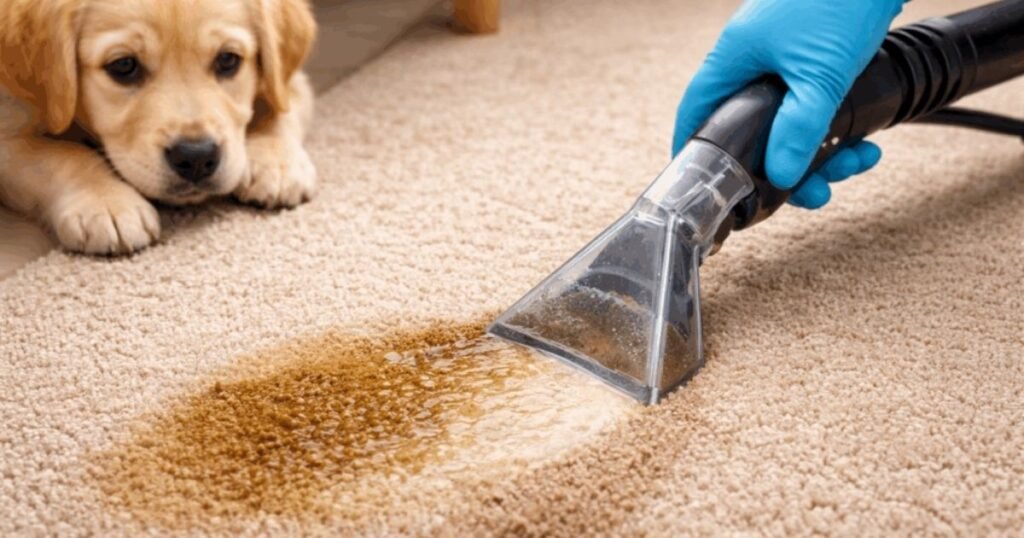
Pet stains need quick cleaning because they can affect both the carpet surface and the padding underneath. The stain you see is only one part of the problem. The smell can sit deeper.
Blot fresh urine with a clean white cloth or paper towel. Press down gently and keep replacing the cloth until it stops absorbing moisture. Do not scrub, because that can spread the urine into a wider area.
After blotting, use an enzyme cleaner made for pet stains. These cleaners are designed to break down organic residue that causes odour. Follow the product instructions and give it enough time to work.
Avoid steam heat at the start. Heat can make some odours harder to remove if the urine has not been treated properly first.
Why Pet Odour Comes Back After Cleaning
Pet odour often comes back when urine reaches the carpet backing or padding. The surface may look clean, but moisture and odour can remain underneath.
This is common in high-use rooms, rental units, and homes with repeated pet accidents. The smell may become stronger on humid days or after the carpet gets damp again.
If the carpet still smells after drying, regular DIY cleaning may not reach deep enough. For more help with odour issues around the home, we also explain how to remove pet smell from house and furniture.
How to Remove Mud, Dirt, and Salt Stains From Carpet
Mud is easier to remove when you let it dry first. That sounds strange, but wet mud spreads fast and can turn one footprint into a larger dirty patch.
Let the mud dry completely, then vacuum slowly. Use several passes to lift loose dirt from the fibres. After that, treat the remaining mark with a small amount of mild dish soap mixed with cool water.
Blot the area with the solution, then blot again with a clean damp cloth to remove soap residue. Press with a dry towel and let the carpet air dry.
Why Winter Salt Is Hard on Carpet
In Toronto and across Ontario, winter salt can be rough on entryway carpets. Salt can leave white marks, hold moisture, and make carpet fibres feel stiff after drying.
Start by vacuuming dry salt before adding water. If you wet the salt too early, it can dissolve and spread into a larger area.
For salt marks, use a damp cloth and blot gently. Do not soak the carpet. Entryways often need more frequent care because shoes bring in salt, slush, grit, and dirt during the winter months.
How to Remove Grease and Oil Stains From Carpet
Grease and oil stains need a light touch. Too much water will not solve the problem because oil does not rinse away like a normal liquid spill.
First, lift any excess grease with a spoon or dull edge. If the stain is fresh, blot with a paper towel to absorb as much oil as possible. Do not press too hard.
Mix a few drops of mild dish soap with cool water. Dish soap can help break down grease, but use only a small amount. Dab the solution onto the stain, then blot with a clean cloth.
Rinse by blotting with a damp cloth. This step matters because leftover soap can attract more dirt.
Why Grease Stains Often Return
Grease can cling to carpet fibres. If soap residue remains, the area can become sticky and collect dust faster than the rest of the carpet.
That is why an oily mark may look better for a day, then slowly reappear. The stain may not be coming back from nowhere. It may still be sitting in the fibres or below the surface.
If the grease stain is large, old, or close to a kitchen or dining area, professional extraction may work better than repeating the same DIY step again and again.
How to Remove Blood Stains From Carpet
Blood stains need cold water. Never start with hot water because heat can set protein-based stains and make them harder to remove.
Blot the stain with a clean white cloth. Add a small amount of cold water and blot again. Work slowly from the outside toward the centre.
If the stain remains, use a mild cleaner that is safe for your carpet. Keep the area lightly damp, not soaked. After treatment, blot with a clean damp cloth and dry the area with a towel.
When Blood Stains Need Professional Cleaning
A fresh blood stain is easier to treat than a dried one. Once it dries, it can bind more strongly to carpet fibres.
Call a professional if the stain has spread, dried, or reached a large area. You should also avoid aggressive DIY cleaning on wool rugs, delicate carpets, or expensive area rugs.
This is one of those stains where doing less damage matters as much as removing the mark.
How to Remove Old Stains From Carpet
Old carpet stains are harder, so how to remove stains from carpet depends on how long the mark has been sitting and what caused it. Some old stains also come with hidden residue from earlier cleaning attempts.
Start by lightly dampening the stain with cool water. Do not soak it. The goal is to soften the residue, not flood the carpet.
Blot the area, then apply a carpet-safe stain remover according to the product directions. Give it time to work. After that, blot with a damp cloth and dry with a towel.
Repeat only if the carpet responds well. If the area becomes sticky, fuzzy, faded, or larger, stop.
Why Old Carpet Stains Reappear
Old stains can reappear because of wicking. That means moisture pulls residue from deeper layers back toward the surface as the carpet dries.
Residue from too much soap can also make a spot look dirty again. The carpet may attract dust in the exact place you cleaned.
If an old stain keeps returning, it may need deeper cleaning. TidyUp HandyCrew can help with carpet and upholstery cleaning in Toronto for carpets with old stains, odour, or high-traffic marks.
What Is the Best Homemade Carpet Stain Remover?
For many fresh household stains, the safest homemade carpet stain remover is a small amount of mild dish soap mixed with cool water. It is simple, gentle, and less risky than strong chemicals.
Use a few drops of dish soap in a cup of cool water. Apply it with a cloth, not by pouring it onto the carpet. Blot the stain, then rinse by blotting with a clean damp cloth.
The rinse step matters. Soap left behind can attract dirt and make the spot look worse later.
Can Vinegar and Baking Soda Remove Carpet Stains?
Vinegar and baking soda may help with some light stains or odours, but they are not a perfect solution for every carpet. Some carpet fibres and dyes can react badly to acidic cleaners.
Always test first in a hidden area. If the carpet changes colour, feels rough, or transfers dye to a white cloth, do not use that mixture on the stain.
Also, do not mix several cleaning products together. More fizz does not mean more cleaning power. Sometimes it just leaves more residue.
When Should You Call a Professional Carpet Cleaner?
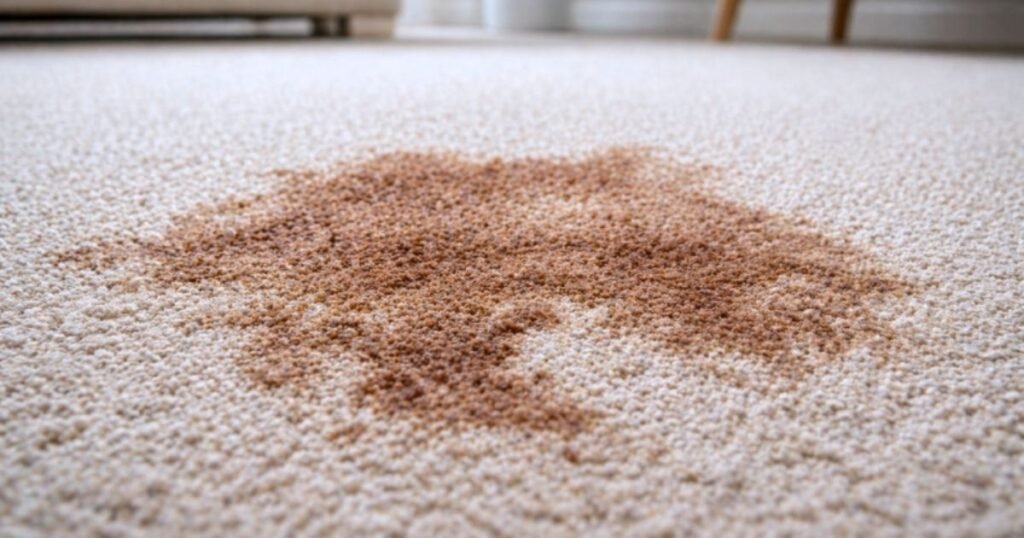
DIY stain removal works best for fresh, small, surface-level stains. It becomes less reliable when the stain is old, large, oily, smelly, or sitting deep in the carpet.
Call a professional carpet cleaner when:
- The stain keeps coming back. This can happen when residue sits below the surface and rises as the carpet dries.
- The carpet still smells after cleaning. Pet urine, food spills, and damp carpet can leave odour behind.
- The stain covers a large area. Bigger stains are easier to spread when you clean them by hand.
- The carpet is delicate or expensive. Wool, handmade rugs, and specialty fibres need careful treatment.
- You are preparing for a move-out, showing, inspection, or guest visit. Visible carpet stains can make the whole space feel less clean.
- DIY products left sticky residue. Residue can collect dust and make the carpet look dirty again.
If you are comparing options before booking, our guide on carpet cleaning cost can help you understand what affects pricing.
For deeper methods, you can also read our guide on steam vs deep carpet cleaning.
How to Prevent Carpet Stains From Becoming Permanent
The best stain removal happens before the stain becomes permanent. A few small habits can protect your carpet and save you from harder cleaning later.
Keep these tips in mind:
- Blot spills right away. The faster you absorb liquid, the less time it has to settle into the fibres.
- Keep clean white cloths nearby. Coloured towels can transfer dye, especially when they get wet.
- Use entryway mats. Mats help catch mud, salt, and grit before they reach the carpet.
- Vacuum high-traffic areas often. Dirt can grind into fibres and make stains harder to lift.
- Clean pet accidents quickly. Fresh pet stains are easier to treat than dried ones.
- Avoid overusing soap. Too much soap can leave residue that attracts dirt.
- Book periodic deep cleaning for busy homes. Homes with kids, pets, guests, or rental turnover usually need more than surface cleaning.
Carpet stains are frustrating, but the right first step makes a real difference. Blot first. Test before cleaning. Use the right method for the stain, and stop before the carpet gets over-wet or damaged.
Frequently Asked Questions
Question: What is the best way to remove stains from carpet?
Answer: The best way to learn how to remove stains from carpet is to start with blotting, remove any solid residue, and use a carpet-safe cleaner that matches the stain type. Work from the outside of the stain toward the centre so it does not spread. Always test the cleaner in a hidden spot before applying it to the visible stain.
Question: Should I scrub or blot carpet stains?
Answer: You should blot carpet stains, not scrub them. Scrubbing can push the stain deeper into the fibres and make the mark wider. Blotting lifts moisture and residue more safely, especially when you use a clean white cloth and gentle pressure.
Question: Can vinegar and baking soda remove old carpet stains?
Answer: Vinegar and baking soda may help with some light stains or odours, but they do not work for every carpet or every stain. Some fibres and dyes can react badly to acidic cleaners. Test in a hidden spot first, and avoid using too much product because leftover residue can attract more dirt.
Question: How do you remove pet urine stains from carpet?
Answer: Blot fresh pet urine right away with a clean cloth or paper towel. After that, use an enzyme cleaner made for pet stains and follow the product directions. If the smell comes back after drying, the urine may have reached the carpet backing or padding, which may need professional cleaning.
Question: Why do carpet stains come back after cleaning?
Answer: Carpet stains often come back because residue remains below the surface and rises as the carpet dries. This is called wicking. Stains can also return when too much soap stays in the fibres and attracts dust, dirt, and moisture.
Question: Can professional carpet cleaning remove old stains?
Answer: Professional carpet cleaning can often reduce or remove old stains, but no cleaner can guarantee every stain will disappear completely. The result depends on the stain type, carpet material, age of the stain, and what products were used before. If a stain keeps returning after DIY cleaning, professional extraction is usually the safer next step.
Question: What carpet stains are the hardest to remove?
Answer: The hardest carpet stains usually include red wine, coffee, grease, pet urine, blood, ink, and old unknown stains. These stains can bond with fibres, reach the padding, or leave odour behind. The faster you treat them, the better your chances of avoiding a permanent mark.
Conclusion
Once you understand how to remove stains from carpet, stains become easier to handle because you know when to blot, what to avoid, and which method fits the stain type. Fresh spills, pet accidents, mud, grease, and old stains all need different treatment.
If a stain keeps coming back, smells after drying, or sits deep in a high-traffic area, it may be time to stop guessing. TidyUp HandyCrew helps homeowners, tenants, landlords, and property managers with carpet and upholstery cleaning in Toronto when DIY cleaning is not enough.
A clean carpet can change how the whole room feels. Treat the stain early, and get help before a small mark becomes a bigger problem. Need a Trusted Local Service Provider? If you’re in our service area, Tidy Up Handy Crew is here to help. Whether you need cleaning, handyman, painting, plumbing, or other property maintenance services, our team is ready to assist. Visit our Google Business Profile to read verified customer reviews, contact us directly, or get directions.
Google Business Profile: https://maps.app.goo.gl/Jxo4YMBjmxTC2eGi6
Phone: +1 (226) 201-3103
Address: 3400 Danforth Ave Unit 5, Scarborough, ON M1L 1E1, Canada
