

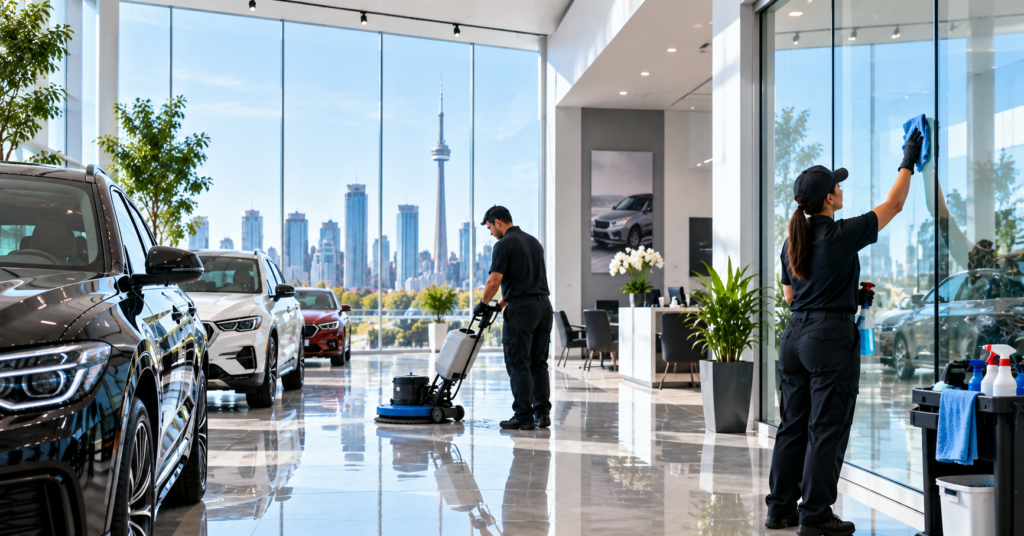
Showroom cleaning in Toronto focuses on keeping customer-facing spaces clean, polished, and presentation-ready, including display surfaces, glass cases, mirrors, floors, shelves, reception areas, entryways, and high-touch points. The goal is to reduce visible dust, fingerprints, smudges, floor marks, and other buildup that can distract from the products on display.
Toronto showrooms, dealerships, furniture stores, appliance showrooms, galleries, and design spaces may also need cleaning planned around business hours, customer traffic, parking, elevator access, keys or fobs, and manager coordination. These details can affect how a showroom cleaning visit is scheduled and which areas should be prioritized first.
TidyUp HandyCrew provides showroom cleaning services in Toronto for businesses that need reliable support with displays, glass, floors, entryways, reception areas, and other guest-facing spaces. This guide covers the main showroom cleaning priorities, common problem areas, scheduling considerations, and what to confirm before requesting a quote.
Key Takeaways
- Showroom cleaning helps keep customer-facing spaces polished, guest-ready, and aligned with brand presentation.
- Display areas, glass, floors, reception spaces, product shelves, entryways, and high-touch surfaces need consistent attention.
- Regular commercial cleaning may not always cover display detail, glass clarity, and product presentation needs.
- Toronto showrooms may need after-hours access, parking, key or fob instructions, and manager coordination.
- Floor care, carpet cleaning, upholstery cleaning, glass detail, or post-renovation cleaning may require add-ons.
- A checklist helps showroom managers request a more accurate quote.
What Is Showroom Cleaning?
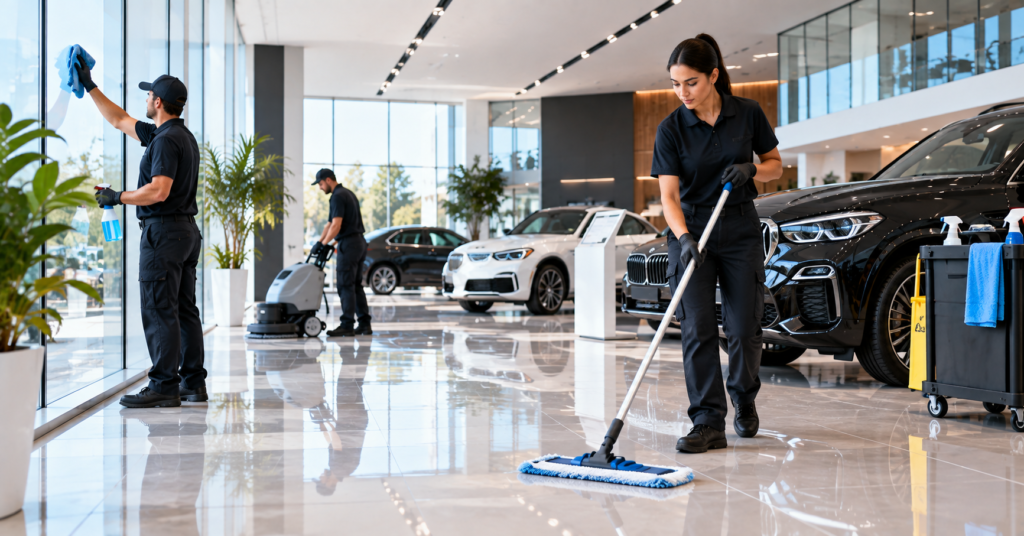
Showroom cleaning is a commercial cleaning service focused on keeping customer-facing display spaces clean, polished, organized, and guest-ready. It may include display surfaces, glass, mirrors, product areas, floors, entryways, reception areas, high-touch surfaces, dust-prone zones, and after-hours cleaning support.
This service is useful for retail showrooms, car dealerships, furniture showrooms, appliance showrooms, design galleries, product studios, and commercial spaces where presentation matters.
Unlike general office cleaning, showroom cleaning pays closer attention to product visibility, guest pathways, display dust, glass marks, lighting reflection, and customer-facing surfaces.
What Is Included in Showroom Cleaning?
Showroom cleaning usually includes display areas, glass touch points, mirrors, product shelves, reception counters, entryways, floors, high-touch surfaces, dust-prone ledges, garbage zones, and customer-facing surfaces. Floor care, upholstery, carpet cleaning, window tracks, or post-renovation dust may require add-ons.
Common showroom cleaning areas include:
- Display surfaces
- Glass cases and glass touch points
- Mirrors if included
- Product shelves
- Reception counter
- Consultation tables
- Entry doors
- Waiting area
- Floors and floor edges
- Door handles
- Light switches
- Garbage and recycling zones
- High-touch surfaces
- Dust-prone ledges
- Visible marks and fingerprints
The exact scope depends on showroom size, product layout, foot traffic, floor type, glass surfaces, and access.
Showroom Display Cleaning Checklist
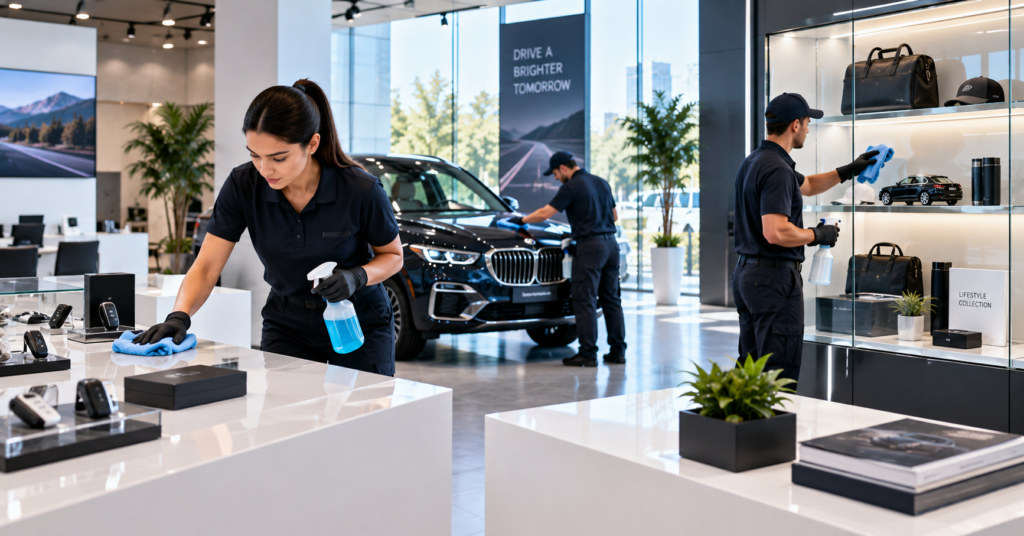
A showroom cleaning checklist should focus on the areas customers notice first. Displays, glass, floors, and reception areas often shape the first impression.
Display Areas and Product Surfaces
Display areas collect dust, fingerprints, and small marks throughout the day. They should stay clean without disturbing product layout.
Check:
- Display tables, Product shelves
- Sample areas
- Product stands
- Cabinet exteriors, Display corners
- Visible dust, Fingerprints
- Guest-facing surfaces
- Manufacturer-specific care notes where needed
If a product has specialty material, provide care instructions before the cleaning visit.
Glass, Mirrors and Display Cases
Glass surfaces show smudges quickly, especially under showroom lighting. Clean glass also helps products look clearer and better presented.
Focus on:
- Glass touch points
- Display case exteriors
- Mirror surfaces, Entry glass
- Smudges and fingerprints
- Glass shelves if included
- Edge areas, Lighting reflection areas
- Streak-free presentation needs
For delicate glass, coated surfaces, or specialty finishes, confirm the proper care method in advance.
Reception and Consultation Areas
Reception and consultation spaces are often where guests ask questions, review details, or wait for service.
Cleaners may focus on:
- Reception counter
- Waiting chairs
- Consultation tables
- Brochure or menu areas
- Door handles
- Light switches
- Payment or service counter exterior areas if included
- High-touch surfaces, Garbage bins
A tidy reception area helps the showroom feel more organized.
Floors and Guest Pathways
Floors guide customers through the showroom. Marks, dust, salt, rain tracking, and debris can affect the overall presentation.
Check:
- Vacuuming, Mopping, Floor edges
- Entry dirt
- Salt or rain tracking
- Under movable display items where accessible
- High-traffic walkways
- Carpet condition
- Baseboards, Corners
Showrooms with carpet, rugs, or specialty flooring may need add-on floor care.
Lighting, Ledges and Dust-Prone Areas
Dust is easier to see in bright showrooms. Lighting, shelves, ledges, and corners can make buildup more noticeable.
Focus on:
- Accessible ledges
- Display lighting exterior areas where safe and accessible
- Shelf edges, Window ledges
- Corners, Dust-prone product areas
- High surfaces only if safely accessible
- Visible dust around displays
High or delicate areas should be discussed before booking.
What Showroom Teams Often Miss
Showroom teams often focus on product arrangement and customer service. However, small cleaning details can build up between visits.
Common missed areas include:
- Glass edges, Display corners
- Product shelf dust
- Reception counter edges
- Waiting area chairs
- Floor edges, Entry mats
- Door handles, Mirror fingerprints
- Dust on ledges
- Under movable display units
- Baseboards
- Lighting reflection marks
- Garbage zone odours
- Consultation table legs
A recurring checklist helps keep presentation details more consistent.
Toronto Showroom Access and Scheduling
Toronto showroom cleaning often works best after hours or before opening. This helps cleaners work without interrupting customers, staff, product demos, or appointments.
Before the visit, confirm:
- After-hours access
- Early-morning cleaning
- Parking, Loading access
- Security instructions
- Key, fob, or lockbox details
- Unit or suite access
- Mixed-use building rules
- Elevator access, Property manager coordination
- Cleaning around staff schedules
- Cleaning before launches, client visits, or events
Access planning helps cleaners start on time and protect the customer experience during business hours.
Showroom Cleaning vs Commercial Cleaning
Showroom cleaning is a type of commercial cleaning, but it has a stronger focus on customer-facing presentation.
| Service | Best For | Main Goal | Showroom-Specific Focus | Best Time |
| Showroom cleaning | Retail, dealership, and product spaces | Keep displays guest-ready | Glass, floors, displays, reception, dust | After hours or before opening |
| General commercial cleaning | Business properties | Maintain commercial spaces | Shared areas, floors, bins, surfaces | Scheduled routine |
| Showroom deep cleaning | Heavy buildup | Detailed showroom reset | Floors, displays, ledges, glass, corners | Periodic or seasonal |
| Post-renovation showroom cleaning | Recently renovated spaces | Remove dust and debris | Fine dust, fixtures, surfaces | After work ends |
| Floor, carpet, or upholstery cleaning | Fabric and floor areas | Address surface condition | Carpet marks, chairs, soft seating | Add-on or separate service |
For broader business spaces, office cleaning services in Toronto may also support workplace cleaning needs.
When Should Showrooms Book Deep Cleaning?
Showrooms should book deep cleaning when routine cleaning no longer handles dust, floor marks, glass smudges, display buildup, reception areas, or customer pathways.
Good times to book include:
- Before client visits, product launches, showroom events
- seasonal campaigns
- After heavy foot traffic, display changes
- After long gaps in routine cleaning
- When floors, glass, displays, or reception areas show buildup
- Before starting recurring commercial cleaning
After renovations or layout changes, post-renovation cleaning services in Toronto may be more suitable than standard cleaning.
When Add-Ons May Be Needed
Some showroom cleaning tasks need extra time, special tools, or separate planning.
Possible add-ons include:
- Floor care
- Carpet cleaning, Upholstery cleaning
- Window track detail cleaning
- Post-renovation dust cleaning
- Interior cabinet cleaning, Glass detail cleaning
- High dust detail, Junk removal
- Severe odour assessment
- Pest-related cleaning, Mould remediation
- Exterior window cleaning
- Pressure washing for suitable exterior areas
- Specialty surface care for delicate materials, if manufacturer instructions are provided
Mention these needs before booking so the quote matches the real scope.
How to Prepare Before Cleaners Arrive
Preparation helps cleaners focus on the agreed showroom cleaning scope.
Use these steps:
- Confirm showroom address, unit number, and access instructions.
- Share parking, loading, elevator, security, key, fob, or lockbox details.
- Confirm whether cleaning should happen after hours or before opening.
- Clear display surfaces where possible.
- Secure valuables, documents, samples, and fragile products.
- Identify priority areas, such as glass, floors, reception, or display shelves.
- Mention delicate surfaces, specialty materials, or manufacturer care notes.
- Mention odours, dust buildup, floor marks, or high-traffic concerns.
- Share photos of problem areas if helpful.
- Confirm quote scope, add-ons, and deadline.
This is especially important for showrooms with fragile samples, luxury finishes, or high-value product displays.
How Long Does Showroom Cleaning Take?
Showroom cleaning time depends on showroom size, floor type, display count, glass surfaces, product layout, foot traffic, dust level, access, business hours, and add-ons.
General estimates include:
- Small showroom or product gallery: 2–4 hours
- Small to medium showroom: 4–8 hours
- Larger showroom or dealership-style space: 8–12+ hours
- Heavy buildup or add-ons: may need extra time
- After-hours or staged cleaning: depends on access and business schedule
A clear floor plan, photos, and priority list can help the cleaning team estimate time more accurately.
How Much Does Showroom Cleaning Cost?
Showroom cleaning cost depends on the size of the space, display count, glass surface volume, floor type, reception area condition, access, timing, and add-ons.
Cost factors include:
- Showroom size
- Display count
- Glass surface volume
- Floor type
- Carpet or upholstery needs
- Reception area condition
- Product layout
- Foot traffic
- Dust buildup
- Entryway condition
- Access and parking
- After-hours scheduling
- Urgency
- Add-ons
- One-time vs recurring cleaning
For broader price planning, read how much does cleaning service cost in Toronto. A custom quote gives the most accurate estimate.
Common Showroom Cleaning Mistakes
Showroom cleaning works best when access, priorities, and delicate products are planned before service.
Avoid these mistakes:
- Waiting until dust affects display quality
- Not planning after-hours access
- Forgetting key or fob instructions
- Not clearing display surfaces
- Not securing fragile products
- Assuming floor care is included
- Assuming upholstery cleaning is included
- Not mentioning delicate materials
- Not sharing photos of heavy buildup
- Booking too little time
- Choosing only by price
- Not planning recurring cleaning after a reset
Instead, define the presentation priorities before booking.
Final Checklist Before Booking
Before requesting a showroom cleaning quote, prepare the main details.
Use this checklist:
- Confirm business name, showroom address, unit, showroom size
- Mention display count, glass, mirror surfaces, floor type
- Find details about reception and waiting areas
- Mention dust, marks, odours, or heavy buildup
- Share access, key, fob, elevator, and parking details
- Confirm after-hours or early-morning needs
- Ask about add-ons, Share photos and request quote details
Clear details help TidyUp HandyCrew recommend the right showroom cleaning scope.
FAQs About Showroom Cleaning in Toronto
1. What is included in showroom cleaning?
Showroom cleaning usually includes display areas, glass touch points, mirrors, product shelves, reception counters, entryways, floors, high-touch surfaces, dust-prone ledges, garbage zones, and customer-facing surfaces. Add-ons may include floor care, upholstery, carpet cleaning, or post-renovation dust cleaning.
2. How do you keep a showroom guest-ready?
Keep a showroom guest-ready by cleaning displays, glass, floors, reception areas, product shelves, entryways, and high-touch surfaces regularly. Also check dust-prone ledges, fingerprints, floor marks, and clutter before client visits or events.
3. Is showroom cleaning different from commercial cleaning?
Yes. Showroom cleaning is a type of commercial cleaning, but it focuses more on presentation. It gives extra attention to displays, glass clarity, product areas, reception spaces, floors, guest pathways, and customer-facing details.
4. Can showroom cleaning happen after hours?
Yes. Showroom cleaning can often happen after hours or before opening, depending on access, building rules, security instructions, keys, fobs, parking, and manager coordination.
5. How long does showroom cleaning take?
A small showroom may take 2–4 hours. A small to medium showroom may take 4–8 hours. Larger showrooms, dealership-style spaces, heavy buildup, or add-ons may need 8–12+ hours or staged cleaning.
6. How much does showroom cleaning cost in Toronto?
Cost depends on showroom size, display count, glass surfaces, floor type, carpet or upholstery needs, reception condition, dust buildup, access, parking, after-hours timing, urgency, add-ons, and whether cleaning is one-time or recurring.
Book Showroom Cleaning in Toronto
Showroom cleaning in Toronto helps businesses keep display areas, glass, floors, reception spaces, entryways, and high-touch surfaces clean and presentation-ready for customers. The right cleaning plan can focus on the areas visitors notice most while supporting the appearance of products, displays, and guest-facing spaces.
TidyUp HandyCrew provides cleaning support for Toronto showrooms, dealerships, retail spaces, design studios, product galleries, and other customer-facing businesses. Services can be planned for one-time cleaning, pre-event preparation, after-hours cleaning, or recurring commercial maintenance based on the showroom layout, traffic level, access, and priority areas.
Ready to prepare your showroom for customers? Book showroom cleaning services in Toronto or request a showroom cleaning quotetoday.
