

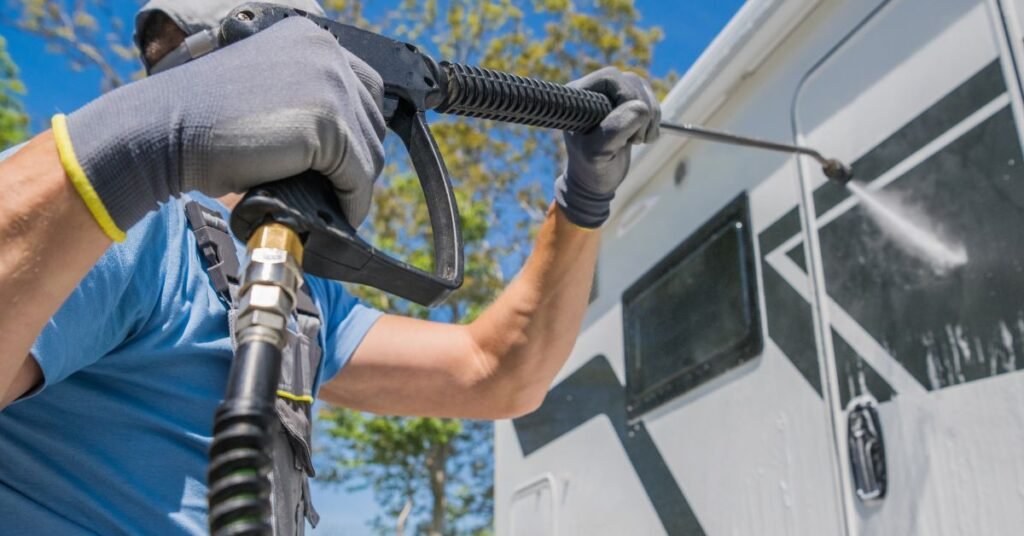
Windows can be cleaned with a power washer only when the glass, seals, frames, and surrounding surfaces are in good condition and the equipment is used at a low, controlled pressure. High pressure or spraying too close can damage seals, force water behind frames, or affect older and already-damaged windows.
For Toronto homes, exterior windows can collect dust, pollen, bird droppings, traffic residue, and seasonal buildup. A wide spray pattern, greater working distance, and gentle technique are safer than directing concentrated pressure at the glass or window edges.
TidyUp HandyCrew provides soft pressure washing services in Toronto for suitable exterior surfaces. If the main goal is detailed glass cleaning rather than exterior washing, our window cleaning services in Toronto may be the better fit.
This guide explains when power washing windows may be appropriate, what to avoid, and how to clean exterior windows more safely.
Can You Clean Windows With a Power Washer?
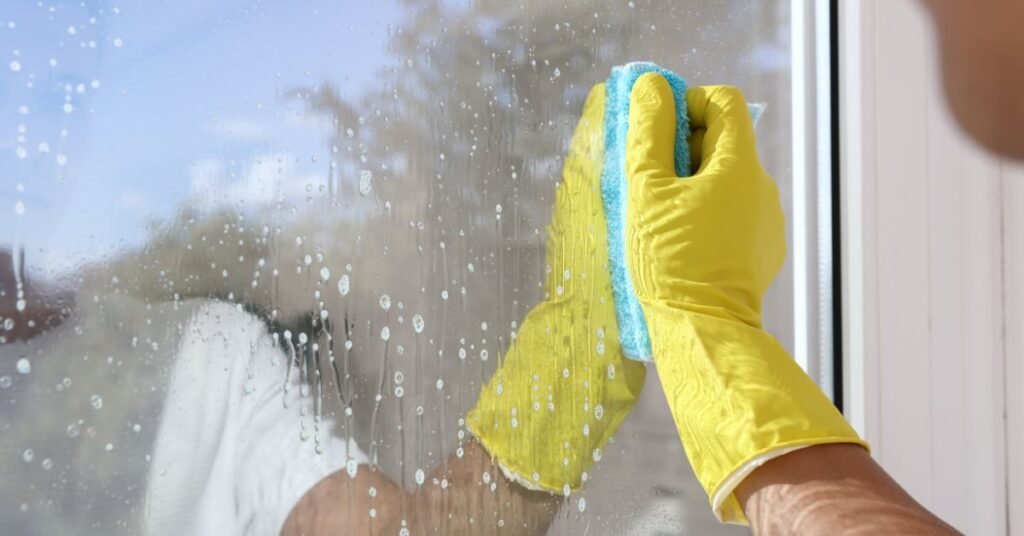
Yes. But the method matters enormously.
You can use a high-pressure washer to wash windows, but only if you use low-pressure soft wash technology. Otherwise, it is only a matter of time before the glass breaks or the sealing strip is permanently damaged.
The key distinction is this: power washing windows is not the same as power washing concrete. The PSI and nozzle settings that clean a driveway effectively will destroy a window instantly. Window cleaning with a power washer requires deliberately dialling the pressure down to a level that most people would consider surprisingly gentle.
A pressure washer operating between 1,000 and 1,200 PSI with a wide-angle nozzle provides sufficient cleaning power to remove dirt and grime from windows without exerting excessive force that could lead to damage. Some professional window cleaners go even lower, working between 500 and 800 PSI for older windows or windows with visible seal wear.
What You Need Before You Start
Gather everything before the power washer comes out. Stopping mid-job to find a missing nozzle or protective cloth creates exactly the kind of rushed decision-making that causes window damage.
Equipment checklist:
- A pressure washer with adjustable PSI settings (1,300 to 1,700 PSI maximum capacity, used at 500 to 1,200 PSI for windows)
- A 40-degree white nozzle tip or a 65-degree black tip for the gentlest approach
- An extension wand for upper-floor windows (never use a ladder while operating a power washer)
- A foam cannon or soap nozzle attachment for applying cleaning solution
- A squeegee for post-wash streak removal
- Microfiber cloths for detailing edges and corners
- Safety goggles and non-slip footwear
- Plastic sheeting or tarps to protect nearby plants and outdoor furniture
Cleaning solution:
A mixture of water and a few drops of dishwashing liquid is effective and eco-friendly. Always check the manufacturer’s instructions for compatible cleaning agents. Avoid ammonia-based products, bleach, and anything with harsh solvents. These damage window coatings, surrounding vegetation, and nearby painted surfaces.
What Windows You Should NOT Power Wash

Before starting, inspect every window. Some windows are not safe candidates for power washing regardless of how careful the technique is.
Double-pane windows with compromised seals. The intense force from a pressure washer, even on its lowest setting, can easily break the seals on double-pane or triple-pane windows. Once that seal is compromised, moisture gets trapped between the panes, causing permanent fogging that ruins the window’s insulating power.
Tinted windows. A pressurised stream of water can easily lift, peel, or scratch delicate tint film, completely destroying the tint. Tinted residential windows are becoming more common in Toronto condos and newer detached homes.
Windows with existing cracks, chips, or frame damage. Inspect thoroughly because windows can be expensive to fix if damaged. If there are minor damages to the seals, they can be fixed with a caulk gun.
Older single-pane windows in heritage Toronto homes. Pre-war single-pane glass in older Toronto properties (Leslieville, The Annex, Roncesvalles) is thinner and more brittle than modern glass. Use manual cleaning methods on these and save the power washer for siding and exterior surfaces.
How to Clean Windows With a Power Washer: Step by Step
This process works for standard residential windows on Toronto detached homes, semis, and townhouses. Follow every step in order.
Step 1: Prepare the Area
Walk the perimeter of the home and remove any obstacles near the windows you plan to clean. Move outdoor furniture, potted plants, and decorative items away from the work zone.
Cover delicate plants and nearby surfaces with plastic sheeting or tarps to shield them from overspray and potential damage. Close all windows and doors securely to prevent water from entering your home.
Check for any outdoor electrical outlets near the windows. Do not allow water to spray near uncovered exterior outlets. If outlets are near the windows you plan to clean, cover them with waterproof tape before starting.
Step 2: Inspect Every Window Before Washing
Inspect the windows for any damage, including cracks, chips, broken panels, damaged seals, latches, or damage to the frame. Run your hand along the frame edges to feel for loose caulking or areas where the seal has separated from the glass.
Flag any damaged windows with tape and skip them during the power wash. Clean those by hand instead. One overlooked crack can become a broken window under even light pressure washer spray.
Remove all window screens before washing. Screens trap dirt and can be damaged by direct power washer spray at close range. Lay them flat on the lawn and clean them separately with a garden hose and soft brush.
Step 3: Set Up the Correct Nozzle and Pressure
Lower the pressure of the machine to between 500 and 1,000 PSI and use a wide-angle nozzle such as the 40-degree white nozzle or the special black soap nozzle. Never use a straight high-pressure water column.
If your machine has a variable pressure dial, set it to its lowest position first. Test the spray on a concrete surface or fence before pointing it at any glass. You should feel very little recoil from the gun at window-cleaning pressure. If the gun is kicking back significantly, the pressure is still too high.
Step 4: Pre-Wet the Windows
Before applying any cleaning solution, pre-wet each window with plain water using the wide-angle nozzle. Wet the window and the surrounding wall surface, which cools the surface so that soapy water does not dry on the glass before it is evenly coated.
This step also loosens the first layer of surface dust and debris, giving the cleaning solution a cleaner surface to work on. In Toronto during spring and summer, pollen and tree sap sit on windows in a sticky layer that pre-wetting helps dissolve before the main clean.
Work from top to bottom on each window. Water should flow downward, not upward. Spraying upward forces water into the window frame gap and risks water intrusion into the wall cavity.
Step 5: Apply the Cleaning Solution
Switch to the soap nozzle or foam cannon attachment. Apply your chosen cleaning solution across the window surface from bottom to top. Spraying cleaning fluid from bottom to top prevents dirty water from flowing down dry glass and leaving inaccessible traces.
Let the solution sit on the glass for two to three minutes. This dwell time allows the surfactant in the cleaning solution to break down grease, bird droppings, and hard water mineral deposits before the rinse.
Do not let the solution dry on the glass. In direct summer sun, the cleaning solution can dry within a minute or two on hot glass. Work one or two windows at a time rather than applying a solution to all windows at once.
Step 6: Rinse Each Window
Switch back to the wide-angle nozzle and plain water. Maintain a distance of three to five feet from the window and angle the sprayer at about 30 degrees to the glass. Start at the top of each window and work your way down.
The secret is to keep a distance of at least three to five feet and avoid the right angle of 90 degrees, otherwise water can easily be forced into the window frame or behind the outer wall cladding.
Move the spray wand in smooth, overlapping horizontal passes from top to bottom. Do not linger in one spot. A pressure washer held stationary over a single point on glass, even at low PSI, concentrates pressure in a way that increases breakage risk.
Step 7: Squeegee and Detail
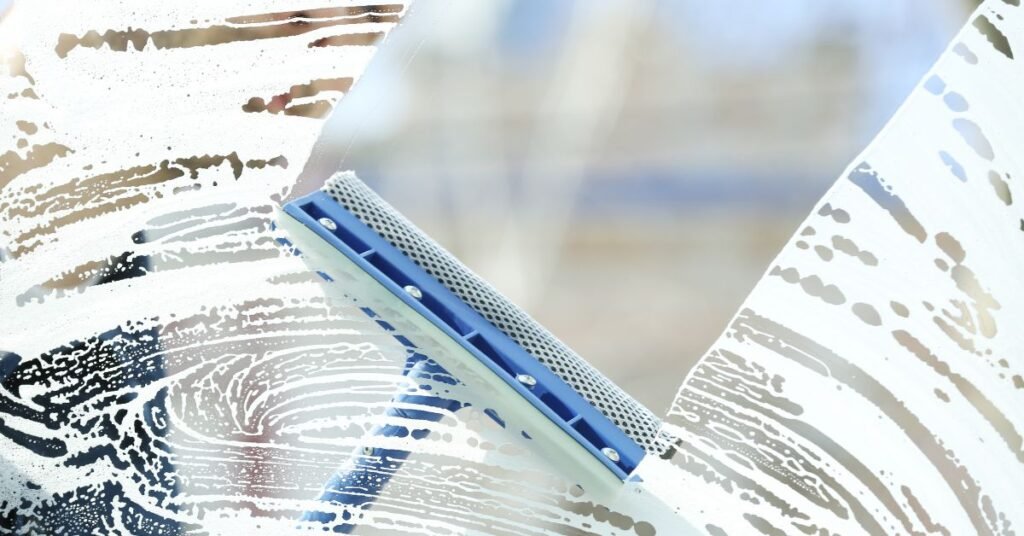
After rinsing, use a squeegee or microfiber mop to remove excess water and minimise streaking. Allow windows to air dry completely before replacing screens.
Start the squeegee at the top corner of the glass and pull horizontally in one smooth stroke across the full width. Wipe the squeegee blade with a dry cloth after each pass to prevent the removed water from being dragged back across clean glass.
For stubborn mineral deposits or hard water rings that survive the power wash, apply diluted white vinegar to a cloth and press on the spot for 20 to 30 seconds. Gently wipe, then rinse with distilled water. For more stubborn stains, use a commercial glass-safe mineral remover and follow the label directions.
Step 8: Clean Window Sills and Tracks
The power washer cleans glass and trim well but struggles with the debris that packs into window sill channels and tracks. Open the windows and clean the sills with a rag or towel after washing them, and you will be left with completely clean windows.
Use a stiff-bristle brush to loosen compacted dirt from the sill channels. Wipe down with a damp microfiber cloth. This step takes five minutes per window and makes the difference between a window that looks clean and a window that is clean.
Reinstall screens only after both the glass and the screens are fully dry.
PSI and Nozzle Quick Reference Guide
| Window Type | Recommended PSI | Recommended Nozzle |
| Standard single-pane glass | 800 to 1,200 PSI | 40-degree white tip |
| Double-pane (intact seals) | 500 to 800 PSI | 65-degree black tip |
| Older or heritage glass | Manual clean only | N/A |
| Tinted windows | Manual clean only | N/A |
| Window frames (vinyl/aluminium) | 1,000 to 1,500 PSI | 40-degree white tip |
| Window screens | 400 to 600 PSI | 65-degree black tip |
Upper-Floor Windows: How to Do It Safely
The most important rule is: never stand on a ladder to operate a pressure washer. The recoil of the gun can lift you off the ladder in an instant. To wash second-floor windows, buy a special telescopic extension rod. Staying on the ground is the absolute principle.
Extension wands for residential pressure washers extend reach to four to six metres, sufficient for most Toronto detached homes and semis. They attach to the standard gun connection and accept all the same nozzle tips.
For three-storey homes or windows that cannot be safely reached from the ground with an extension wand, professional cleaning is the safer and more practical choice. Our guide on how much does it cost to power wash a house covers professional pricing across different Toronto home types and sizes.
Common Mistakes to Avoid When Cleaning Windows With a Power Washer
- Using the wrong nozzle.
- Getting too close to the glass.
- Spraying at a 90-degree angle directly into the glass.
- Let the cleaning solution dry on the glass.
- Spraying upward into the frame gap.
- Not inspecting windows before starting.
How Often Should You Power Wash Windows in Toronto

Toronto’s climate creates specific conditions that determine how quickly windows get dirty enough to need washing.
- Spring is the most important cleaning window.
- Autumn is the second optimal time.
Recommended schedule for Toronto homes:
- Standard residential home, no nearby trees: twice a year (spring and autumn)
- Home near deciduous trees with heavy sap: three times a year (spring, mid-summer, autumn)
- Condo or home facing a busy road: three to four times a year due to exhaust particulate and road spray
- Commercial or rental property: quarterly for professional appearance standards
For homes where power washing is part of a broader exterior maintenance plan, our post on how long does it take to power wash a house gives a realistic timeline for the full exterior job.
Power Washing Windows Before Painting: One Important Note
If you are planning to paint your window frames, siding, or exterior trim, power washing the windows and surrounding surfaces first is strongly recommended.
Paint applied over dirty, dusty, or chalky surfaces fails significantly faster than paint applied over a clean substrate. Power washing removes the old paint chalk, surface contamination, and moisture-trapping dirt that cause premature paint peeling.
And if you are considering power washing your entire home exterior as a pre-paint step, our guide on should you power wash your house before painting covers when it is essential and when it can be skipped.
DIY vs. Professional Window Power Washing in Toronto
For most single-storey and two-storey Toronto homes with intact windows and accessible ground-floor levels, DIY window power washing is a reasonable task for a careful, patient homeowner with the right equipment.
The realistic DIY scenario: a 1,200 sq. ft. semi-detached in East York with 12 ground and second-floor windows takes approximately two to three hours for a first-time DIYer following the correct process. The same job takes a professional crew 45 to 60 minutes.
Professional window power washing makes the most sense when:
- The home is three storeys or the windows are inaccessible from the ground without a ladder
- Any windows have existing seal concerns or frame damage that a professional should assess first
- The homeowner does not own a suitable pressure washer and renting is not cost-effective for a one-time job
- The windows are part of a broader exterior cleaning job (siding, deck, driveway) that is more efficiently done by one professional crew in a single visit
Residential professional window power washing costs typically range from $100 to $400, depending on the number of windows and difficulty. For a standard Toronto detached home, most professional window cleaning quotes land between $150 and $300 for a full exterior window wash.
Need a Trusted Local Service Provider? If you’re in our service area, Tidy Up Handy Crew is here to help. Whether you need cleaning, handyman, painting, plumbing, or other property maintenance services, our team is ready to assist. Visit our Google Business Profile to read verified customer reviews, contact us directly, or get directions.
Google Business Profile: https://maps.app.goo.gl/Jxo4YMBjmxTC2eGi6
Phone: +1 (226) 201-3103
Address: 3400 Danforth Ave Unit 5, Scarborough, ON M1L 1E1, Canada
Frequently Asked Questions About Cleaning Windows With a Power Washer
Question: Can you clean windows with a power washer without damaging the glass?
Yes, if you use the correct settings. Keep PSI between 500 and 1,200 for most residential windows, use a 40-degree or wider nozzle, maintain a minimum three-foot distance from the glass, and angle the spray at 30 to 45 degrees rather than directly into the glass at 90 degrees. Never use a red (0-degree) or yellow (15-degree) nozzle tip on glass.
Question: What PSI should you use to clean windows with a power washer?
Use 500 to 1,200 PSI for standard residential windows. Double-pane windows with intact seals should be cleaned at 500 to 800 PSI maximum. Do not exceed 1,500 PSI on any glass surface. Standard driveway and concrete cleaning pressure (2,500 to 3,500 PSI) will crack or shatter residential window glass immediately.
Question: Can you power wash double-pane windows?
Yes, but only if the seals are intact and the glass shows no fogging between the panes. Use the lowest pressure setting available (500 to 800 PSI) and a 65-degree nozzle. If the double-pane windows already show fogging or moisture between the panes, the seal is already compromised. Do not power wash them. Water forced through a broken seal makes the fogging permanent.
Question: How do you avoid streaks when cleaning windows with a power washer?
Rinse the cleaning solution completely from the glass before it dries, then squeegee from top to bottom in single smooth horizontal passes, wiping the blade clean after each stroke. For mineral deposit rings or hard water spots that remain after washing, apply diluted white vinegar on a cloth, press it onto the spot for 20 to 30 seconds, and wipe with distilled water.
Question: Should you clean windows with a power washer before painting window frames?
Yes. Power washing window frames and surrounding surfaces before painting removes old chalk, surface contamination, and dirt that cause premature paint failure. Allow the surface to dry completely before painting, typically 24 to 48 hours minimum in Toronto conditions.
Final Thoughts
Cleaning windows with a power washer is one of the most effective exterior maintenance tasks a Toronto homeowner can do, when the settings are right, the nozzle is correct, and the technique is sound. The result is significantly cleaner glass than manual washing delivers, in a fraction of the time.
The three rules that cover almost everything: keep the pressure below 1,200 PSI on glass, use a 40-degree or wider nozzle, and never spray at a 90-degree angle directly into the frame. Follow those and the job is straightforward.
At TidyUp HandyCrew, we handle exterior pressure washing across Toronto and the GTA using professional soft-wash equipment and eco-friendly cleaning solutions that protect glass, frames, surrounding vegetation, and painted surfaces. Every job is handled by insured, background-checked staff with experience on all Toronto home types from pre-war brick detached homes to modern glass-facade condos.
Book our Soft Pressure Wash Cleaning Services today and get a free quote from Toronto’s trusted cleaning crew.
