

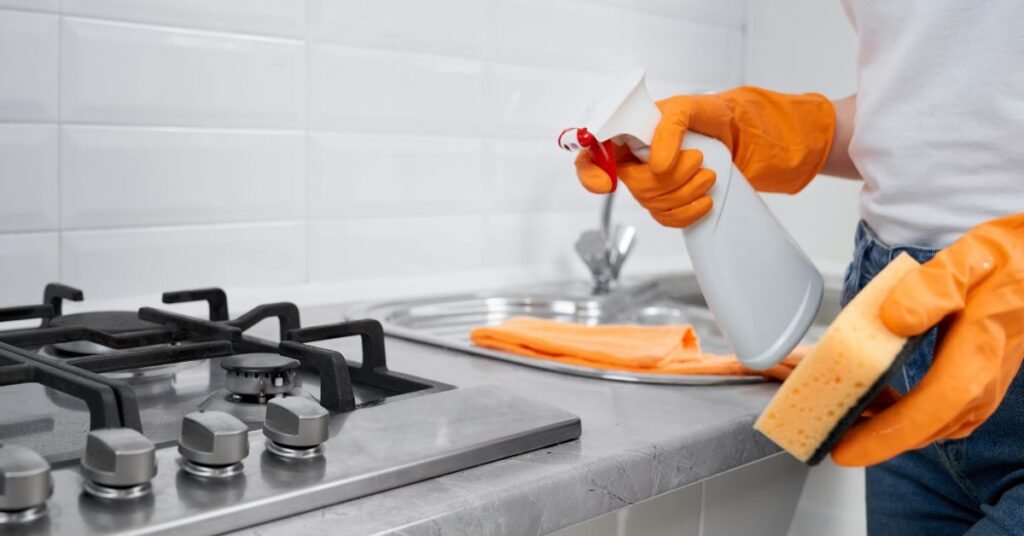
How to Remove Kitchen Grease and Oil Buildup properly is one of the fastest ways to restore a clean, healthy cooking space, without damaging cabinets, walls, or appliances. If your kitchen feels sticky, smells oily, or looks dull no matter how often you wipe it, trapped grease is usually the real problem.You can remove stubborn oil film using simple tools like dish soap, baking soda, microfiber cloths, and warm water. No harsh chemicals. No expensive equipment. Just the right method for the right surface.
According to Better Homes and Gardens, airborne cooking oils can settle on surfaces within days and harden over time if not removed regularly. That buildup can attract dust, bacteria, and even pests. Many homes in busy urban kitchens, including condos and apartments across Canada, face this issue daily.
In this guide, you will learn 7 proven steps to clean cabinets, backsplashes, range hoods, and walls safely. You will also get prevention tips to keep grease from coming back.
What Is Kitchen Grease and Oil Buildup and Why Is It So Hard to Remove?
Kitchen grease and oil buildup is the thin, sticky film that forms on cabinets, walls, backsplashes, range hoods, and even ceilings after regular cooking. It may start as an invisible mist, but over time it turns into a stubborn residue that attracts dust and dirt. That is why your kitchen can feel sticky even after wiping it down.
Grease buildup is difficult to remove because it is not just surface dirt. It is a combination of cooking oils, heat, moisture, and airborne particles that bond together. Once it hardens, normal wiping is no longer enough. Understanding how it forms helps you remove it safely without damaging painted cabinets, laminate surfaces, or stainless steel appliances.
How Cooking Oils Turn Into Sticky Residue
When you cook, especially when frying, tiny oil droplets become airborne. Heat and steam carry these particles around the kitchen. Without proper ventilation from a range hood or exhaust fan, they settle on nearby surfaces. As the oil cools, it thickens and clings to cabinets and walls. Steam adds moisture, which helps grease stick even more. Over time, this creates a tacky layer that traps dust and cooking odors.
Why Grease Gets Worse Over Time
Grease buildup becomes harder to remove because it layers. Each cooking session adds a new film over the old one. Dust sticks to this layer, making it darker and thicker. Oxidation from heat exposure slowly hardens the oil, turning it into a stubborn coating. The longer it sits, the stronger it bonds to surfaces. That is why regular cleaning and proper ventilation are essential to prevent heavy buildup.
How to Prepare for Safe Grease Removal
Before you begin removing kitchen grease and oil buildup, taking a few minutes to prepare can save you from damaging surfaces or wasting time. Many cabinets, walls, and appliances have delicate finishes that can easily dull, scratch, or discolor if cleaned the wrong way. Starting with the right setup helps you clean effectively while keeping your kitchen looking new.
Open nearby windows or turn on your range hood to improve airflow. This reduces strong odors and helps surfaces dry faster. Wear gloves to protect your hands, especially if you are using commercial degreasers or hot water. Always test any cleaning solution on a small hidden area first. This simple step prevents permanent marks on painted cabinets, laminate, or stainless steel.
Essential Cleaning Tools and Supplies
For most grease removal tasks, you only need a few basic items. Use microfiber cloths to trap grease without scratching. Keep a non-abrasive sponge for stubborn spots. Dish soap works as a gentle degreaser, while baking soda helps lift stuck residue. Warm water and protective gloves complete your basic cleaning kit.
Kitchen Surfaces That Need Extra Care
Some kitchen materials are more sensitive than others. Painted cabinets can lose their finish if scrubbed too hard. Laminate may swell if soaked. Stainless steel shows streaks easily. Natural stone, such as granite or marble, can be damaged by acidic cleaners. Knowing these risks helps you choose the safest cleaning method.
How to Remove Kitchen Grease and Oil Buildup in 7 Proven Steps
Removing kitchen grease and oil buildup becomes much easier when you follow a clear, surface safe process. These seven proven steps will help you clean cabinets, walls, backsplashes, and appliances without causing damage or leaving sticky residue behind.
Step 1: Identify the Surface and Grease Level
Start by checking both the material and the thickness of the grease. A light film usually feels slightly sticky and can be removed with mild cleaners. A sticky layer looks dull and attracts dust. Hardened buildup appears dark, rough, and difficult to wipe away. Knowing whether you are working on painted wood, laminate, stainless steel, tile, or stone helps you choose the right method and avoid costly mistakes.
Step 2: Clean With Warm Water and Dish Soap
Mix a few drops of grease cutting dish soap into a bowl of warm water. Dip a microfiber cloth into the solution and wring it out well so it is damp, not dripping. Gently wipe the greasy area using circular motions. Let the soapy water sit on stubborn spots for one to two minutes. This dwell time helps loosen oil bonds. Rinse with clean water and dry immediately to prevent streaks.
Step 3: Use Baking Soda Paste for Tough Grease
For areas where soap alone does not work, make a paste using baking soda and a small amount of water. Apply it to the greasy surface and let it sit for five to ten minutes. Use a soft sponge to scrub gently. Avoid pressing too hard, especially on painted or laminated surfaces. Once the grease lifts, wipe clean with a damp cloth and dry thoroughly.
Step 4: Degrease Cabinets Without Damage
Kitchen cabinets collect more grease than most people realize. Use gentle methods to protect their finish.
- Painted Cabinets:Clean with mild soap and water only. Avoid vinegar and rough pads, which can remove paint.
- Laminate Cabinets: Use minimal moisture and dry immediately. Do not allow water to seep into seams.
- Wood Cabinets With Finish: Wipe along the grain using a damp cloth and mild soap. Follow with a dry microfiber cloth to restore shine.
Step 5: Remove Grease From Backsplash and Grout
For ceramic or glass tile, use dish soap and warm water first. For stubborn spots, apply baking soda paste. Use a grout brush or old toothbrush to clean between tiles. Rinse thoroughly to prevent residue buildup. Dry with a clean towel to avoid water marks.
Step 6: Clean Greasy Walls and Ceiling Areas
Grease often rises and settles on nearby walls and ceilings. Use a lightly damp microfiber cloth with diluted dish soap. Work from top to bottom to prevent streaking. Avoid soaking the surface, as excess moisture can damage paint. Rinse with a clean cloth and dry immediately.
Step 7: Deep Clean Range Hood and Filters
Remove metal mesh filters and soak them in hot water mixed with dish soap and baking soda for 20 to 30 minutes. Gently scrub and rinse well. Many filters are dishwasher safe, but check the manufacturer’s instructions first. If filters remain clogged or damaged, replace them to maintain proper ventilation and reduce future grease buildup.
Natural vs Commercial Degreasers: Which Works Best?
Choosing the right degreaser plays a major role in how easily you can remove kitchen grease and oil buildup. Some homeowners prefer natural cleaners for safety and affordability, while others rely on commercial products for faster results. Both options can work well when used correctly. The key is knowing when to use each one and which surfaces they are best suited for.
Natural solutions are ideal for routine cleaning and light to moderate grease. Commercial degreasers are more effective for thick, hardened buildup. Understanding their strengths and limits helps you clean efficiently without damaging your kitchen.
Dish Soap and Baking Soda
Dish soap is designed to break down oil, making it one of the most effective everyday degreasers. When mixed with warm water, it lifts grease from cabinets, tiles, and appliances. Baking soda adds gentle scrubbing power and helps remove stubborn residue without scratching most surfaces. This combination is affordable, widely available, and safe for regular use.
Vinegar Based Solutions
White vinegar cuts through grease and removes odors thanks to its acidic nature. It works well on glass, ceramic tile, and stainless steel when diluted with water. However, vinegar should never be used on natural stone or delicate finishes, as it can cause permanent damage.
Store Bought Kitchen Degreasers
Commercial degreasers are formulated for heavy grease and long term buildup. They act quickly and require less scrubbing. Many are effective on range hoods and industrial style appliances. Always follow label instructions and ensure proper ventilation when using these products.
What to Avoid on Sensitive Surfaces
Avoid abrasive powders, steel wool, and highly acidic or alkaline cleaners on painted cabinets, laminate, wood finishes, and stone countertops. These products can dull surfaces, remove protective coatings, and lead to costly repairs.
Surface Based Grease Cleaning Guide by Material
Not all kitchen surfaces respond the same way to grease removal methods. Using the wrong cleaner or technique can lead to fading, scratches, or permanent stains. This surface based guide helps you choose the safest and most effective approach for each common kitchen material, so you can remove grease without damaging your home.
Painted Walls and Cabinets
Painted surfaces are sensitive to moisture and harsh scrubbing. Use a soft microfiber cloth with warm water and a small amount of dish soap. Wipe gently in sections and avoid soaking the surface. Rinse with a clean damp cloth and dry immediately to prevent streaks and paint dulling.
Stainless Steel Appliances
Stainless steel shows fingerprints and grease easily. Clean using a damp microfiber cloth and mild soap, then wipe in the direction of the grain. Rinse lightly and buff dry with a soft towel. Avoid steel wool or rough sponges, as they can permanently scratch the finish.
Granite and Natural Stone
Natural stone surfaces require special care. Use only pH neutral stone cleaners or mild dish soap with warm water. Never use vinegar, lemon juice, or abrasive powders. These can etch the stone and weaken protective sealants. Dry thoroughly to maintain shine.
Glass and Ceramic Tile
Glass and ceramic tile are durable and easy to clean. Dish soap and warm water remove most grease. For stubborn spots, use baking soda paste and a soft sponge. Rinse well to prevent residue and water marks.
Laminate Countertops
Laminate is prone to swelling if exposed to excess moisture. Use a lightly damp cloth with mild soap. Do not let water pool near seams or edges. Dry immediately after cleaning to protect the surface and extend its lifespan.
How to Prevent Kitchen Grease Buildup Long Term
Preventing kitchen grease and oil buildup is much easier than removing thick, sticky residue later. By following a simple daily and weekly routine, you can keep your kitchen cleaner, healthier, and more attractive with minimal effort. Consistent maintenance also protects cabinets, walls, and appliances from long term damage caused by trapped oils and dust. Small habits practiced regularly make the biggest difference. When grease is removed before it hardens, it takes only minutes to clean. Proper ventilation also plays a key role in reducing airborne oil particles that settle on surfaces.
Daily 2 Minute Cleaning Routine
After cooking, wipe nearby cabinets, stovetops, and backsplashes with a damp microfiber cloth and a drop of dish soap. Focus on areas around the stove and sink where grease collects most. Dry surfaces immediately to prevent streaks and residue. This quick habit stops oil from building up overnight.
Weekly Deep Wipe Schedule
Once a week, clean high contact areas more thoroughly. Wipe cabinet doors, appliance handles, range hood covers, and backsplash tiles using warm soapy water. Check corners and edges where grease often hides. Rinse and dry each section before moving on to the next.
Proper Ventilation and Filter Maintenance
Always use your range hood or exhaust fan when cooking, especially during frying. Clean mesh filters every three to four weeks by soaking them in hot soapy water. Replace damaged or clogged filters when needed. Good airflow reduces grease in the air and keeps surfaces cleaner for longer.
Common Mistakes That Make Grease Buildup Worse
Many people unknowingly make cleaning mistakes that cause kitchen grease and oil buildup to return faster or become harder to remove. These errors can damage surfaces, spread residue, and reduce the effectiveness of your cleaning routine. Avoiding them will help you maintain a cleaner kitchen and protect your cabinets, walls, and appliances.
Using Abrasive Pads
Scrubbing grease with steel wool or rough scouring pads may seem effective, but it often scratches painted, laminated, and stainless steel surfaces. These tiny scratches trap more oil and dirt, making future cleaning more difficult and causing surfaces to look dull over time.
Overusing Water on Wood
Soaking wooden cabinets or laminate surfaces with too much water can weaken finishes and cause swelling. Moisture trapped in seams also attracts more grease and dust. Always use a damp cloth instead of a dripping wet one.
Skipping Final Rinse and Dry
Leaving soap or cleaner residue behind creates a sticky layer that attracts new grease. Rinsing with clean water and drying with a soft cloth prevents buildup and keeps surfaces smooth and clean.
When to Hire Professional Kitchen Cleaning Services in Canada
While regular home cleaning works for light grease, some kitchens develop heavy oil buildup that requires professional treatment. Over time, grease can settle deep into cabinet surfaces, ventilation systems, and hidden corners where basic tools cannot reach. In these cases, hiring expert cleaners helps restore hygiene, improve air quality, and protect your kitchen from long term damage. Professional kitchen cleaning is especially helpful for busy households, rental properties, and homes where cooking happens daily. It saves time, reduces stress, and delivers deeper results than standard DIY methods.
Signs DIY Cleaning Is Not Enough
If you notice thick, sticky grease that does not come off easily, strong cooking odors that linger, dark stains on walls or cabinets, or blocked range hood filters, these are clear signs DIY cleaning is no longer effective. When grease returns within days, it often means buildup has reached deeper layers.
How Professional Cleaners Restore Greasy Kitchens
Professional cleaners use advanced deep cleaning techniques, eco safe products, and trained staff to remove stubborn grease safely. They focus on cabinets, appliances, backsplashes, and ventilation systems, ensuring every area is thoroughly cleaned without damaging surfaces. This professional approach delivers longer lasting freshness and a healthier kitchen environment.
Why Choose TidyUp HandyCrew for Kitchen Cleaning
Choosing the right cleaning company makes a real difference in how clean, safe, and long-lasting your kitchen results will be. At TidyUp HandyCrew, we focus on delivering professional, reliable, and detail driven cleaning services that remove grease and grime at the source.
Our trained team uses eco-friendly products and proven techniques to protect your cabinets, walls, appliances, and countertops. We do not rely on harsh chemicals that can damage finishes or affect indoor air quality. Every service is tailored to your kitchen’s condition, surface type, and usage level. We are known for punctual service, transparent pricing, and consistent quality. Whether you need deep kitchen cleaning, move-in or move-out cleaning, or regular maintenance, our experts follow a structured process to ensure no greasy corner is missed.
With years of experience serving homes and businesses across Canada, we understand local cleaning challenges, from condo kitchens to family homes. Our goal is simple. Save you time. Reduce stress. Deliver spotless results you can trust.
Conclusion
Removing kitchen grease and oil buildup does not have to be difficult when you follow the right steps and use safe, proven methods. By identifying your surface type, choosing the correct cleaner, and maintaining a simple routine, you can keep your cabinets, walls, and appliances clean and protected. These techniques help prevent sticky residue, unpleasant odors, and long term surface damage.
If you stay consistent with daily and weekly care, your kitchen will remain fresh and easier to manage. And when grease buildup becomes too heavy or time is limited, professional support can make all the difference. For deep, reliable results, trust TidyUp HandyCrew to restore your kitchen safely and efficiently. Visit TidyUp HandyCrew today to book your service and enjoy a spotless, healthier cooking space.
Frequently Asked Questions
Question: Why Does Kitchen Grease Return So Fast?
Grease returns quickly when residue is left behind after cleaning or when ventilation is poor. Using a range hood and wiping surfaces daily helps prevent rapid buildup.
Question: Is Vinegar Safe for All Surfaces?
No. Vinegar is safe for glass, ceramic tile, and stainless steel, but it can damage natural stone, wood finishes, and some painted surfaces.
Question: How Do I Remove Years of Grease?
For heavy buildup, use warm soapy water first, then baking soda paste. Let cleaners sit longer and repeat if needed. Professional deep cleaning may be required.
Question: Can Steam Cleaning Damage Cabinets?
Yes. Steam can weaken wood finishes and cause swelling. It is best to use low moisture methods on cabinets.
Question: How to Remove Grease From Cabinets Above Stove
Use dish soap and warm water with a microfiber cloth. For thick grease, apply baking soda paste and wipe gently.
